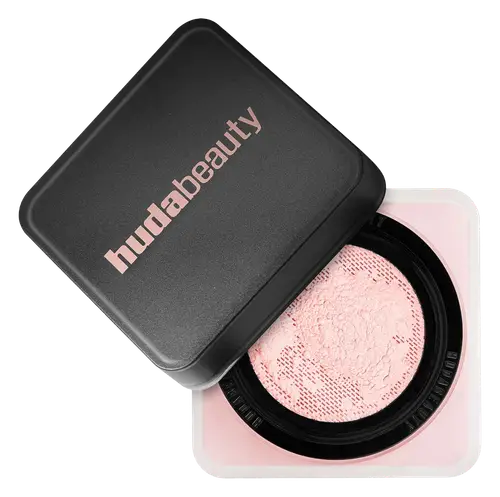
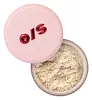
Huda Beauty Easy Bake Loose Baking & Setting Powder Versus One/Size by Patrick Starrr Ultimate Blurring Setting Powder

What's inside
What's inside
 Key Ingredients
Benefits
Concerns
Ingredients Side-by-side
Talc
Abrasive
Synthetic Fluorphlogopite
Silica
Abrasive

Dimethicone
Emollient

Nylon-12

Caprylyl Glycol
Emollient
Pentylene Glycol
Skin Conditioning
Oryza Sativa Starch
AbsorbentPhenyl Trimethicone
Skin Conditioning
Sodium Dehydroacetate
Preservative
Octyldodecyl Stearoyl Stearate
Emollient

Diisostearyl Malate
EmollientParfum
Masking



Tocopheryl Acetate
Antioxidant


Benzyl Salicylate
Perfuming
Sorbitan Sesquioleate
Emulsifying
Hexyl Cinnamal
Perfuming
Linalool
Perfuming
Coumarin
Perfuming
Hydroxycitronellal
Perfuming
Benzyl Benzoate
Antimicrobial
Iron Oxides
CI 77492
Cosmetic ColorantCI 77491
Cosmetic ColorantUltramarines
CI 77007
Cosmetic ColorantCI 19140
Cosmetic ColorantCI 77499
Cosmetic ColorantCI 73360
Cosmetic ColorantTalc, Synthetic Fluorphlogopite, Silica, Dimethicone, Nylon-12, Caprylyl Glycol, Pentylene Glycol, Oryza Sativa Starch, Phenyl Trimethicone, Sodium Dehydroacetate, Octyldodecyl Stearoyl Stearate, Diisostearyl Malate, Parfum, Tocopheryl Acetate, Benzyl Salicylate, Sorbitan Sesquioleate, Hexyl Cinnamal, Linalool, Coumarin, Hydroxycitronellal, Benzyl Benzoate, Iron Oxides, CI 77492, CI 77491, Ultramarines, CI 77007, CI 19140, CI 77499, CI 73360
Talc
Abrasive
Calcium Aluminum Borosilicate
Magnesium Myristate

Nylon-12
Caprylic/Capric Triglyceride
Masking

Ethylhexyl Palmitate
Emollient
Zea Mays Starch
Absorbent
Phenoxyethanol
Preservative
Caprylyl Glycol
Emollient
Lauroyl Lysine
Skin Conditioning
Sodium Dehydroacetate
Preservative
Trimethylsiloxysilicate
Emollient
Polymethyl Methacrylate
Ascorbyl Palmitate
Antioxidant
Methicone
Emollient
Iron Oxides
CI 19140
Cosmetic ColorantCI 77007
Cosmetic ColorantTalc, Calcium Aluminum Borosilicate, Magnesium Myristate, Nylon-12, Caprylic/Capric Triglyceride, Ethylhexyl Palmitate, Zea Mays Starch, Phenoxyethanol, Caprylyl Glycol, Lauroyl Lysine, Sodium Dehydroacetate, Trimethylsiloxysilicate, Polymethyl Methacrylate, Ascorbyl Palmitate, Methicone, Iron Oxides, CI 19140, CI 77007
Reviews
Ingredients Explained
These ingredients are found in both products.
Ingredients higher up in an ingredient list are typically present in a larger amount.
Caprylyl Glycol is a humectant, skin conditioner, emollient, and preservative booster derived from either caprylic acid or synthetically created.
Typical use levels vary from 0.3-1% as a preservative booster and go up to 2% to condition skin.
Because it is not a free-fatty acid, this ingredient is fungal acne safe (there's nothing for Malassezia to feed on).
Learn more about Caprylyl GlycolCI 19140 is also known as Tartrazine. Tartrazine is a synthetic dye used in cosmetics, foods, and medicine to add a yellow color.
Tartrazine is created from petroleum and is water-soluble.
Some people may experience allergies from this dye, especially asthmatics and those with an aspirin intolerance.
Learn more about CI 19140This pigment is called Ultramarine blue lazurite. It gives a saturated blue color, but can be used to create other colors as well.
According to the manufacturer, it is usually made from kaolin, sodium sulfate, sodium carbonate, sulfur, and charcoal.
Nylon-12 is a polymer. It is derived from 12-aminododecanoic acid, an omega-amino fatty acid
According to a manufacturer, it is a talc substitute. Like talc, nylon-12 gives products a satin feel. The manufacturer also claims this ingredients does not block pores and has moderate oil absorption.
This ingredient may not be reef-safe.
Learn more about Nylon-12Sodium Dehydroacetate is a synthetic preservative and sodium salt form of dehydroacetic acid. It stops bacteria, mold, and yeast from growing in your products at low concentrations.
Clinical testing found it to be non-irritating, non-sensitizing, and non-photosensitizing. It's also not significantly absorbed through skin.
There are a very small number of reported cases of contact dermatitis in cases linked to wound-care creams used over compromised skin (rather than skincare).
Overall, this is a well-studied and low-risk preservative just doing its job.
Typical concentrations run up to 0.6%, which is also the maximum amount permitted under both EU CosIng regulations and US FDA guidelines.
Learn more about Sodium DehydroacetateTalc is a clay mineral. It helps absorb moisture and improve the texture of products. Like other types of clay, Talc can have a slight exfoliating effect on skin. Talc can be added to increase the volume of products.
Some Baby powders are made by combining talc with corn starch. The word "talc" comes from Latin and originates from Arabic. Talc is a mineral commonly found throughout the world.
If you have any concerns about using talc, we recommend checking out the FDA's official page.
Learn more about TalcThis ingredient is a combination of red, black, and yellow iron oxide pigments. This combination of colors is usually found in foundation, because it results in a "skin" color.
The EU typically uses CI numbers for colorants when applicable, such as CI 77489. In the US, iron oxides are regulated as color additives and "iron oxides" is the most commonly used name in US cosmetic practice.
A 2021 paper looked at skincare formulations containing iron oxides and found that they reduced transmission of blue light when measured optically. In simple terms, the pigment particles helped block or scatter part of the visible light spectrum in lab testing and the authors suggest this could translate into better protection against blue-light-related skin effects.
There is also clinical and experimental research showing that tinted products containing iron oxides can reduce visible light-induced pigmentation:
Please note, whether a product reduces visible or blue light depends on things like:
In the EU's CosIng database, iron oxides are only listed as a colorant. CosIng groups ingredients by their main cosmetic role, such as colorant, preservative, or UV filter.
Though studies say iron oxides can "attenuate blue light", they're describing an optical property and not an officially recognized cosmetic function.
So CosIng isn’t contradicting the research. It’s just classifying iron oxides by what they officially are: pigments that add color.
Learn more about Iron Oxides

