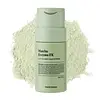
This mild powder cleanser is mild enough to cleanse without leaving skin feeling tight or stripped.
This mild powder cleanser is mild enough to cleanse without leaving skin feeling tight or stripped.

What's inside
What's inside
 Key Ingredients
Benefits
Concerns
No concerns
Ingredients Side-by-side
Zea Mays Starch
Absorbent
Microcrystalline Cellulose
AbsorbentSodium Cocoyl Isethionate
Cleansing
Sodium Lauroyl Glutamate
SurfactantDiglycerin
Humectant
Allantoin
Skin Conditioning



Maltodextrin
Absorbent
Papain
Skin Conditioning
Camellia Sinensis Leaf Powder
Glucose
Humectant
Bromelain
Skin Conditioning
Sodium Hyaluronate
Humectant

Zinc PCA
Humectant


Mannitol
Humectant
Epigallocatechin Gallate
Antioxidant
Decapeptide-4
Skin Conditioning
Hamamelis Virginiana Water
Astringent



1,2-Hexanediol
Skin Conditioning
Camellia Sinensis Leaf Water
Masking
Butylene Glycol
Humectant
Silybum Marianum Seed Extract
Skin ConditioningEthylhexylglycerin
Skin ConditioningCamellia Sinensis Leaf Extract
Antimicrobial
Zea Mays Starch, Microcrystalline Cellulose, Sodium Cocoyl Isethionate, Sodium Lauroyl Glutamate, Diglycerin, Allantoin, Maltodextrin, Papain, Camellia Sinensis Leaf Powder, Glucose, Bromelain, Sodium Hyaluronate, Zinc PCA, Mannitol, Epigallocatechin Gallate, Decapeptide-4, Hamamelis Virginiana Water, 1,2-Hexanediol, Camellia Sinensis Leaf Water, Butylene Glycol, Silybum Marianum Seed Extract, Ethylhexylglycerin, Camellia Sinensis Leaf Extract
Zea Mays Starch
Absorbent
CI 77004
Cosmetic ColorantSodium Cocoyl Isethionate
Cleansing
Sodium Lauroyl Glutamate
SurfactantCamellia Sinensis Leaf Powder
Diglycerin
Humectant
Allantoin
Skin Conditioning
Maltodextrin
Absorbent
Papain
Skin Conditioning
Propanediol
Solvent
Water
Skin ConditioningCapryloyl Salicylic Acid
Exfoliating

Citric Acid
Buffering
Epigallocatechin Gallate
Antioxidant
Gluconolactone
Chelating
Lavandula Stoechas Extract
Masking1,2-Hexanediol
Skin Conditioning
Pyrus Malus Fruit Extract
Skin Conditioning
Castanea Crenata Shell Extract
Skin ConditioningDiospyros Kaki Leaf Extract
Skin Protecting
Hydroxycinnamic Acid
Skin ConditioningRutin
Antioxidant
Zea Mays Starch, CI 77004, Sodium Cocoyl Isethionate, Sodium Lauroyl Glutamate, Camellia Sinensis Leaf Powder, Diglycerin, Allantoin, Maltodextrin, Papain, Propanediol, Water, Capryloyl Salicylic Acid, Citric Acid, Epigallocatechin Gallate, Gluconolactone, Lavandula Stoechas Extract, 1,2-Hexanediol, Pyrus Malus Fruit Extract, Castanea Crenata Shell Extract, Diospyros Kaki Leaf Extract, Hydroxycinnamic Acid, Rutin
Ingredients Explained
These ingredients are found in both products.
Ingredients higher up in an ingredient list are typically present in a larger amount.
1,2-Hexanediol is a synthetic liquid and another multi-functional powerhouse.
It is a:
- Humectant, drawing moisture into the skin
- Emollient, helping to soften skin
- Solvent, dispersing and stabilizing formulas
- Preservative booster, enhancing the antimicrobial activity of other preservatives
Allantoin is a soothing ingredient known for its protective and moisturizing properties; it's basically a quiet workhorse ingredient you can find in a huge range of cosmetics.
Though it can be derived from the comfrey plant, allantoin is produced synthetically for cosmetic products to ensure purity.
Research shows it can encourage your skin cells to turn over and renew by stimulating keratinocyte and fibroblast proliferation.
It also has mild keratolytic properties to help loosen and shed dead skin cells without being harsh.
Studies also suggest allantoin can help calm inflammation by dialing down some of the chemical signals your skin sends out when it is irritated.
This ingredient is typically used in the 0.1-0.5% range, and the FDA recognizes it as a skin protectant in OTC products up to 2%.
Overall, allantoin is a wonderful addition to most routines; it is stable across a wide pH range (~4-8), works well with other ingredients, and is considered non-sensitizing/non-irritating.
Fun fact: Allantoin is naturally occurring in comfrey root, beets, chamomile, and wheat sprouts. Our bodies even produce it as a byproduct of uric acid metabolism.
Learn more about AllantoinDiglycerin is a humectant. It is derived from glycerin, which is naturally found in your skin.
As a humectant, it helps draw moisture to the skin from the air.
Epigallocatechin Gallate (EGCG) is the most abundant catechin in green tea. It is a heavyweight antioxidant in the green tea family.
In skincare, it helps protect skin from photoaging damage by scavenging UV-induced reactive oxygen species and tampering down inflammatory pathways.
UV-exposed skin cells treated with EGCG showed less of the enzyme that chews up collagen, lower inflammatory signaling, and better preserved barrier function.
EGCG nudges skin cells to make more of your skin's built in moisturizing molecules, filaggrin and hyaluronic acid, for better skin hydration.
Because it inhibits melanogenesis, it also provides a mild brightening effect.
Clinically, topical EGCG has helped calm radiation-related skin irritation and scalp seborrheic dermatitis with no major side effects.
In an 8-week split-face study, topical EGCG at 1% and 5% significantly reduced inflammatory and non-inflammatory acne.
A study from 2023 on patients with Seborrhea (a chronic skin condition caused by overactive sebaceous glands) found that using a 5% EGCG cream (alone and combined with 2% L-carnitine) and found meaningful sebum reduction plus better hydration.
Just one caveat here: Most clinical trials used 1-5% concentrations and most cosmetics contain only 0.1-1%.
The only headache related to this ingredient is stability. EGCG degrades quickly with heat, light, oxygen, and higher pH.
That's why you'll usually see it in low-pH formulas (4.5-6.5) or paired with vitamin C + vitamin E to slow its degradation. Hyaluronic acid also stabilizes it and boosts its antioxidant activity.
Learn more about Epigallocatechin GallateMaltodextrin is a plant-derived carbohydrate made by breaking down starch (usually from corn, potato, or rice). In cosmetic formulas, it's a multitasking absorbent, emulsion stabilizer, and skin conditioner.
This ingredient is mostly used to stabilize emulsions and improve the powdery, non-greasy feel of products (like dry shampoos).
Safety-wise, this ingredient is pretty solid; it's even recognized as a food additive. Both animal and clinical studies found no adverse effects at the levels used in cosmetics.
Industry data shows this ingredient is used up to 45.7% in spray products and up to 33% in powder products.
Learn more about MaltodextrinPapain is a proteolytic enzyme extracted from unripe papaya fruit. It is a gentle exfoliator that helps remove the dead skin cells from your outermost layer of skin.
Basically, papain works by dissolving the "glue" holding dead skin cells to your skin's surface. This also promotes cell turnover and smooths texture.
Unlike other exfoliants, papain can work without causing significant irritation.
Beyond exfoliation, its proteolytic action also helps soothe irritated skin and supports the healing of minor wounds.
A 2024 in vivo/in vitro study confirmed its potential to suppress skin inflammation and improve transepidermal water loss (TEWL) in atopic dermatitis models.
Just one thing worth noting: there are reports of allergic responses in individuals with a papaya or latex sensitivity. Be sure to patch test if you're in this camp.
Learn more about PapainSodium cocoyl isethionate is a natural ingredient from coconut oil. It is an ultra gentle cleanser that gives a nice foam without drying the skin or impacting the skin barrier.
The amount of foam created depends on the amount of sodium cocoyl isethionate used in the product.
This ingredient also helps improve the spreadability of a product.
This ingredient hasn’t been shown in studies to feed fungal acne yeast.
Learn more about Sodium Cocoyl IsethionateSodium Lauroyl Glutamate is an amino-acid based mild surfactant that is used in formulas as a primary or secondary cleansing agent. This means it helps lift away oil, dirt, and makeup.
You'll see this ingredient in facial cleansers, shampoos, and even toothpaste because it foams reasonably well while being much gentler than harsher surfactants like SLS.
A study comparing surfactant mixtures found that Sodium Lauroyl Glutamate caused visibly less disruption to skin lipid structure and less irritation than SLS when tested on human subjects; this correlated with the data from in vivo results as well.
The Tenside, Surfactants, Detergents cosmetics industry journal has also concluded that amino acid based surfactants are generally milder than their corresponding alkyl sulfate counterparts. They also stated glutamates in particular are considered one of the gentler options in the category.
The Cosmetic Ingredient Review (CIR) Expert Panel has reviewed dermal irritation and sensitization data for this ingredient at the highest reported use concentration and concluded it to be safe in present practices.
Typical use concentrations tend to run low (generally less than 10%) though the CIR's review noted the highest reported use concentration was 40% as a raw material blend (and not a diluted finished cosmetic product).
Learn more about Sodium Lauroyl GlutamateZea Mays Starch is starch made from corn. You might know this as cornstarch . It is used to thicken a product. It can replace talc as an absorbent.
The pH of cornstarch is 5.92.
Cornstarch is a common food ingredient used to thicken soups or to make corn syrup.
Learn more about Zea Mays StarchWe don't have a description for Camellia Sinensis Leaf Powder yet.


