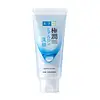
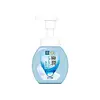
This mild foaming cleanser is mild enough to cleanse without leaving skin feeling tight or stripped.

What's inside
What's inside
 Key Ingredients
Benefits
Concerns
Ingredients Side-by-side
Glycerin
Humectant


Potassium Cocoyl Glycinate
Surfactant
Water
Skin ConditioningPropanediol
Solvent
Citric Acid
Buffering


Potassium Chloride
Glycol Distearate
Emollient
Coconut Acid
Cleansing
Caprylic/Capric Glycerides Polyglyceryl-10 Esters
EmollientPotassium Cocoate
Emulsifying

Phytosteryl/Octyldodecyl Lauroyl Glutamate
Skin ConditioningChlorphenesin
Antimicrobial
Sodium Acetylated Hyaluronate
Humectant

Phytic Acid
Chelating
Sodium PCA
Humectant
Sodium Lactate
Buffering
Arginine
Masking
Aspartic Acid
Masking
PCA
Humectant
1,2-Hexanediol
Skin Conditioning
Phenoxyethanol
Preservative
Moringa Oleifera Seed Extract
Skin Conditioning
Glycine
Buffering
Biosaccharide Gum-4
Skin Conditioning
Alanine
Masking
Hydroxypropyltrimonium Hyaluronate
Serine
Masking
Disodium Phosphate
BufferingValine
MaskingThreonine
Proline
Skin Conditioning
Isoleucine
Skin ConditioningPhenylalanine
Masking
Histidine
Humectant
Methylparaben
Preservative

Glycerin, Potassium Cocoyl Glycinate, Water, Propanediol, Citric Acid, Potassium Chloride, Glycol Distearate, Coconut Acid, Caprylic/Capric Glycerides Polyglyceryl-10 Esters, Potassium Cocoate, Phytosteryl/Octyldodecyl Lauroyl Glutamate, Chlorphenesin, Sodium Acetylated Hyaluronate, Phytic Acid, Sodium PCA, Sodium Lactate, Arginine, Aspartic Acid, PCA, 1,2-Hexanediol, Phenoxyethanol, Moringa Oleifera Seed Extract, Glycine, Biosaccharide Gum-4, Alanine, Hydroxypropyltrimonium Hyaluronate, Serine, Disodium Phosphate, Valine, Threonine, Proline, Isoleucine, Phenylalanine, Histidine, Methylparaben
Water
Skin ConditioningPEG-8
HumectantButylene Glycol
Humectant
Polyglyceryl-10 Laurate
Skin Conditioning
Tea-Cocoyl Alaninate
Cleansing
Sodium Cocoamphoacetate
CleansingGlycerin
Humectant
Disodium Cocoyl Glutamate
Cleansing
Hydroxypropyltrimonium Hyaluronate
Methylparaben
Preservative
Sodium Acetylated Hyaluronate
Humectant
Sodium Cocoyl Glutamate
Cleansing
Starch Hydroxypropyltrimonium Chloride
Emulsion StabilisingSuccinic Acid
BufferingWater, PEG-8, Butylene Glycol, Polyglyceryl-10 Laurate, Tea-Cocoyl Alaninate, Sodium Cocoamphoacetate, Glycerin, Disodium Cocoyl Glutamate, Hydroxypropyltrimonium Hyaluronate, Methylparaben, Sodium Acetylated Hyaluronate, Sodium Cocoyl Glutamate, Starch Hydroxypropyltrimonium Chloride, Succinic Acid
Reviews
Ingredients Explained
These ingredients are found in both products.
Ingredients higher up in an ingredient list are typically present in a larger amount.
Glycerin (or glycerol) is a compound naturally found in your skin. It's a powerhouse humectant that pulls water into the stratum corneum.
Topically, glycerin does several things at once:
Your skin makes glycerin on its own (mostly from sebaceous oil breakdown) and shuttles it to your outermost layer of skin, or your epidermis, via aquaporin-3.
Aquaporin-3 is a transporter that is essential for normal skin hydration, elasticity, and repair. Interestingly, mice lacking in AQP3 have dry and less elastic skin that can be fully corrected with glycerin.
This ingredient is non-irritating, plays well with almost every ingredient, and works across all skin types. Typical use is anywhere between 3-10% but can go up to 79% in some leave-on products.
Just know very high concentrations (>40%) can feel tacky in low humidity.
Glycerin is the name for this ingredient in American English. British English uses Glycerol/Glycerine.
Learn more about GlycerinHydroxypropyltrimonium Hyaluronate is a positively charged version of hyaluronic acid.
This small change does a lot in a formula:
Regular hyaluronic acid carries a negative charge and so does the surface of your skin. This means the two repel each other and hyaluronic acid can be washed away easily. The positive charge here does the opposite: it makes the ingredient cling to your skin (also called "substantivity") so it keeps hydrating even in rinse-off products where it lays down a light, moisture-holding film.
The research backs this up too; a 2025 clinical study on a shower gel containing 0.1% positively charged hyaluronic acid increased skin hydration by 6.6% versus the baseline and 11.1% versus the placebo. This was measured 6 hours after 1 minute of contact and rinse, and on volunteers with very dry skin.
The same team's lab work showed it adhered to skin far better than unmodified hyaluronic acid (+107% vs. low molecular weight, +23% versus high molecular weight). They also found it increased two proteins tied to skin hydration, aquaporin-3 by 16% and filaggrin by 35%.
A separate 2024 study reached a similar conclusion and credited the hydrating benefits to its film-forming properties.
Both studies used the ingredient at 0.1% which also matches how much it usually shows up in products (at fractions of a percent).
One honesty note worth keeping in mind: the published research comes from the company that manufactures the ingredient so independent data would strengthen the picture. However, the results are consistent and the mechanism makes sense.
As a Hyaluronic Acid derivative, it has a well-tolerated profile and suits most skin types.
Learn more about Hydroxypropyltrimonium HyaluronateMethylparaben is a synthetic preservative and one of the most widely used in the world. It has a simple, but important job: prevent your products from going bad by stopping bacteria, yeast, and mold from growing.
Typical use levels are low, often 0.1-0.3%.
This is also one of the most heavily studied preservatives out there and major regulatory bodies have repeatedly given it the green light.
In 2023, the EU's Scientific Committee on Consumer Safety (SCCS) confirmed that this ingredient is safe up to 0.4% on its own, of up to 0.8% when mixed with other paraben esters.
Here's the science behind the noise behind parabens/hormones as well:
Methylparaben shows very weak estrogen-like activity in vitro tests (more than 1,000x weaker than your body's own estradiol). In vivo (live-organism) studies don't support a meaningful endocrine-disrupting effect either.
You get a stronger estrogenic effect from eating tofu, actually.
It's also a low sensitizer and allergic reactions are uncommon; they usually happen on damage or broken skin.
There is a caveat: France has proposed to formally re-examine its endocrine classification in 2025 so the regulatory conversation isn't fully closed as of yet.
But as it stands today, this ingredient is considered safe at permitted levels.
Learn more about MethylparabenSodium Acetylated Hyaluronate is a type of Hyaluronic Acid.
Hyaluronic Acids help moisturize, soothe, and protect the skin.
Read about common types of Hyaluronic Acid here:
Learn more about Sodium Acetylated HyaluronateWater. It's the most common cosmetic ingredient of all. You'll usually see it at the top of ingredient lists, meaning that it makes up the largest part of the product.
So why is it so popular? Water most often acts as a solvent - this means that it helps dissolve other ingredients into the formulation.
You'll also recognize water as that liquid we all need to stay alive. If you see this, drink a glass of water. Remember to stay hydrated!
Learn more about Water

