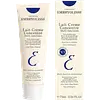
This barrier-repair moisturizer is formulated around Butyrospermum Parkii Butter to strengthen the skin barrier and hydrate skin.
This barrier-repair moisturizer is formulated around Butyrospermum Parkii Butter and Hydrolyzed Soy Protein to strengthen the skin barrier and hydrate skin.

What's inside
What's inside
 Benefits
Concerns
Ingredients Side-by-side
Water
Skin ConditioningParaffinum Liquidum
Emollient


Stearic Acid
Cleansing


Palmitic Acid
Emollient

Glyceryl Stearate Se
Emulsifying
Triethanolamine
BufferingCera Alba
Emollient
Cetyl Palmitate
Emollient
Butyrospermum Parkii Butter
Skin Conditioning
1,2-Hexanediol
Skin Conditioning
Caprylyl Glycol
Emollient
Steareth-10
Emulsifying
Polyacrylamide
C13-14 Isoparaffin
Emollient
Parfum
Masking

Laureth-7
EmulsifyingPropylene Glycol
Humectant
Tropolone
Skin ConditioningHydrolyzed Soy Protein
Humectant
Aloe Barbadensis Leaf Extract
Emollient

Water, Paraffinum Liquidum, Stearic Acid, Palmitic Acid, Glyceryl Stearate Se, Triethanolamine, Cera Alba, Cetyl Palmitate, Butyrospermum Parkii Butter, 1,2-Hexanediol, Caprylyl Glycol, Steareth-10, Polyacrylamide, C13-14 Isoparaffin, Parfum, Laureth-7, Propylene Glycol, Tropolone, Hydrolyzed Soy Protein, Aloe Barbadensis Leaf Extract
Water
Skin ConditioningParaffinum Liquidum
Emollient
Stearic Acid
Cleansing
Glyceryl Stearate
Emollient
Triethanolamine
BufferingCera Alba
Emollient
Cetyl Palmitate
Emollient
Butyrospermum Parkii Butter
Skin Conditioning
Steareth-10
Emulsifying
Polyacrylamide
C13-14 Isoparaffin
Emollient
Laureth-7
EmulsifyingPropylene Glycol
Humectant
Hydrolyzed Soy Protein
Humectant
Aloe Barbadensis Leaf Extract
Emollient
1,2-Hexanediol
Skin Conditioning
Caprylyl Glycol
Emollient
Tropolone
Skin ConditioningParfum
Masking
Water, Paraffinum Liquidum, Stearic Acid, Glyceryl Stearate, Triethanolamine, Cera Alba, Cetyl Palmitate, Butyrospermum Parkii Butter, Steareth-10, Polyacrylamide, C13-14 Isoparaffin, Laureth-7, Propylene Glycol, Hydrolyzed Soy Protein, Aloe Barbadensis Leaf Extract, 1,2-Hexanediol, Caprylyl Glycol, Tropolone, Parfum
Reviews
Ingredients Explained
These ingredients are found in both products.
Ingredients higher up in an ingredient list are typically present in a larger amount.
1,2-Hexanediol is a synthetic liquid and another multi-functional powerhouse.
It is a:
- Humectant, drawing moisture into the skin
- Emollient, helping to soften skin
- Solvent, dispersing and stabilizing formulas
- Preservative booster, enhancing the antimicrobial activity of other preservatives
Aloe Barbadensis Leaf Extract is a botanical extract pulled from the leaves of aloe vera and one of the most studied plant ingredients in cosmetics.
The inner leaf gel it comes from is mostly water (~99-99.5%) and the remaining fraction is made up of pretty good stuff: polysaccharides, vitamins, phenolics, and enzymes.
Its headline job is hydration.
The star polysaccharide in aloe, acemannan, is a humectant that retains moisture and helps reduce trans-epidermal water loss.
Aloe also has real soothing credentials; it contains anti-inflammatory compounds like bradykinase and C-glucosyl chromone that help calm irritation and redness.
On the repair side, lab work shows that acemannan wakes up your skin's repair cells (fibroblasts), prompting them to multiply and speed up healing.
There's some human data for cosmetic benefit too: a cream containing 10% Aloe Barbadensis leaf extract improved skin hydration and elasticity in a real-use study.
Safety-wise, this ingredient is well-regarded with just one rare downside; there have been some case reports of acute eczema, contact urticaria, and dermatitis in people who applied aloe-derived ingredients topically. Those with a known aloe or Liliaceae sensitivity should patch test.
Typical use levels range widely, from under 1% up to 90%+ depending on the format and the effect you are after.
Learn more about Aloe Barbadensis Leaf ExtractThis ingredient is also known as shea butter. It is a plant-derived extract from the nuts of the Africa shea tree and one of the most well-studied emollients.
Because it has a high concentration of fatty acids (primarily oleic, stearic, and linoleic) it is able to form a protective barrier on the skin's surface. This helps seal in moisture and prevents transepidermal water loss (TEWL).
In vitro research found an increase in skin hydration by 58% and a decrease in TEWL by 37.8% after 24 hours of applying this ingredient (pretty impressive for a single ingredient!).
Besides hydration, shea butter also contains triterpenes that have anti-inflammatory potential. In particule, lupeol cinnamate has shown the highest anti-inflammatory activity in vivo.
Shea butter also contains vitamins A and E which may contribute to antioxidant activity.
While Shea Butter has an SPF rating of about 3-4, it is not a sunscreen replacement.
This ingredient may not be fungal acne safe because its fatty acids fall within the C11-C24 range that the Malassezia yeast can metabolize.
This ingredient shows up on a lot of "pore-clogging" lists but there's no real evidence behind that. It doesn't even have a comedogenic rating from an actual study; the numbers you'll find online come from blogs citing other blogs.
Ratings for other ingredients mostly come from a 1980s rabbit ear test. This test doesn't translate well to human skin or to real products because the ingredient sits at a much lower percentage.
Some people still find it breaks them out. So if that's you, definitely trust your skin. Just know this one's based on experience and not evidence.
Learn more about Butyrospermum Parkii ButterC13-14 Isoparaffin is a synthetic emollient, solvent, and thickening agent. It helps soften skin and improves spreadability without leaving a greasy residue.
This ingredient has been found to be non-sensitizing and safe for use in cosmetics.
Two things floating around online that cause fear-mongering:
There's one scary-sounding study related to kidney tumors in male rats; this depends on a protein called alpha-2u-globulin that binds the ingredient and clogs up kidney cells. Female rats barely make this protein, and humans don't make it at all so this effect cannot happen to us. Regulatory bodies have states this rat-only pathway shouldn't be used to judge human risk.
The other thing you'll see is 1,4-dioxane being a trace byproduct that can form during manufacturing of petroleum-derived ingredients. This is a real, but heavily managed/monitored issue. This byproduct is removed through purification steps before the ingredients goes into the formula. Regulatory bodies also actively monitor residual levels for safety.
One last thing to note: this ingredient is a pure hydrocarbon with no fatty-acid or ester chains for Malassezia to feed on, so it's considered fungal acne safe.
Learn more about C13-14 IsoparaffinCaprylyl Glycol is a humectant, skin conditioner, emollient, and preservative booster derived from either caprylic acid or synthetically created.
Typical use levels vary from 0.3-1% as a preservative booster and go up to 2% to condition skin.
Because it is not a free-fatty acid, this ingredient is fungal acne safe (there's nothing for Malassezia to feed on).
Learn more about Caprylyl GlycolThis is another name for beeswax; it's a natural wax produced by honey bees to build their honeycomb.
Because it forms a protective layer on your skin, it can help lock in moisture and reduce water loss. It is also widely used as a thickener and emulsifier in lip balms and lotions. Research suggests beeswax containing moisturizers can support skin barrier integrity.
In comedogenic testing, Beeswax scored a 0-2, which is on the low end. Whether or not a product clogs your pores really comes down to the formula as a whole (not any single ingredient on its own) and your skin.
Beeswax is not vegan since it is animal-derived. It cannot be removed with water, but can be taken off with an oil cleanser.
People with a known Propolis allergy also report to have reactions from beeswax.
Beeswax's wax esters are derived primarily from palmitic and oleic acid (C16 and C18:1). Both of these fall within the C11-C24 feeding window.
The Malassezia yeast can potentially cleave these esters and release usable fatty acids, so this ingredient may not be fungal acne safe. However, not everyone will react to this ingredient.
Learn more about Cera AlbaCetyl Palmitate is a wax-ester that pulls triple duty as an emollient, thickener, and emulsion enhancer.
It helps enhance the texture of products by giving a smooth, silky feel while helping to stabilize the formula. The emollient action softens skin and reduces moisture loss.
This ingredient is considered safe and human testing of concentrations between 2.5-2.7% were found minimal irritation. Just know, there have been very rare cases of the palmitate family causing contact dermatitis.
This ingredient may not be fungal acne safe because it contains a C16 ester (palmitic acid) that falls into the C11-24 range that Malassezia can feed on.
Learn more about Cetyl PalmitateHydrolyzed Soy Protein is a water-soluble blend of peptides and amino acids made by breaking down the protein from soybeans into smaller proteins.
It's the most widely used hydrolyzed vegetable protein in cosmetics and it acts mainly as a skin and hair conditioning agent.
The smaller fragments are water-loving so it forms a thin, moisture-retentive film on skin that helps reduce water loss and leaves things feeling softer and smoother.
You'll often see it credited with "firming" or "anti-aging" benefits as well; this claim traces back to lab research like Tokudome et al. (2012). This study added low-molecular-weight soybean peptides to cultured human skin fibroblasts and saw increased type I collagen gene expression + collagen content.
The caveat is that this is in-vitro and oral-peptide research so the only solid, well-established role for the topical ingredient is skin conditioning.
Typical use concentrations go up to 3.5% in mascara but this ingredient is typically used at low levels well under 1%.
It has a reassuring safety profile as well; it's not a skin irritant in testing up to 20% and has limited skin penetration due to its large size and water-loving nature.
Anyone with a known soy allergy should definitely patch test or skip this ingredient. There's also a single case of a soy-containing product aggravating rosacea via protein contact dermatitis, but this is very rare.
Learn more about Hydrolyzed Soy ProteinLaureth-7 is created by the ethoxylation of lauryl alcohol using ethylene oxide. Lauryl alcohol is a fatty alcohol with hydrating properties.
This ingredient is an emulsifier and cleansing ingredient. As an emulsifier, it is used to prevent ingredients from separating. It also helps cleanse the skin by gathering dirt, oil, and pollutants to be rinsed away.
Paraffinum Liquidum is a highly-refined cosmetic-grade mineral oil. It is also known as liquid paraffin.
Despite its controversial reputation, the science is pretty clear: it's one of the most well-studied and effective moisturizing ingredients out there.
As an occlusive, it forms a protective layer on the skin that locks in moisture and prevents transepidermal water loss (TEWL). This makes it especially great for compromised skin barriers.
The "it clogs your pores" myth has been around for decades; a study found that industrial-grade mineral oil may be comedogenic but cosmetic-grade mineral oil is not (these two are very, very different).
A 2017 review concluded that cosmetic use of mineral oils and waxes does not present a risk to consumers due to absorption.
Mineral oil got a bad rap from the old rabbit ear studies. When tested on actual human skin, cosmetic-grade mineral oil showed no comedogenic activity. The rating of 0 is a correction of outdated science.
Mineral oil is an inert substance with no fatty acids so there's nothing to feed Malassezia. This ingredient is fungal acne safe.
Learn more about Paraffinum LiquidumParfum is a catch-all term for an ingredient or more that is used to give a scent to products.
Also called "fragrance", this ingredient can be a blend of hundreds of chemicals or plant oils. This means every product with "fragrance" or "parfum" in the ingredients list is a different mixture.
For instance, Habanolide is a proprietary trade name for a specific aroma chemical. When used as a fragrance ingredient in cosmetics, most aroma chemicals fall under the broad labeling category of “FRAGRANCE” or “PARFUM” according to EU and US regulations.
The term 'parfum' or 'fragrance' is not regulated in many countries. In many cases, it is up to the brand to define this term.
For instance, many brands choose to label themselves as "fragrance-free" because they are not using synthetic fragrances. However, their products may still contain ingredients such as essential oils that are considered a fragrance by INCI standards.
One example is Calendula flower extract. Calendula is an essential oil that still imparts a scent or 'fragrance'.
Depending on the blend, the ingredients in the mixture can cause allergies and sensitivities on the skin. Some ingredients that are known EU allergens include linalool and citronellol.
Parfum can also be used to mask or cover an unpleasant scent.
The bottom line is: not all fragrances/parfum/ingredients are created equally. If you are worried about fragrances, we recommend taking a closer look at an ingredient. And of course, we always recommend speaking with a professional.
Learn more about ParfumPolyacrylamide is a synthetic polymer. It is used to stabilize products and bind ingredients. When hydrated, Polyacrylamide forms a soft gel.
Polyacrylamide is low-toxicity. If source properly, it is deemed safe to use in cosmetics.
It should be noted the precursor to Polyacrylamide is acrylamide. Acrylamide is a carcinogen. Most reputable sources of Polyacrylamide will screen for residual acrylamide to make sure the count is in a safe range. Acrylamide is not able to be absorbed through the skin.
We recommend speaking with a professional if you have concerns.
Learn more about PolyacrylamidePropylene Glycol is a synthetic, colorless, odorless liquid that has been a staple in cosmetics for decades. It is a skin conditioning agent, humectant, and solvent.
As a humectant, it draw water to the skin to reduce flaking and restore suppleness. It's also a solvent that helps dissolve other actives and keeps formulas stable across temperature changes.
The CIR Expert Panel has confirmed this ingredient to be nontoxic and clinical studies show no sensitization at cosmetic use concentrations.
True allergic reactions are quite rare: a 15-year retrospective study of 6,751 patients found only 0.31% had a positive reaction (and less than half were considered clinically relevant).
It seemed that when sensitization does occur, it's most commonly linked to topical medication (like corticosteroids) and not cosmetics. Allergic contact dermatitis also appears largely limited to individuals with underlying skin conditions.
Overall, propylene glycol is a well-studied ingredient that most people can tolerate without issue.
Learn more about Propylene GlycolSteareth-10 is an ether of stearyl alcohol. It is a waxy compound used to emulsify ingredients.
This ingredient may not be acne safe.
Stearic Acid is a fatty acid that is already found in your skin. It's one of the free fatty acids that works alongside ceramides and cholesterols to maintain your barrier.
In cosmetics, it is a multitasker:
Safety-wise, the CIR Expert Panel has concluded it to be safe in cosmetics when formulated to be non-irritating and non-sensitizing.
Free stearic acid is a C18 fatty acid that the Malassezia yeast can substrate, so this ingredient may not be fungal acne safe.
Learn more about Stearic AcidTriethanolamine (TEA) is an emulsifier and pH adjuster. It is created using ethylene oxide and ammonia. This gives Triethanolamine a nitrogen core and a similar scent to ammonia.
As an emulsifier, it prevents ingredients from separating and enhances texture by adding volume to a product.
PH adjusters are common in cosmetic products. The pH of a product can affect the effectiveness of other ingredients. A product with a high pH may also irritate the skin.
If you are looking for the tea leaf ingredient, click here.
Learn more about TriethanolamineWe don't have a description for Tropolone yet.
Water. It's the most common cosmetic ingredient of all. You'll usually see it at the top of ingredient lists, meaning that it makes up the largest part of the product.
So why is it so popular? Water most often acts as a solvent - this means that it helps dissolve other ingredients into the formulation.
You'll also recognize water as that liquid we all need to stay alive. If you see this, drink a glass of water. Remember to stay hydrated!
Learn more about Water

