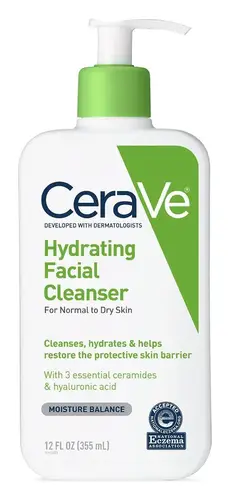
This barrier-repair moisturizer is formulated around Petrolatum and Panthenol to strengthen the skin barrier and hydrate skin.

What's inside
What's inside
 Key Ingredients
No key ingredients
Benefits
No benefits
Concerns
Ingredients Side-by-side
Water
Skin ConditioningGlycerin
Humectant


Petrolatum
Emollient


Dicaprylyl Ether
Emollient
Dimethicone
Emollient
Glyceryl Stearate
Emollient

Cetyl Alcohol
Emollient

Helianthus Annuus Seed Oil
Emollient
PEG-30 Stearate
Emulsifying
Panthenol
Skin Conditioning

Niacinamide
Smoothing







Prunus Amygdalus Dulcis Oil
Skin Conditioning

Tocopheryl Acetate
Antioxidant

Pantolactone
Humectant
Dimethiconol
Emollient
Acrylates/C10-30 Alkyl Acrylate Crosspolymer
Emulsion StabilisingCarbomer
Emulsion StabilisingPropylene Glycol
Humectant
Disodium EDTA
ChelatingBenzyl Alcohol
Perfuming




Phenoxyethanol
Preservative
Sodium Hydroxide
BufferingCitric Acid
Buffering
Water, Glycerin, Petrolatum, Dicaprylyl Ether, Dimethicone, Glyceryl Stearate, Cetyl Alcohol, Helianthus Annuus Seed Oil, PEG-30 Stearate, Panthenol, Niacinamide, Prunus Amygdalus Dulcis Oil, Tocopheryl Acetate, Pantolactone, Dimethiconol, Acrylates/C10-30 Alkyl Acrylate Crosspolymer, Carbomer, Propylene Glycol, Disodium EDTA, Benzyl Alcohol, Phenoxyethanol, Sodium Hydroxide, Citric Acid
Reviews
Ingredients Explained
These ingredients are found in both products.
Ingredients higher up in an ingredient list are typically present in a larger amount.
Benzyl Alcohol is an aromatic alcohol with several roles: it's a preservative, solvent, and mild fragrance component with a floral scent.
This ingredient has been deemed safe for use in cosmetic formulations at concentrations up to 5%, and up to 10% in hair dyes. You'll typically see 0.5-2% in most rinse-off or leave-on products.
As a preservative, it works by disrupting the membrane of microbial proteins. This helps keep bacteria and fungi from growing in your products.
The sensitization picture is actually quite assuring as well:of nearly 71,000 patients patch tested with benzyl alcohol, only 0.21% showed a positive reaction with most of them being weakly positive.
This led researchers to conclude that benzyl alcohol cannot be regarded as a significant contact allergen.
It is worth noting this ingredient is classified as one of the EU's regulated fragrance allergens and restricted to 1% in finished products.
Labels must also declare it in concentrations above 0.001% in leave-on products and 0.01% in rinse-off products.
At concentrations around 5%, localized redness and itching can appear as a direct irritant response and not as a true allergic reaction.
Learn more about Benzyl Alcohol