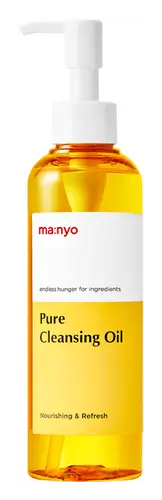
Bioderma Atoderm Soothing Lipid-Replenishing Cleansing Oil Versus Biore Makeup Remover Perfect Cleansing Oil


What's inside
What's inside
 Key Ingredients
Benefits
No benefits
Concerns
Ingredients Side-by-side
Water
Skin ConditioningGlycerin
Humectant


Sodium Cocoamphoacetate
CleansingPEG-7 Glyceryl Cocoate
Emulsifying


Lauryl Glucoside
CleansingCitric Acid
Buffering


Coco-Glucoside
Cleansing
Glyceryl Oleate
Emollient
Parfum
Masking

Laureth-2
CleansingMannitol
Humectant
Polysorbate 20
Emulsifying
Xylitol
Humectant
Rhamnose
HumectantNiacinamide
Smoothing








Fructooligosaccharides
Humectant
Tocopherol
Antioxidant

Hydrogenated Palm Glycerides Citrate
Emollient
Paraffinum Liquidum
Emollient

PEG-12
HumectantLauric Acid
Cleansing
Isododecane
EmollientIsopropyl Palmitate
Emollient
Water
Skin ConditioningPolyglyceryl-2 Isostearate
Emulsifying
Decyl Glucoside
Cleansing
Polysorbate 85
Emulsifying
Glyceryl Oleate
Emollient
Isostearic Acid
Cleansing
Isostearyl Glyceryl Ether
Skin ConditioningMyristyl Alcohol
Emollient
Isostearyl Glyceryl Pentaerythrityl Ether
EmollientAlcohol Denat.
Antimicrobial

Citric Acid
Buffering
BHT
Antioxidant
Parfum
Masking
Paraffinum Liquidum, PEG-12, Lauric Acid, Isododecane, Isopropyl Palmitate, Water, Polyglyceryl-2 Isostearate, Decyl Glucoside, Polysorbate 85, Glyceryl Oleate, Isostearic Acid, Isostearyl Glyceryl Ether, Myristyl Alcohol, Isostearyl Glyceryl Pentaerythrityl Ether, Alcohol Denat., Citric Acid, BHT, Parfum
Reviews
Alternatives
Ingredients Explained
These ingredients are found in both products.
Ingredients higher up in an ingredient list are typically present in a larger amount.
Citric Acid is an alpha hydroxy acid (AHA) naturally found in citrus fruits like oranges, lemons, and limes.
Like other AHAs, citric acid can exfoliate skin by breaking down the bonds that hold dead skin cells together. This helps reveal smoother and brighter skin underneath.
However, this exfoliating effect only happens at high concentrations (20%) which can be hard to find in cosmetic products.
Due to this, citric acid is usually included in small amounts as a pH adjuster. This helps keep products slightly more acidic and compatible with skin's natural pH.
In skincare formulas, citric acid can:
While it can provide some skin benefits, research shows lactic acid and glycolic acid are generally more effective and less irritating exfoliants.
Most citric acid used in skincare today is made by fermenting sugars (usually from molasses). This synthetic version is identical to the natural citrus form but easier to stabilize and use in formulations.
Read more about some other popular AHA's here:
Learn more about Citric AcidGlyceryl Oleate is the monoester of glycerin and oleic acid. It is a skin-conditioning emollient that also helps form emulsions.
What makes glyceryl oleate special is its "re-fatting" effect.
When you wash your hair and skin with a surfactant-based cleanser, the surfactants grab onto everything. This includes your skin's natural lipids, or the fats that live in your skin barrier and sebum. Once you rinse these surfactants away, it leaves your skin feeling tight, dry, and clean (in a not-good way).
Re-fatting is essentially putting some of these lipids back. Glyceryl oleate deposits a thin layer of emollient lipids back on the skin or hair surface reduce some of the barrier damage.
Also, glyceryl oleate isn't a foreign molecule to your skin. It's chemically identical to something your skin already produces and manages naturally. This is why it tends to be well-tolerated with low risk of irritation.
Typical use levels range from 0.5-5%.
Glyceryl Oleate has a function of "perfuming" in the CosIng database. This just means that the ingredient has some scent character that can contribute to the product's overall smell.
The scent of this ingredient is described as "waxy".
As an ester of oleic acid, this ingredient may not be fungal acne safe. This is because oleic acid falls into the carbon-chain length that Malassezia can use as a substrate.
Learn more about Glyceryl OleateParfum is a catch-all term for an ingredient or more that is used to give a scent to products.
Also called "fragrance", this ingredient can be a blend of hundreds of chemicals or plant oils. This means every product with "fragrance" or "parfum" in the ingredients list is a different mixture.
For instance, Habanolide is a proprietary trade name for a specific aroma chemical. When used as a fragrance ingredient in cosmetics, most aroma chemicals fall under the broad labeling category of “FRAGRANCE” or “PARFUM” according to EU and US regulations.
The term 'parfum' or 'fragrance' is not regulated in many countries. In many cases, it is up to the brand to define this term.
For instance, many brands choose to label themselves as "fragrance-free" because they are not using synthetic fragrances. However, their products may still contain ingredients such as essential oils that are considered a fragrance by INCI standards.
One example is Calendula flower extract. Calendula is an essential oil that still imparts a scent or 'fragrance'.
Depending on the blend, the ingredients in the mixture can cause allergies and sensitivities on the skin. Some ingredients that are known EU allergens include linalool and citronellol.
Parfum can also be used to mask or cover an unpleasant scent.
The bottom line is: not all fragrances/parfum/ingredients are created equally. If you are worried about fragrances, we recommend taking a closer look at an ingredient. And of course, we always recommend speaking with a professional.
Learn more about ParfumWater. It's the most common cosmetic ingredient of all. You'll usually see it at the top of ingredient lists, meaning that it makes up the largest part of the product.
So why is it so popular? Water most often acts as a solvent - this means that it helps dissolve other ingredients into the formulation.
You'll also recognize water as that liquid we all need to stay alive. If you see this, drink a glass of water. Remember to stay hydrated!
Learn more about Water