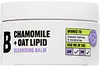
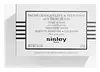
Beauty Bay Chamomile + Oat Lipid Cleansing Balm Versus Sisley Paris Triple-Oil Balm Make-Up Remover And Cleanser
This oil-based makeup remover is made to dissolve makeup, sunscreen, and daily buildup.
This oil-based makeup remover is made to dissolve makeup, sunscreen, and daily buildup.


What's inside
What's inside
 Key Ingredients
Benefits
Concerns
Ingredients Side-by-side
Prunus Amygdalus Dulcis Oil
Skin Conditioning





Orbignya Oleifera Seed Oil
Emollient
PEG-20 Glyceryl Triisostearate
Emollient
Helianthus Annuus Seed Wax
Skin Conditioning
Avena Sativa Kernel Oil
Skin Conditioning





Prunus Amygdalus Dulcis Oil, Orbignya Oleifera Seed Oil, PEG-20 Glyceryl Triisostearate, Helianthus Annuus Seed Wax, Avena Sativa Kernel Oil, Phenoxyethanol, Propylene Glycol, Eucalyptus Globulus Leaf Oil, Tocopherol, Panthenol, Limonene, Citric Acid, Bisabolol, Chamomilla Recutita Flower Extract, Water
Butyrospermum Parkii Butter
Skin Conditioning
Hydrogenated Polyisobutene
EmollientOrbignya Oleifera Seed Oil
Emollient
PEG-20 Glyceryl Triisostearate
Emollient
Hydrogenated Vegetable Oil
Emollient
Cetyl Alcohol
Emollient

Macadamia Integrifolia Seed Oil
Skin Conditioning
Mangifera Indica Seed Butter
Skin Conditioning
Helianthus Annuus Seed Wax
Skin Conditioning
Bisabolol
Antioxidant

Parfum
Masking


Glycine Soja Oil
Emollient
Dehydroacetic Acid
Preservative
Tocopherol
Antioxidant


Ascorbyl Palmitate
Antioxidant
Butyrospermum Parkii Butter, Hydrogenated Polyisobutene, Orbignya Oleifera Seed Oil, PEG-20 Glyceryl Triisostearate, Hydrogenated Vegetable Oil, Cetyl Alcohol, Macadamia Integrifolia Seed Oil, Mangifera Indica Seed Butter, Helianthus Annuus Seed Wax, Bisabolol, Parfum, Glycine Soja Oil, Dehydroacetic Acid, Tocopherol, Ascorbyl Palmitate
Ingredients Explained
These ingredients are found in both products.
Ingredients higher up in an ingredient list are typically present in a larger amount.
Bisabolol is a gentle skin conditioner, antioxidant, and soothing ingredient.
It's primary claim to fame is soothing and research shows topically applied bisabolol can quiet the chemical messengers that cause your skin to become inflamed, helping to sooth any irritation.
A clinical study found that applying 0.5% bisabolol daily for 8 weeks produced an average 9% decrease in skin pigmentation. Researchers found it can also suppress the process that leads to excess melanin production in skin.
In vitro studies found that bisabolol combined with propylene glycol significantly increased skin permeability by increasing lipid fluidity in the stratum corneum.
You'll likely see use concentrations quite low, usually 0.1-0.2%.
Overall, this is a well-tolerated ingredient that works well in formulas designed for sensitive, reactive, or post-procedure skin.
Learn more about BisabololHelianthus Annuus Seed Wax is created from the common sunflower.
Sunflower seed wax is made up of long chain non-glyceride esters, a small amount of fatty alcohols, and fatty acids.
This ingredient is often used to enhance the texture of products. The fatty acid properties also help hydrate the skin.
Learn more about Helianthus Annuus Seed WaxOrbignya Oleifera Seed Oil is from the seed of the Babassu palm plant. This plant is native to Brazil.
Orbignya Oleifera Seed Oil contains many fatty acids with the most being lauric acid.
Like other plant oils, Orbignya Oleifera Seed Oil is hydrating and can help soften skin.
It is also an antioxidant. Antioxidants help fight off damage from free-radical molecules.
One study found this oil might contain anti-inflammatory properties, but more research is needed.
Learn more about Orbignya Oleifera Seed OilPEG-20 Glyceryl Triisostearate is a synthetic, oil-loving helper ingredient that does two jobs:
This ingredient is made by joining three building blocks: PEG, Isostearic Acid and glycerin. The PEG gives it the oil-and-water blending power.
This ingredient has been found safe for use in cosmetics and broader PEG family testing shows minimal irritation/sensitization. The molecule's large size also means it isn't expected to penetrate skin to any meaningful degree.
Fungal acne note: This ingredient may not be fungal acne safe due to isostearic acid (C18). Isostearic acid falls into the C11-24 range that Malassezia can feed on.
Learn more about PEG-20 Glyceryl TriisostearateTocopherol is a fat-soluble antioxidant known as Vitamin E.
You'll find this ingredient in the vast majority of skincare (for good reason). It works to neutralize free radicals, or unstable molecules generated by UV exposure, pollution, and other environmental stressors, before they can cause oxidative damage to your skin cells.
Topically applied tocopherol has been shown to protect against UV damage by ramping up the skin's own natural defense enzymes.
It also acts as a skin conditioning agent; some studies show that regular topical use can improve the skin's water-binding capacity over 2-4 weeks.
This ingredient is especially loved for being a team player. When combined with Vitamin C, the photoprotective effect of both ingredients roughly doubles and the combo also helps reduce UV-induced DNA damage.
This ingredient has some brightening potential but it's more of a prevention ingredient than spot-fader. Cell studies show it can slow down melanin production but it's worth noting that it's not the most powerful brightener out there.
In formulations, it also serves as a stabilizer that helps protect other oxidation-prone ingredients from degrading.
Concentrations usually range from 0.1-1% in most leave-on products.
Learn more about Tocopherol

