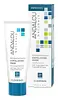
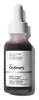
Andalou Naturals Clear Skin Kombucha Enzyme Exfoliating Mask Versus The Ordinary AHA 30% + BHA 2% Peeling Solution
This smoothing exfoliator is formulated around Glycolic Acid and Salicylic Acid to refine skin texture and brighten dull-looking skin.


What's inside
What's inside
 Key Ingredients
Benefits
Concerns
Ingredients Side-by-side
Aloe Barbadensis Leaf Juice
Skin Conditioning


Water
Skin ConditioningCitrus Paradisi Juice
Perfuming
Glycerin
Humectant

Papain
Skin Conditioning
Bromelain
Skin Conditioning
Maltodextrin
Absorbent
Saccharomyces/Xylinum/Black Tea Ferment
Skin Conditioning

Xanthan Gum
EmulsifyingSorbitan Oleate Decylglucoside Crosspolymer
CleansingArginine
Masking
Magnesium Ascorbyl Phosphate
Antioxidant




Malus Domestica Fruit Cell Culture Extract
Skin ConditioningNiacin
SmoothingSodium Hyaluronate
Humectant
Riboflavin
Cosmetic ColorantSalix Alba Extract
Skin ConditioningHibiscus Sabdariffa Flower Extract
Skin ConditioningAspalathus Linearis Extract
Skin ConditioningPhenethyl Alcohol
MaskingEthylhexylglycerin
Skin ConditioningCitrus Aurantium Dulcis Peel Oil
Masking

Cymbopogon Martini Oil
Masking
Aloe Barbadensis Leaf Juice, Water, Citrus Paradisi Juice, Glycerin, Papain, Bromelain, Maltodextrin, Saccharomyces/Xylinum/Black Tea Ferment, Xanthan Gum, Sorbitan Oleate Decylglucoside Crosspolymer, Arginine, Magnesium Ascorbyl Phosphate, Malus Domestica Fruit Cell Culture Extract, Niacin, Sodium Hyaluronate, Riboflavin, Salix Alba Extract, Hibiscus Sabdariffa Flower Extract, Aspalathus Linearis Extract, Phenethyl Alcohol, Ethylhexylglycerin, Citrus Aurantium Dulcis Peel Oil, Cymbopogon Martini Oil
Glycolic Acid
Buffering





Water
Skin ConditioningAloe Barbadensis Leaf Water
MaskingSodium Hydroxide
BufferingDaucus Carota Sativa Extract
Perfuming
Propanediol
Solvent
Cocamidopropyl Dimethylamine
Emulsifying
Salicylic Acid
Masking



Lactic Acid
Buffering
Tartaric Acid
Buffering
Citric Acid
Buffering
Panthenol
Skin Conditioning
Sodium Hyaluronate Crosspolymer
Humectant
Tasmannia Lanceolata Fruit/Leaf Extract
Antioxidant
Glycerin
Humectant
Pentylene Glycol
Skin Conditioning
Xanthan Gum
EmulsifyingPolysorbate 20
Emulsifying
Trisodium Ethylenediamine Disuccinate
ChelatingPotassium Sorbate
Preservative
Sodium Benzoate
Masking
Ethylhexylglycerin
Skin Conditioning1,2-Hexanediol
Skin Conditioning
Caprylyl Glycol
Emollient
Glycolic Acid, Water, Aloe Barbadensis Leaf Water, Sodium Hydroxide, Daucus Carota Sativa Extract, Propanediol, Cocamidopropyl Dimethylamine, Salicylic Acid, Lactic Acid, Tartaric Acid, Citric Acid, Panthenol, Sodium Hyaluronate Crosspolymer, Tasmannia Lanceolata Fruit/Leaf Extract, Glycerin, Pentylene Glycol, Xanthan Gum, Polysorbate 20, Trisodium Ethylenediamine Disuccinate, Potassium Sorbate, Sodium Benzoate, Ethylhexylglycerin, 1,2-Hexanediol, Caprylyl Glycol
Reviews
Ingredients Explained
These ingredients are found in both products.
Ingredients higher up in an ingredient list are typically present in a larger amount.
Ethylhexylglycerin is created from glycerin. It is a multitasker ingredient that:
The CIR Expert Panel found minimal skin absorption or sensitization of any kind in a safety assessment. Though this ingredient is considered well-tolerated, a small number of cases of allergic dermatitis have been published since 2002. Just be sure to patch test if you are unsure.
Industry-reported use ranges from 8% in rinse-off products and 2% in leave-on formulations.
Learn more about EthylhexylglycerinGlycerin (or glycerol) is a compound naturally found in your skin. It's a powerhouse humectant that pulls water into the stratum corneum.
Topically, glycerin does several things at once:
Your skin makes glycerin on its own (mostly from sebaceous oil breakdown) and shuttles it to your outermost layer of skin, or your epidermis, via aquaporin-3.
Aquaporin-3 is a transporter that is essential for normal skin hydration, elasticity, and repair. Interestingly, mice lacking in AQP3 have dry and less elastic skin that can be fully corrected with glycerin.
This ingredient is non-irritating, plays well with almost every ingredient, and works across all skin types. Typical use is anywhere between 3-10% but can go up to 79% in some leave-on products.
Just know very high concentrations (>40%) can feel tacky in low humidity.
Glycerin is the name for this ingredient in American English. British English uses Glycerol/Glycerine.
Learn more about GlycerinWater. It's the most common cosmetic ingredient of all. You'll usually see it at the top of ingredient lists, meaning that it makes up the largest part of the product.
So why is it so popular? Water most often acts as a solvent - this means that it helps dissolve other ingredients into the formulation.
You'll also recognize water as that liquid we all need to stay alive. If you see this, drink a glass of water. Remember to stay hydrated!
Learn more about WaterXanthan gum is used as a stabilizer and thickener within cosmetic products. It helps give products a sticky, thick feeling - preventing them from being too runny.
On the technical side of things, xanthan gum is a polysaccharide - a combination consisting of multiple sugar molecules bonded together.
Xanthan gum is a pretty common and great ingredient. It is a natural, non-toxic, non-irritating ingredient that is also commonly used in food products.
Learn more about Xanthan Gum

