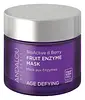
This wash off mask is made with Aloe Barbadensis Leaf Juice and Resveratrol for a rinse-off smoothing boost.
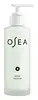
This mild cream cleanser is made to cleanse without leaving your skin tight or dry.

What's inside
What's inside
 Key Ingredients
Benefits
Concerns
Ingredients Side-by-side
Aloe Barbadensis Leaf Juice
Skin Conditioning


Water
Skin ConditioningVaccinium Macrocarpon Fruit Juice
Skin ConditioningGlycerin
Humectant

Hydroxypropyl Starch Phosphate
Vitis Vinifera Fruit Meristem Cell Culture
Antioxidant
Resveratrol
Antioxidant

Ubiquinone
Antioxidant
Papain
Skin Conditioning
Lecithin
Emollient
Tocopherol
Antioxidant

Saccharum Officinarum Extract
MoisturisingAlgae Extract
Emollient

Leptospermum Scoparium Branch/Leaf Oil
Tonic
Agave Tequilana Leaf Extract
AstringentHelianthus Annuus Seed Oil
Emollient

Limnanthes Alba Seed Oil
Skin Conditioning
Pyrus Malus Fruit Extract
Skin Conditioning
Xanthan Gum
EmulsifyingCitrus Medica Limonum Fruit Extract
Skin ConditioningCamellia Sinensis Leaf Extract
Antimicrobial

Hibiscus Sabdariffa Flower Extract
Skin ConditioningAspalathus Linearis Extract
Skin ConditioningPhenethyl Alcohol
MaskingEthylhexylglycerin
Skin ConditioningRubus Idaeus Fruit
AstringentEthyl Vanillate
Perfuming

Citrus Aurantium Dulcis Peel Oil
Masking
Aloe Barbadensis Leaf Juice, Water, Vaccinium Macrocarpon Fruit Juice, Glycerin, Hydroxypropyl Starch Phosphate, Vitis Vinifera Fruit Meristem Cell Culture, Resveratrol, Ubiquinone, Papain, Lecithin, Tocopherol, Saccharum Officinarum Extract, Algae Extract, Leptospermum Scoparium Branch/Leaf Oil, Agave Tequilana Leaf Extract, Helianthus Annuus Seed Oil, Limnanthes Alba Seed Oil, Pyrus Malus Fruit Extract, Xanthan Gum, Citrus Medica Limonum Fruit Extract, Camellia Sinensis Leaf Extract, Hibiscus Sabdariffa Flower Extract, Aspalathus Linearis Extract, Phenethyl Alcohol, Ethylhexylglycerin, Rubus Idaeus Fruit, Ethyl Vanillate, Citrus Aurantium Dulcis Peel Oil
Water
Skin ConditioningAlgae Extract
Emollient
Decyl Glucoside
Cleansing
Sodium Lauroyl Oat Amino Acids
CleansingSorbitan Olivate
Emulsifying
Sesamum Indicum Seed Oil
Emollient
Simmondsia Chinensis Seed Oil
Emollient
Magnesium Aluminum Silicate
Absorbent
Tocopherol
Antioxidant
Citrus Aurantifolia Oil
Cleansing

Citrus Aurantium Dulcis Oil
Masking
Juniperus Communis Fruit Oil
Masking
Cupressus Sempervirens Oil
Masking
Jasminum Officinale Oil
Masking
Lactic Acid
Buffering
Xanthan Gum
EmulsifyingGlycine
Buffering
Potassium Sorbate
Preservative
CI 75810
Cosmetic ColorantWater, Algae Extract, Decyl Glucoside, Sodium Lauroyl Oat Amino Acids, Sorbitan Olivate, Sesamum Indicum Seed Oil, Simmondsia Chinensis Seed Oil, Magnesium Aluminum Silicate, Tocopherol, Citrus Aurantifolia Oil, Citrus Aurantium Dulcis Oil, Juniperus Communis Fruit Oil, Cupressus Sempervirens Oil, Jasminum Officinale Oil, Lactic Acid, Xanthan Gum, Glycine, Potassium Sorbate, CI 75810
Reviews
Ingredients Explained
These ingredients are found in both products.
Ingredients higher up in an ingredient list are typically present in a larger amount.
Algae Extract is one of the vaguest names on any label because it just means "extract of some alga" (and there are thousands of species and dozens of ways to extract them). This just means two products listing it can contain completely different things.
This ingredient name was actually officially retired in the INCI dictionary in 2015 and brands were pushed toward species-specific names instead (like Laminaria Digitata Extract or Chondrus Crispus Extract).
Generally, it is used to hold water and soften skin in a formula. Algae are rich in polysaccharides, pigments, and amino-acids that act as humectants, emollients, and skin-conditioning agents.
It isn't on standard cosmetic-patch test panels and "seaweed dermatitis" is actually an acute irritant reaction to algal toxins in seawater and not the cosmetic ingredient.
You'll see algae listed as a 5/5 on a lot of pore-clogging charts and that number doesn't come from anywhere; it's not in the original rabbit-ear studies that most comedogenic ratings trace back to.
The reasoning behind the reputation is that seaweed is high in iodine and iodine can trigger acne-like breakouts when eaten. This traces back to a 1976 letter in Archives of Dermatology describing two women whose breakouts cleared after they stopped taking high-dose kelp supplements orally.
And the reaction of these two women wasn't clogged pores at all: it was an iodine-triggered pustular rash. Later research found normal dietary iodine doesn't meaningfully affect acne either and nobody has shown topical algae delivers enough iodine to matter.
What we do have is dozens of brown and red algae ingredients found to be non-irritating and non-sensitizing, and a handful of studies that found algae compounds may actually help acne.
However, plenty of people do report breaking out from algae-containing products. Skin is individual and it's worth avoiding if yours has reacted to algae before.
Learn more about Algae ExtractTocopherol is a fat-soluble antioxidant known as Vitamin E.
You'll find this ingredient in the vast majority of skincare (for good reason). It works to neutralize free radicals, or unstable molecules generated by UV exposure, pollution, and other environmental stressors, before they can cause oxidative damage to your skin cells.
Topically applied tocopherol has been shown to protect against UV damage by ramping up the skin's own natural defense enzymes.
It also acts as a skin conditioning agent; some studies show that regular topical use can improve the skin's water-binding capacity over 2-4 weeks.
This ingredient is especially loved for being a team player. When combined with Vitamin C, the photoprotective effect of both ingredients roughly doubles and the combo also helps reduce UV-induced DNA damage.
This ingredient has some brightening potential but it's more of a prevention ingredient than spot-fader. Cell studies show it can slow down melanin production but it's worth noting that it's not the most powerful brightener out there.
In formulations, it also serves as a stabilizer that helps protect other oxidation-prone ingredients from degrading.
Concentrations usually range from 0.1-1% in most leave-on products.
Learn more about TocopherolWater. It's the most common cosmetic ingredient of all. You'll usually see it at the top of ingredient lists, meaning that it makes up the largest part of the product.
So why is it so popular? Water most often acts as a solvent - this means that it helps dissolve other ingredients into the formulation.
You'll also recognize water as that liquid we all need to stay alive. If you see this, drink a glass of water. Remember to stay hydrated!
Learn more about WaterXanthan gum is used as a stabilizer and thickener within cosmetic products. It helps give products a sticky, thick feeling - preventing them from being too runny.
On the technical side of things, xanthan gum is a polysaccharide - a combination consisting of multiple sugar molecules bonded together.
Xanthan gum is a pretty common and great ingredient. It is a natural, non-toxic, non-irritating ingredient that is also commonly used in food products.
Learn more about Xanthan Gum

