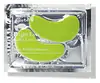
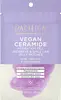
100% Pure Bright Eyes Masks Versus Pacifica Vegan Ceramide Hydration Fill Undereye & Smile Line Jelly Patches
This brightening eye mask is formulated around Camellia Sinensis Leaf Extract and Sodium Ascorbate to brighten dull-looking skin and soften the look of wrinkles.
This hydrating eye mask is formulated around Niacinamide and Ceramide NP to hydrate skin and strengthen the skin barrier.

What's inside
What's inside
 Key Ingredients
Benefits
Concerns
No concerns
Ingredients Side-by-side



Water
Skin ConditioningGlycerin
Humectant


Niacinamide
Smoothing









Ceramide NP
Skin Conditioning
Ceramide AP
Skin Conditioning
Ceramide EOP
Skin Conditioning
Phytosphingosine
Skin Conditioning
Cholesterol
Emollient
Calendula Officinalis Extract
Skin Conditioning
Betaine
Humectant
Althaea Officinalis Root Extract
Skin Conditioning
Palmitoyl Tripeptide-38
Skin Conditioning
Sodium Hyaluronate
Humectant
Hydroxypropyl Cyclodextrin
MaskingXanthan Gum
EmulsifyingPolyglyceryl-10 Laurate
Skin Conditioning

Sodium Lauroyl Lactylate
EmulsifyingPhenoxyethanol
Preservative
Ethylhexylglycerin
Skin ConditioningSodium Citrate
BufferingCitric Acid
Buffering
Water, Glycerin, Niacinamide, Ceramide NP, Ceramide AP, Ceramide EOP, Phytosphingosine, Cholesterol, Calendula Officinalis Extract, Betaine, Althaea Officinalis Root Extract, Palmitoyl Tripeptide-38, Sodium Hyaluronate, Hydroxypropyl Cyclodextrin, Xanthan Gum, Polyglyceryl-10 Laurate, Sodium Lauroyl Lactylate, Phenoxyethanol, Ethylhexylglycerin, Sodium Citrate, Citric Acid
Reviews
Alternatives
Ingredients Explained
These ingredients are found in both products.
Ingredients higher up in an ingredient list are typically present in a larger amount.
Sodium Hyaluronate is the salt form of hyaluronic acid. It is a long sugar chain that is naturally found in your skin, joints, and connective tissue that maintains hydration and elasticity.
In skincare, it works as a humectant. It pulls water from the environment and deeper layers of skin and binds it to the surface.
Interestingly, the size of the molecule affects its behavior:
Some clinical evidence links low molecular weight versions to improved wrinkle depth, elasticity, anti-inflammatory effects, and barrier repair.
Many serums use a blend of both weights so you can get surface hydration plus longer-lasting and deeper effects.
You'll typically see concentrations between 0.1-2% for this ingredient.
Learn more about Sodium Hyaluronate

