Purity Vision Bio Retinol Oil & Serum 2 In 1
A serum with 25 ingredients, including vitamin E.
This anti-aging serum is formulated around Squalane and Argania Spinosa Kernel Oil to soften the look of wrinkles and strengthen the skin barrier.
Worth noting
Contains EU-listed fragrance allergens, including Rosa Damascena Flower Extract and Lavandula Angustifolia Oil.
We independently verify ingredients, backed by peer-reviewed research. Suggest an update.
What's inside
Ingredients List
Caprylic/Capric Triglyceride
Masking


Macadamia Integrifolia Seed Oil
Skin Conditioning


Squalane
Emollient
Plukenetia Volubilis Seed Oil
Emollient
Helianthus Annuus Seed Oil
Emollient
Ricinus Communis Seed Oil
Masking
Argania Spinosa Kernel Oil
Emollient


PCA Glyceryl Oleate
Emollient
Brassica Campestris Seed Oil
Skin Conditioning
Opuntia Ficus-Indica Seed Oil
Emollient
Daucus Carota Sativa Root Extract
Skin Conditioning
Laminaria Ochroleuca Extract
Skin Conditioning
Pistacia Lentiscus Gum
MaskingPolygonum Tinctorium Leaf Extract
Skin ConditioningAlaria Esculenta Extract
Skin Protecting

Rhus Verniciflua Peel Cera
EmollientRosa Damascena Flower Extract
Masking
Tocopherol
Antioxidant


Lavandula Angustifolia Oil
Masking

Tanacetum Annuum Flower/Leaf/Stem Oil
Masking
Camphor
Masking
Pinene
Masking
Linalool
Perfuming
Limonene
Perfuming
Linalyl Acetate
Masking
Caprylic/Capric Triglyceride, Macadamia Integrifolia Seed Oil, Squalane, Plukenetia Volubilis Seed Oil, Helianthus Annuus Seed Oil, Ricinus Communis Seed Oil, Argania Spinosa Kernel Oil, PCA Glyceryl Oleate, Brassica Campestris Seed Oil, Opuntia Ficus-Indica Seed Oil, Daucus Carota Sativa Root Extract, Laminaria Ochroleuca Extract, Pistacia Lentiscus Gum, Polygonum Tinctorium Leaf Extract, Alaria Esculenta Extract, Rhus Verniciflua Peel Cera, Rosa Damascena Flower Extract, Tocopherol, Lavandula Angustifolia Oil, Tanacetum Annuum Flower/Leaf/Stem Oil, Camphor, Pinene, Linalool, Limonene, Linalyl Acetate
Key Ingredients
Benefits
Concerns
Ingredients Explained
Caprylic/Capric Triglyceride (aka MCT Oil) is a lightweight emollient, solvent, and texture enhancer. It is considered a skin-softener by helping to prevent moisture loss.
Though it behaves like an oil, it is not technically one due to its chemical composition. One perk of this ingredient is that it is very stable, resistant to oxidation, and unlikely to go rancid.
In practice, that translates to a long shelf life and a consistently elegant skin feel.
While there is an assumption Caprylic Triglyceride can clog pores due to it being derived from coconut oil, there is no research supporting this. Just patch test if you have concerns.
Fractionated coconut oil and MCT Oil are both listed as Caprylic/Capric Triglyceride according to INCI. This is because INCI names are based on the ingredient’s final chemical composition and not its marketing name or source.
This ingredient is treated as the gold standard fungal acne safe oil. Even though it is coconut derived, the problematic lauric acid is stripped out.
This leaves just caprylic (C8) and capric (C10) acid. These chain lengths actually trend antifungal; a 2020 study found caprylic acid was enough to disrupt Malassezia furfur cell membrane, with a caprylic acid derivative damaging membrane structures at concentrations as low as 0.2%.
Learn more about Caprylic/Capric TriglycerideThis ingredient is also known as Macadamia Seed Oil. It's an emollient with a fatty acid profile that closely mirrors the skin's own lipid makeup.
The palmitoleic acid content is especially notable as it's somewhat rare in plant oils. Palmitoleic acid is something your skin already makes naturally. It helps keep cell membranes structured and plays a role in fighting off harmful microbes.
This palmitoleic content is also part of why macademia seed oil absorbs quickly and doesn't leave much of a greasy residue.
It also contains oleic acid, linoleic acid, and phytosterols that can help reduce redness.
In vitro research has shown the oil to have meaningful antioxidant activity, protect fats in the skin from oxidative damage, and slow down the enzyme that breaks down hyaluronic acid.
A 2024 clinical study found it effective at improving skin hydratino and reducing wrinkle appearance when formulated into nanoemulsions.
Because it carries oleic acid (C18) and palmitic acid (C16), this ingredient may not be fungal acne safe. This is because the Malassezia yeast metabolizes in the C11-24 chain length range.
You'll also see this ingredient listed as: Macadamia Ternifolia Seed Oil.
This is the same ingredient; M. ternifolia is an older INCI naming convention for the edible macadamia nut, while M. integrifolia is the species actually cultivated for oil production. Both names refer to the same oil.
Learn more about Macadamia Integrifolia Seed OilSqualane is the hydrogenated and shelf-stable form of squalene (a lipid that naturally occurs in human sebum).
It is an emollient and skin conditioning agent that is able to integrate seamlessly into the skin's lipid barrier without clogging pores.
This is due to how structurally similar it is to what your skin already produces.
Though it is mostly an emollient that helps soften and hydrate skin, it also has some humectant and occlusive action. Humectants help the skin retain moisture while occlusives seal it in, making squalane a triple-threat moisturizer.
Research shows it has antioxidant capabilities that help protect against stressors like UV exposure, specifically UVA induced oxidative stress. This study also found that it supports collagen biosynthesis in human dermal fibroblasts.
No clinical study has reported significant adverse effects and irritation reactions are very rare from this ingredient (even at 100% concentration).
Overall, it's a fantastic ingredient for hydration and is suitable for all skin types.
This depends on the source. Squalane can be derived from both plants and animals. Most squalane used in skincare comes from plants.
Please note: the source of squalane is only known if disclosed by the brand. We recommend reaching out to the brand if you have any questions about their squalane.
Read more about squalene with an "e".
Though squalane is often called an oil, it’s technically not one. It is a hydrocarbon, meaning it is only made of carbon and hydrogen. True oils are triglycerides and made of fatty acids and glycerol.
The term “oil-free” isn’t regulated so companies can define it however they want. Some exclude all oils, while others just avoid mineral oil or comedogenic oils.
Squalane has a comedogenic rating of 1 from the original 1972 study that tested raw ingredients under occlusion on rabbit ears. This system is not standardized or peer-reviewed, and using the raw ingredients is very different from how diluted cosmetic formulations are used on human skin.
A comedogenic rating of 1 means it is "unlikely to clog pores" according to the original rating system.
The overall formula of a product matters more than the individual ingredients on whether or not it will cause clogged pores.
Learn more about SqualanePlukenetia Volubilis Seed Oil (aka sacha inchi oil) is a plant oil that is 80-90% polyunsaturated fatty acids. These fatty acids are split pretty evenly between alpha-linoleic acid and linoleic acid.
On skin, it is an emollient and barrier helper since linoleic acid feeds into your skin's own lipid barrier.
A 14 day human study found its moisturizing performance matched olive oil and tested as mild/low irritation on skin tissue.
It also showed gentle anti-inflammatory + antioxidant activity, plus the ability to stop Staphylococcus aureus (a bacteria tied to breakouts and eczema flares) from sticking to skin.
The concentration for this oil is flexible and can range from a few percent in serums up to 100% as a facial oil.
Since this ingredient is a triglyceride oil loaded with fatty acids that Malassezia can feed on, it may not be fungal acne safe.
Allergy-wise, the risk is low. Despite having the nicknames "Inca peanut" or "mountain peanut", this ingredient is not actually a peanut or tree nut. However, allergy to the seeds does exist so patch test if your skin is reactive.
Learn more about Plukenetia Volubilis Seed OilHelianthus Annuus Seed Oil is a plant oil derived from the seeds of a sunflower.
It is rich in fatty acids, primarily linoleic acid and oleic acid. This gives it emollient and skin conditioning properties.
The reason this ingredient is so effective is because it forms a thin film on the skin that reduces transepidermal water loss (TEWL) while supplying linoleic acid to the stratum corneum to improve barrier strength.
The high linoleic acid content is particularly noteworthy for acne-prone skin.
Research suggests that acne-prone skin tends to be deficient in linoleic acid in sebum. Topical application may help replenish this to support a healthier follicular environment and less comedone-promoting sebum.
One randomized study found sunflower seed oil preserved skin barrier integrity in adult volunteers with and without atopic dermatitis (outperforming olive oil).
This ingredient is well-studied, gentle, and an effective emollient suitable for most skin types.
On fungal acne: This ingredient may not be Fungal acne (Malassezia folliculitis) safe. This is because it contains fatty acids with carbon chain lengths in the C11-C24 range.
Learn more about Helianthus Annuus Seed OilThis ingredient is also known as castor oil. It is a skin conditioning ingredient.
The star component of castor oil is ricinoleic acid, an unusual fatty acid that makes up ~80-92% of its composition.
In skincare, it is an emollient that dries down to a solid film with water-binding properties. This helps keep skin hydrated and helps reduce transepidermal water loss (TEWL).
A 2026 dermatology review pulls together its broader uses:
Human clinical testing found this ingredient to be non-irritating and non-sensitizing.
Because castor oil contains fatty acids in the C11-24 range, this ingredient may not be fungal acne safe.
At this time, the literature does not support castor oil in regrowing hair. A 2022 systematic review found no strong evidence that it supports hair growth and only weak evidence that it improves hair shine.
Castor oil itself carries "perfuming" and "masking" function tags according to the official CosIng database. This is because of its mild odor and odor-dampening properties.
Learn more about Ricinus Communis Seed OilYou may know this ingredient as argan oil. It has emollient and skin conditioning properties that help soften skin and reinforce the lipid barrier.
The fatty acid profile of argan oil is roughly 45-55% oleic acid, 28-36% linoleic acid, 10-15% palmitic acid, and 5-7% stearic acid. It also contains vitamin E, sterols, squalene, and polyphenols like ferulic acid.
Two clinical studies in postmenopausal women found that applying argan oil for 60 days significantly improved skin elasticity and moisturization (reduced transepidermal water loss and increased epidermal water content).
Since it is high in oleic and linoleic acid, this ingredient may not be fungal acne safe. Both of these fall in the C11-C24 range that Malassezia yeast can metabolize.
Learn more about Argania Spinosa Kernel OilPCA Glyceryl Oleate isn't fungal acne safe.
This ingredient is also known as rapeseed oil. Rapeseed oil is a lightweight plant oil with a strong fatty acid profile that makes it a great skin conditioner.
It's rich in oleic acid, linoleic acid (LA), and alpha-linoleic acid (ALA). Fatty acids like LA and ALA play an important role in the maintenance of skin barrier function.
They specifically help with reducing transepidermal water loss (TEWL) and supporting the skin's lipid matrix.
Studies show people deficient in essential fatty acids are prone to dermatitis and increased TEWL.
Besides fatty acids, it also contains tocopherols and phytosterols that provide antioxidant support.
Rapeseed oil is composed mostly of C16-18 fatty acids that the Malassezia species can metabolize, making it a potential trigger for fungal acne.
Learn more about Brassica Campestris Seed OilThis ingredient is also known as prickly pear seed oil (PPSO); it's one of the more nutritionally dense plant oils you can find in cosmetics.
Its fatty acid profile is dominated by linoleic acid (57-65%), followed by oleic (16-22%), and palmitic (12-16%).
That high linoleic acid content is a big deal for skin. Linoleic acid is a key component of the skin's own lipid barrier and this combination is associated with improved skin hydration + barrier repair.
PPSO also contains some phytosterols and is exceptionally rich in tocopherols (vitamin E). The phytosterols contribute to anti-inflammatory activity and the tocopherols provide meaningful antioxidant protection.
Animal studies have shown that topical application of PPSO reduced edema formation and inflammatory cell infiltration; this supports its traditional use for wound healing and skin inflammation.
In vitro studies, preclinical, and clinical evidence all point to a very low toxicity profile for this ingredient.
Typical use levels range from 1-100% :
Fungal acne: The Malassezia species can metabolize fatty acids with carbon chain lengths between C11-24. Linoleic, oleic, and palmitic acid fall into this range, making PPSO not fungal acne safe.
Learn more about Opuntia Ficus-Indica Seed OilDaucus Carota Sativa Root Extract comes from the root commonly known as carrot (the orange kind we eat!).
This extract contains beta-carotene, a pigment responsible for giving plants the orange color. Beta-carotene is a potent antioxidant. Antioxidants may help reduce the signs of aging.
Beta-carotene is the reason we turn orange if we eat too many carrots.
It should be noted coming into contact with the leaves of wild carrots can cause skin irritation. The sap causes phytophotodermatitis, or sensitivity exposed to sunlight.
This ingredient is created using the edible parts of the carrot.
Learn more about Daucus Carota Sativa Root ExtractLaminaria Ochroleuca Extract is a type of kelp. It helps sooth and hydrate the skin. By nourishing the skin's barrier, it may also help relieve irritation.
This ingredient contains both lipids and antioxidants. The lipids nourish the skin's barrier. Antioxidants help fight free-radicals. Free-radicals are molecules that may damage your skin cells.
This ingredient is good for soothing sensitive skin.
Many different types of algae have different benefits.
Learn more about Laminaria Ochroleuca ExtractThis ingredient is also known as mustic gum and from a tree native to the Mediterranean Basin.
It has fragrance and masking properties.
Fun fact: This ingredient has been used as chewing gum for at least 2,400 years.
Learn more about Pistacia Lentiscus GumWe don't have a description for Polygonum Tinctorium Leaf Extract yet.
This ingredient comes from winged kelp; it's an edible brown seaweed found on exposed rocky Atlantic shores.
In cosmetics, it has skin protecting and hair conditioning properties.
Lab testing has shown it to be an impressive antioxidant: out of 3 Icelandic seaweeds, Alaria had the most phenolics, flavonoids, and strongest antioxidant capacity. It also blocked the enzymes that break down collagen, elastin, hyaluronic acid, and the enzyme that drives pigment creation.
Cell studies found it could lower progerin production in aged skin cells (with no effect in cells from young donors). Progerin is a protein that weakens the cell nucleus and drives both premature aging and normal aging processes
Just keep in mind these results are all from test tube and cell studies and there are currently no human trials on the extract itself.
Safety-wise, this one has a solid record. Human sensitization tests at 0.5 to 2.5% and under 5% all came back negative, and brown algae ingredients aren't restricted in the EU.
You'll see algae listed as a 5/5 on a lot of pore-clogging charts and that number doesn't come from anywhere; it's not in the original rabbit-ear studies that most comedogenic ratings trace back to.
The reasoning behind the reputation is that seaweed is high in iodine and iodine can trigger acne-like breakouts when eaten. This traces back to a 1976 letter in Archives of Dermatology describing two women whose breakouts cleared after they stopped taking high-dose kelp supplements orally.
And the reaction of these two women wasn't clogged pores at all: it was an iodine-triggered pustular rash. Later research found normal dietary iodine doesn't meaningfully affect acne either and nobody has shown topical algae delivers enough iodine to matter.
What we do have is dozens of brown and red algae ingredients found to be non-irritating and non-sensitizing, and a handful of studies that found algae compounds may actually help acne.
However, plenty of people do report breaking out from algae-containing products. Skin is individual and it's worth avoiding if yours has reacted to algae before.
Learn more about Alaria Esculenta ExtractThis ingredient is also known as berry wax; it is a plant-derived wax from the peel or rind of the lacquer tree with emollient and stabilizing properties.
According to a manufacturer, this ingredient can help thicken/stabilize formulas, improves slip, and leave a soft emollient on skin.
It is important to note this ingredient comes from the lacquer tree which is in the same plant family as poison ivy or poison oak. Though this ingredient comes from the wax instead of sap (the sap contains the substance that causes itchy rashes), there is a very small chance that sensitive people could react.
Learn more about Rhus Verniciflua Peel CeraRosa Damascena Flower Extract is from the Damask rose. This ingredient has tonic and masking properties.
This ingredient has tonic properties; tonics are used to remove soap residue. As a masking ingredient, it is used to cover unpleasant smells from other ingredients.
Tocopherol is a fat-soluble antioxidant known as Vitamin E.
You'll find this ingredient in the vast majority of skincare (for good reason). It works to neutralize free radicals, or unstable molecules generated by UV exposure, pollution, and other environmental stressors, before they can cause oxidative damage to your skin cells.
Topically applied tocopherol has been shown to protect against UV damage by ramping up the skin's own natural defense enzymes.
It also acts as a skin conditioning agent; some studies show that regular topical use can improve the skin's water-binding capacity over 2-4 weeks.
This ingredient is especially loved for being a team player. When combined with Vitamin C, the photoprotective effect of both ingredients roughly doubles and the combo also helps reduce UV-induced DNA damage.
This ingredient has some brightening potential but it's more of a prevention ingredient than spot-fader. Cell studies show it can slow down melanin production but it's worth noting that it's not the most powerful brightener out there.
In formulations, it also serves as a stabilizer that helps protect other oxidation-prone ingredients from degrading.
Concentrations usually range from 0.1-1% in most leave-on products.
Learn more about TocopherolLavandula Angustifolia Oil is more commonly known as lavender essential oil. It is considered a fragrancing ingredient.
Lavender imparts a famous scent. While the smell is lovely, this ingredient and may sensitize skin in topical products. This is because about 85% of the oil is made up of linalool and linalyl acetate.
When exposed to air, these two compounds become strong allergens. This ingredient exhibits cytotoxicity at low concentrations; amounts of 0.25% have been shown to damage skin cells.
A study from Japan found this ingredient caused lavender sensitivity after widespread exposure.
Lavender essential oil has some antimicrobial, antibacterial, and anti-inflammatory properties. However, the cons of this ingredient may outweight the pros.
More research is needed to confirm lavender essential oil's effects when used in aromatherapy.
Lavandula Angustifolia is known as the English Lavender and famous for creating purple fields in Provence, France.
Learn more about Lavandula Angustifolia OilTanacetum Annuum Flower/Leaf/Stem Oil is an oil.
Camphor is a waxy solid with a strong scent. It is made using turpentine oil.
This ingredient is used for medicinal purposes due to its cooling effect. In medicine, camphor is a common anti-inflammation ingredient.
Camphor also possesses antibacterial and antifungal properties.
One study found camphor to be a potential anti-wrinkle ingredient. This might be due to its ability to increase elastin and collagen production. Collagen and elastin are responsible for plump and youthful looking skin.
It is best to use cosmetics with a small amount of camphor under 11%. Using topical camphor may induce irritation and redness.
In the past, camphor was traditionally made by distilling the wood of the camphor tree.
Learn more about CamphorPinene is created by distilling the resin of Pinus trees.
It is a known EU allergen. Long term contact with this ingredient can cause dermatitis.
Linalool is a small, naturally occurring scent molecule found in plants like lavender, coriander, bergamot, and more.
It is one of the two most-used fragrance ingredients in cosmetics and added purely for smell. Since it's not used for a skin benefit, there's no "effective dose". Concentration depends on the fragrance load of the product.
The EU requires it to be named on the label above 0.001% in leave-on and 0.01% in rinse-off products.
Fresh linalool is a weak sensitizer but air exposure turns some of it into hydroperoxides, which are strong sensitizers. Those oxidation products are the actual allergy concern.
Patch-test clinics see positive reactions to linalool hydroperoxides in about 4% to 12% of dermatitis patients depending on country and test concentration.
Resassuringly, one analytical study found hydroperoxide levels in real fragranced products to be orders of magnitude below what induced sensitization in animal studies with no evidence of oxidation building up during normal storage.
The practical takeaway is that linalool is fine for most people but worth avoiding if you have a confirmed fragrance contact allergy or a badly compromised barrier.
Products stored a long time after opening are also the high-risk scenario since that is when oxidation happens.
The scent of linalool is described as floral, spicy tropical, and citrus-like.
Learn more about LinaloolLimonene is the compound that gives citrus peel its smell.
In skincare, it shows up as a standalone fragrance ingredient or as a natural compound of citrus and other essential oils.
You'll typically see this ingredient used in very small amounts; anything above 0.001% in a leave-on product or 0.01% in a rinse-off has to be named on the label in the EU. The citrus oils that carry it sit around 0.5-1% in a finished formula.
Fresh limonene is a weak allergen; the real issue is that it slowly reacts with air and then breaks down from oxidation to create hydroperoxides (which are strong sensitizers). This is why suppliers are required to keep the peroxide value below 20 mmol.
Positive reactions in people being investigated for eczema vary:
It's worth skipping if you have a known fragrance allergy or a compromised barrier, but the risk is low for most people.
Older or long-opened products are also more likely to bother you than fresh ones due to oxidation.
Learn more about LimoneneLinalyl Acetate is the acetate ester of linalool and can be naturally found in many flowers and spice plants.
This ingredient is often used to add a scent or mask an unpleasant one in products.
Linalyl acetate is mildly toxic to humans and toxic to fish.
Learn more about Linalyl AcetateReviews
No written reviews yet. Be the first to review this product.
Recent searches
Search reviews by skin type, ingredient, or keyword.
Where it's from
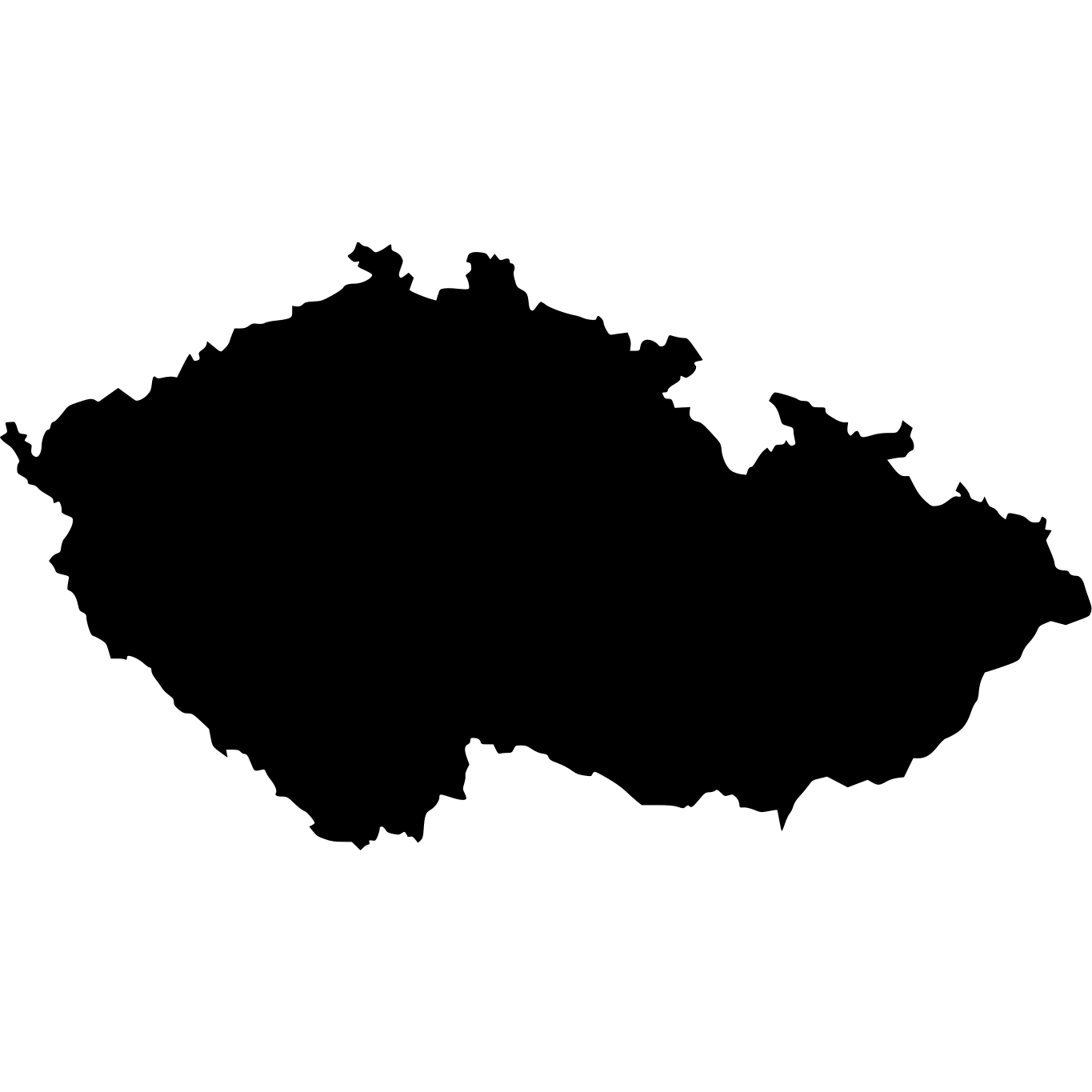
Purity Vision is a Czech brand

We're dedicated to providing you with the most up-to-date and science-backed ingredient info out there.
The data we've presented on this page has been verified by a member of the SkinSort Team.
Read more about us· Updated July 22, 2026 • Added by meph1st0


