Nanolash Peptide Eyelash Serum
A lash & brow serum with 21 ingredients, including PHA and peptides.
Lash & brow serum with 21 ingredients that contains peptides and PHA
We independently verify ingredients, backed by peer-reviewed research. Suggest an update.
What's inside
Ingredients List
Water
Skin ConditioningPropanediol
Solvent

Tetrasodium Disuccinoyl Cystine
Propylene Glycol
Humectant

Alcohol
Antimicrobial


Myristoyl Pentapeptide-17
Skin Conditioning
Myristoyl Hexapeptide-16
Skin Conditioning
Centella Asiatica Leaf Extract
Skin Conditioning


Panax Ginseng Root Extract
Emollient
Calendula Officinalis Flower Extract
Masking
Scutellaria Baicalensis Root Extract
Astringent
Triticum Vulgare Germ Extract
Skin ConditioningGlycine Soja Germ Extract
EmollientArginine
Masking
Lactic Acid
Buffering





Gluconolactone
Chelating

Calcium Gluconate
HumectantSodium Benzoate
Masking
Phenoxyethanol
Preservative
Citric Acid
Buffering
Triethanolamine
BufferingWater, Propanediol, Tetrasodium Disuccinoyl Cystine, Propylene Glycol, Alcohol, Myristoyl Pentapeptide-17, Myristoyl Hexapeptide-16, Centella Asiatica Leaf Extract, Panax Ginseng Root Extract, Calendula Officinalis Flower Extract, Scutellaria Baicalensis Root Extract, Triticum Vulgare Germ Extract, Glycine Soja Germ Extract, Arginine, Lactic Acid, Gluconolactone, Calcium Gluconate, Sodium Benzoate, Phenoxyethanol, Citric Acid, Triethanolamine
Key Ingredients
Benefits
Concerns
Ingredients Explained
Water. It's the most common cosmetic ingredient of all. You'll usually see it at the top of ingredient lists, meaning that it makes up the largest part of the product.
So why is it so popular? Water most often acts as a solvent - this means that it helps dissolve other ingredients into the formulation.
You'll also recognize water as that liquid we all need to stay alive. If you see this, drink a glass of water. Remember to stay hydrated!
Learn more about WaterPropanediol is an all-star ingredient. It softens, hydrates, and smooths the skin.
It’s often used to:
Propanediol is not likely to cause sensitivity and considered safe to use. It is derived from corn or petroleum with a clear color and no scent.
Learn more about PropanediolWe don't have a description for Tetrasodium Disuccinoyl Cystine yet.
Propylene Glycol is a synthetic, colorless, odorless liquid that has been a staple in cosmetics for decades. It is a skin conditioning agent, humectant, and solvent.
As a humectant, it draw water to the skin to reduce flaking and restore suppleness. It's also a solvent that helps dissolve other actives and keeps formulas stable across temperature changes.
The CIR Expert Panel has confirmed this ingredient to be nontoxic and clinical studies show no sensitization at cosmetic use concentrations.
True allergic reactions are quite rare: a 15-year retrospective study of 6,751 patients found only 0.31% had a positive reaction (and less than half were considered clinically relevant).
It seemed that when sensitization does occur, it's most commonly linked to topical medication (like corticosteroids) and not cosmetics. Allergic contact dermatitis also appears largely limited to individuals with underlying skin conditions.
Overall, propylene glycol is a well-studied ingredient that most people can tolerate without issue.
Learn more about Propylene GlycolThis ingredient is also called ethanol or ethyl alcohol. It is denatured, meaning made undrinkable for cosmetic use.
In formulas, it:
Is it bad for your skin?
The answer comes down to concentration. Patch and wash studies have found highly concentrated alcohol-based hand rubs (60-100%) cause less barrier disruption than washing with a basic detergent like SLS. The only measurable effect in these studies was a temporary dip in skin hydration.
Concentrations below 12-15% in leave-on cosmetics is generally well-tolerated. Concentrations above start to see increased transepidermal water loss (TEWL) and reduced hydration.
In concentrations about 58%, it creates temporary channels in your skin's lipid layers to become more permeable and allow other ingredients to slip through easily.
This ingredient can be up to 80% of the formula in alcohol-based perfumes.
Overall, this ingredient is probably harmless if found lower down an ingredients list but worth side-eyeing if it's high up (especially if your barrier is already struggling).
Alcohol can worsen dry skin, eczema, and oily skin, especially at higher concentrations. This is because it can increase transepidermal water loss and decrease hydration to disrupt the skin barrier.
According to the National Rosacea Society based in the US, you should be mindful of products with these alcohols in the top half of ingredients.
True allergic contact dermatitis to ethanol is uncommon, but be sure to patch test if you have dry or sensitive skin.
Learn more about AlcoholMyristoyl Pentapeptide-17 is a five amino peptide attached to myristic acid to help it absorb better into skin. It's mostly used for lash growth and as a delivery vehicle for other ingredients.
The myristic acid "tail" is basically a delivery upgrade that helps the peptide mix with your skin's natural oils so it can get where it needs to go.
In your eyelash follicles, it activates the keratin gene and promotes nutrient absorption into the follicle. This translates to thicker and longer eyelashes over time.
Besides stimulating keratin production for lash growth, this ingredient enhances the delivery of other active ingredients in a formula.
The clinical evidence is still pretty early-stage at this point. A 90 day study in 29 participants found improvements in lash length (10.52%), volume (9.3%), thickness (35%), and curl (50.83%) with no adverse reactions reported.
You might have heard that eyelash serums can cause pigmentation change in eye color to turn eyes brown. This is associated with a different class of lash serum ingredients: prostaglandin analogs.
Myristoyl Pentapeptide-17 is a different thing entirely and has no known association with iris pigmentation changes. The 90 day study noted no adverse effects around the eye area at all.
Learn more about Myristoyl Pentapeptide-17Myristoyl Hexapeptide-16 is a peptide.
Centella Asiatica Leaf Extract comes from the leaves of an herb plant native to Southeast Asia. Centella Asiatica is rich in antioxidants and amino acids. It can help reduce irritation and soothe the skin.
Many active components found in centella asiatica, such as Madecassic Acid and Asiaticoside, encourage the skin to naturally produce hyaluronic acid. This helps keep our skin hydrated. Many of these components also show antioxidant activity and may help reduce the signs of aging.
Research shows centella asiatica can help increase Type I collagen production by increasing fibroblast production. Fibroblast helps form connective tissue.
The combination of all these properties makes centella asiatica leaf extract effective at soothing the skin.
Other components of centella asiatica leaf extract include Vitamin A, vitamin C, several B vitamins, and Asiatic Acid.
Recent studies found madecassoside may help prevent damage from UV rays by preventing UV-induced inflammation. Further research is needed.
This plant has been used as a medicine and in food for many centuries. As a medicine, it is used to treat burns, scratches, and wounds.
Learn more about Centella Asiatica Leaf ExtractGinseng root is a well-loved ingredient in Asian skincare for good reason. It hydrates the skin, soothes irritation, and helps even out skin tone.
In traditional East Asian medicine, ginseng has been used for centuries both as food and as a healing remedy, and modern research continues to confirm its skin benefits.
One of the standout features of ginseng is its ability to improve blood circulation and oxygen delivery to the skin, bringing a fresh supply of nutrients to support overall skin health. It also has antioxidant and anti-inflammatory properties. This helps to protect your skin against damage from UV exposure, pollution, and daily stress.
Additionally, studies suggest that ginseng may help reduce hyperpigmentation by inhibiting tyrosinase, the enzyme involved in melanin production.
There are different types of ginseng used in skincare, and while they all share core benefits, their potency can vary.
Most products use fresh or white ginseng because it’s more affordable. However, red ginseng, produced by steaming the root, contains higher levels of ginsenosides, which are compounds with proven anti-aging effects. These ginsenosides help reduce the appearance of wrinkles and improve skin elasticity.
Note: All forms of ginseng are listed simply as “Panax ginseng” in ingredient lists. We recommend reaching out to the brand if you have questions about which type of ginseng is used in their ingredients.
For general antioxidant benefits, any ginseng extract will do, but for wrinkle care or firmer skin, red or fermented ginseng is often more effective.
In short, ginseng is a powerhouse ingredient that supports hydration, radiance, and resilience.
Learn more about Panax Ginseng Root ExtractCalendula Officinalis Flower Extract comes from the marigold flower and has been used on skin for centuries for its calming effect.
In the lab, its active compounds appear to calm inflammation and support the early "healing" phase of minor wounds.
This is why Europe's medicines regulator has approved calendula extracts as a traditional remedy for minor skin inflammation and healing small wounds.
The stronger human evidence is around would/ulcer care rather than everyday cosmetic claims; a review that pulled together 14 studies found that calendula helped calm the early, inflamed stage of a wound and helped new skin tissue form faster.
Two studies also showed it shrank leg ulcers (the kind caused by poor circulation). Results were mixed for burns and for the skin irritation people get from radiation treatment, so it's not a sure thing there.
In cosmetics, it's mostly a skin conditioning and soothing agent.
The Cosmetic Ingredient Review panel concluded that calendula-derived ingredients are safe as used and that the ingredients are not irritating, sensitizing, or photosensitizing in clinical tests (though they may be mild eye irritants).
Typical use levels are quite low; industry data reported it used at under 0.5% (one supplier noted a 10-25% extract blend used at 1-10% in the finished product). Historical use goes up to 10%.
The only thing to keep in mind is if you have daisy/ragweed allergies. Calendula is in the same family and one patch-test study found 2% of dermatitis patients reacted to marigold. Be sure to patch test if you have sensitive or allergy-prone skin.
Learn more about Calendula Officinalis Flower ExtractScutellaria Baicalensis Root Extract comes from the Baikal skullcap or Chinese skullcap plant. This plant is native to Northeast Asia and can be found in China, Mongolia, Korea, and Siberia.
In cosmetics, Scutellaria Baicalensis Root Extract provides antioxidant and anti-inflammatory benefits. This is due to the flavonoid composition of Scutellaria Baicalensis Root Extract.
In Chinese traditional folk medicine, Scutellaria Baicalensis Root Extract is used to help treat lung issues and hypertension.
Learn more about Scutellaria Baicalensis Root ExtractThis ingredient is extracted from the germ part of the wheat plant. The germ of a plant refers to the seed embryo, or part that sprouts into a new plant.
Some studies have found wheat germ to help with wound healing.
We don't have a description for Glycine Soja Germ Extract yet.
Arginine is a semi-essential amino acid. This just means our bodies can product a bit on its own, but sometimes needs a little boost from food sources.
It is a part of your skin's natural moisturizing factor (NMF), or the water-loving molecules in your outermost layer of skin (stratum corneum) that keeps everything hydrated and happy.
Here's an interesting thing about Arginine: your skin converts it into urea through the Krebs-Henseleit urea cycle. Urea is one of the most effective humectants your skin naturally produces.
A clinical study showed applying 2.5% arginine hydrochloride to atopic dermatitis skin showed significant urea levels in the stratum corneum and improved moisture in just four weeks.
Arginine is also a precursor to nitric oxide; nitric oxide improves microcirculation and supports wound healing and collagen synthesis.
One study found that an amino acid complex containing Arginine reduced skin irritation, improved hydration, and accelerated skin repair in clinical / in-vivo studies.
Arginine itself is an amino acid and not a fatty acid, oil, or ester. On its own, it's not a direct food source for Malassezia, or the yeast that causes fungal acne.
Learn more about ArginineLactic Acid is another well-loved alpha hydroxy acid (AHA). It is gentler than glycolic acid but still highly effective.
Its main role is to exfoliate the surface of the skin by loosening the “glue” that holds dead skin cells together. Shedding those old cells leads to smoother, softer, and more even-toned skin.
Because lactic acid molecules are larger than glycolic acid, they don’t penetrate as deeply. This means they’re less likely to sting or irritate, making it a great choice for beginners or those with sensitive skin.
Like glycolic acid, it can:
Lactic acid also acts as a humectant (like hyaluronic acid). It can draw water into the skin to improve hydration and also plays a role in the skin's natural moisturizing factor (NMF) in the form of sodium lactate.
Studies show it can boost ceramide production to strengthen the skin barrier and even help balance the skin’s microbiome.
To get results, choose products with a pH between 3-4.
Lower strengths (5-12%) focus on surface exfoliation; higher strengths (12% and up) can reach deeper in the dermis (deeper, supportive layer) to improve skin texture and firmness over time.
Though it was originally derived from milk, most modern lactic acid used in skincare is vegan. It is made through non-dairy fermentation to create a bio-identical and stable form suitable for all formulations.
When lactic acid shows up near the end of an ingredient list, it usually means the brand added just a tiny amount to adjust the product’s pH.
Legend has it that Cleopatra used to bathe in sour milk to help reduce wrinkles.
Lactic acid is truly a gentle multitasker: it exfoliates, hydrates, strengthens, and brightens. It's a great ingredient for giving your skin a smooth, glowing, and healthy look without the harshness of stronger acids.
Read more about some other popular AHA's here:
Learn more about Lactic AcidGluconolactone is a PHA. PHAs are a great gentle alternative to traditional AHAs.
When applied, Gluconolactone has the same affect on skin as AHAs such as lactic acid. It helps dissolve the dead skin cells in the top layer of your skin. This improves texture and brightens the skin.
PHAs are more gentle than AHAs due to their larger structure. They do not penetrate as deeply as AHAs and take a longer time to dissolve dead cells. Studies show PHAs do not cause as much irritation.
Gluconolactone has some interesting properties:
In a 2004 study, Gluconolactone was found to prevent UV damage in mouse skin cells and has not been found to increase sun sensitivity. However, we still recommend wearing SPF daily.
This ingredient is is an created by reacting gluconic acid with an alcohol.
Learn more about GluconolactoneThis ingredient is calcium salt of gluconic acid. It is a humectant, meaning it attracts water to your skin.
Sodium Benzoate is a preservative. It's used in both cosmetic and food products to inhibit the growth of mold and bacteria. It is typically produced synthetically.
Both the US FDA and EU Health Committee have approved the use of sodium benzoate. In the US, levels of 0.1% (of the total product) are allowed.
Sodium benzoate works as a preservative by inhibiting the growth of bacteria inside of cells. It prevents the cell from fermenting a type of sugar using an enzyme called phosphofructokinase.
It is the salt of benzoic acid. Foods containing sodium benzoate include soda, salad dressings, condiments, fruit juices, wines, and snack foods.
Studies for using ascorbic acid and sodium benzoate in cosmetics are lacking, especially in skincare routines with multiple steps.
We always recommend speaking with a professional, such as a dermatologist, if you have any concerns.
Learn more about Sodium BenzoatePhenoxyethanol is one of the most widely used preservatives in skincare (and for good reason!).
It has a large spectrum of antimicrobial activity and especially effective bacteria, yeast, and mold while only having a weak effect on your skin's natural microbiome.
On a cellular level, it disrupts the cell membranes of microbes by poking holes that make the cell leak. This shuts down the chemical reactions the microbe needs to make energy so it can no longer survive.
Another perk of this ingredient is that it stays functional across a wide pH range (3-10).
You'll often see it paired with boosters like Ethylhexylglycerin; one study showed that a 1:9 ratio of Ethylhexylglycerin to Phenoxyethanol damages bacterial membranes as effectively as doubling the Phenoxyethanol concentration on its own.
Typical use concentrations range from 0.3-1% depending on the formula, and this ingredient is capped at 1% int the EU.
Safety-wise, the fear mongering does not hold up to the evidence. The EU's Scientific Committee on Consumer Safety and FDA consider it safe as a preservative at up to 1%, including for children of all ages.
Adverse systemic effects only showed up in animal studies at exposures roughly 200x higher than what people get from cosmetics. And despite its very widespread use, this ingredient is a rare sensitizer and allergic reactions are uncommon.
Learn more about PhenoxyethanolCitric Acid is an alpha hydroxy acid (AHA) naturally found in citrus fruits like oranges, lemons, and limes.
Like other AHAs, citric acid can exfoliate skin by breaking down the bonds that hold dead skin cells together. This helps reveal smoother and brighter skin underneath.
However, this exfoliating effect only happens at high concentrations (20%) which can be hard to find in cosmetic products.
Due to this, citric acid is usually included in small amounts as a pH adjuster. This helps keep products slightly more acidic and compatible with skin's natural pH.
In skincare formulas, citric acid can:
While it can provide some skin benefits, research shows lactic acid and glycolic acid are generally more effective and less irritating exfoliants.
Most citric acid used in skincare today is made by fermenting sugars (usually from molasses). This synthetic version is identical to the natural citrus form but easier to stabilize and use in formulations.
Rosacea skin has a lower threshold for acids generally, with 62.5% of rosacea subjects in one study reacting to lactic acid in a sting test. This is why we mark citric acid as a potential rosacea trigger.
However, this ingredient shows up as a pH adjuster or chelator at roughly 0.1-1% in many products. These low levels are unlikely to be an issue for rosacea skin and becomes a potential trigger at exfoliating concentrations (20%). Because everybody's skin is unique, we recommend a patch test if you are unsure.
Learn more about Citric AcidTriethanolamine (TEA) is an emulsifier and pH adjuster. It is created using ethylene oxide and ammonia. This gives Triethanolamine a nitrogen core and a similar scent to ammonia.
As an emulsifier, it prevents ingredients from separating and enhances texture by adding volume to a product.
PH adjusters are common in cosmetic products. The pH of a product can affect the effectiveness of other ingredients. A product with a high pH may also irritate the skin.
If you are looking for the tea leaf ingredient, click here.
Learn more about TriethanolamineReviews
No written reviews yet. Be the first to review this product.
Recent searches
Search reviews by skin type, ingredient, or keyword.
Where it's from
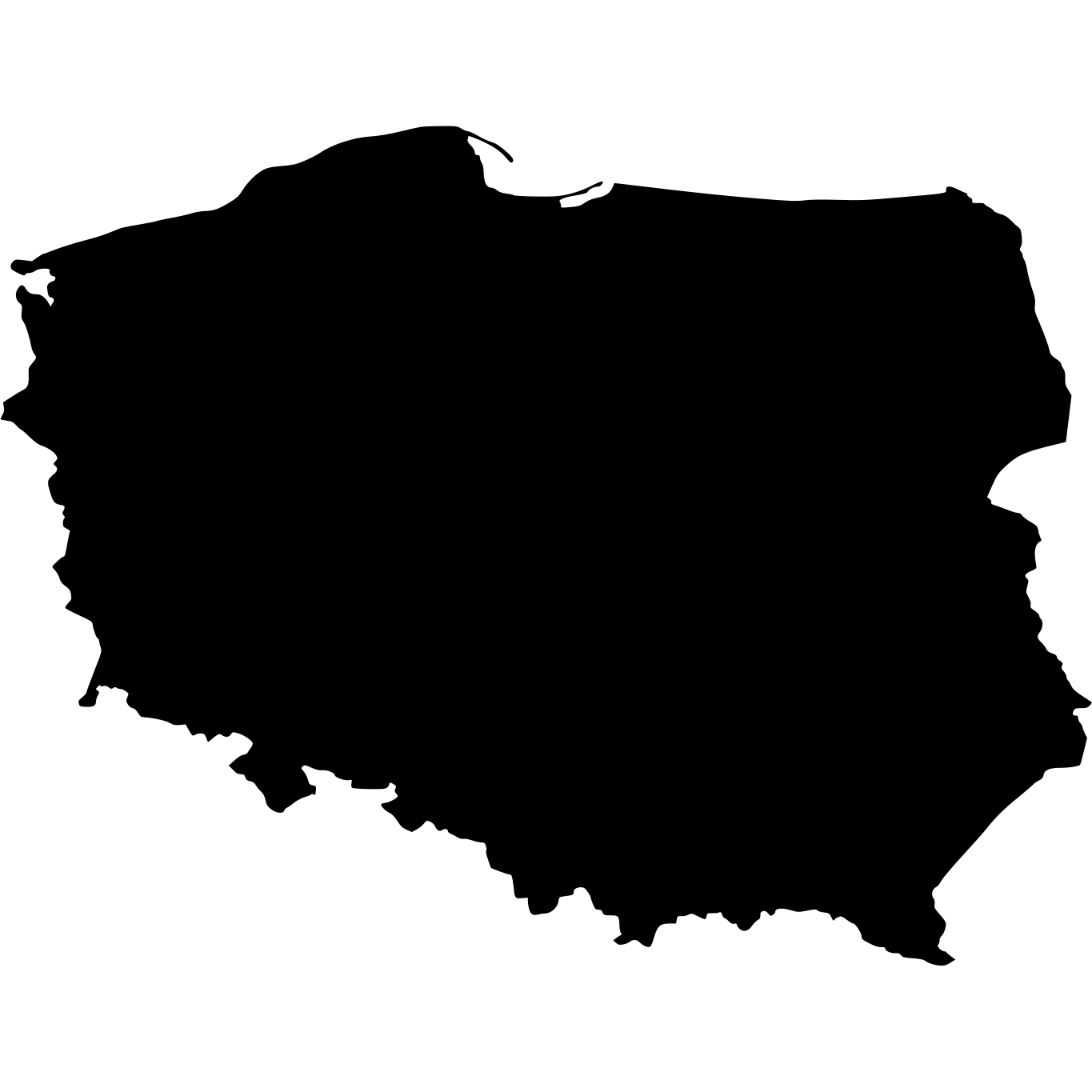
Nanolash is a Polish brand
Often compared with

We're dedicated to providing you with the most up-to-date and science-backed ingredient info out there.
The data we've presented on this page has been verified by a member of the SkinSort Team.
Read more about us· Updated January 22, 2026 • Added by FIQ130


