Geltek Favorite Enzyme Powder
A exfoliator with 17 ingredients.
We independently verify ingredients, backed by peer-reviewed research. Suggest an update.
What's inside
Ingredients List
Aluminum Starch Octenylsuccinate
Absorbent
Oryza Sativa Starch
AbsorbentSodium Cocoyl Isethionate
Cleansing
Sodium Lauroyl Glutamate
SurfactantBetaine
Humectant


Fructooligosaccharides
Humectant
Magnesium Stearate
Cosmetic ColorantAllantoin
Skin Conditioning

Papain
Skin Conditioning
Bromelain
Skin Conditioning
Glycyrrhiza Glabra Root Extract
Bleaching

Centella Asiatica Extract
Cleansing
Plantago Major Callus Extract
Skin ConditioningAloe Barbadensis Extract
Skin Conditioning
Xanthan Gum
EmulsifyingSodium Levulinate
Skin ConditioningSodium Anisate
AntimicrobialAluminum Starch Octenylsuccinate, Oryza Sativa Starch, Sodium Cocoyl Isethionate, Sodium Lauroyl Glutamate, Betaine, Fructooligosaccharides, Magnesium Stearate, Allantoin, Papain, Bromelain, Glycyrrhiza Glabra Root Extract, Centella Asiatica Extract, Plantago Major Callus Extract, Aloe Barbadensis Extract, Xanthan Gum, Sodium Levulinate, Sodium Anisate
Benefits
Ingredients Explained
Aluminum Starch Octenylsuccinate is a synthetic powder used as an absorbent, thickener, and anti-caking agent.
As an absorbent, it is great at mattifying skin by soaking up the oil. This is why you'll find it in a range of products from makeup to moisturizers.
This ingredient is considered a modified starch. Starch can also be found naturally in plants.
One study from 1991 found that 5% of this ingredient enhanced titanium dioxide SPF by as much as 40%. The study found 1% titanium dioxide had a 5.6 SPF and adding 5% of aluminum starch octenylsuccinate boosted it to an SPF of 8.1
Although “aluminum” in an ingredient name can raise red flags for some consumers, the form and usage context matter significantly. For typical topical applications, there is no substantial evidence of health risks - such as cancer, neurotoxicity, or systemic “aluminum overload.”
Learn more about Aluminum Starch OctenylsuccinateOryza Sativa Starch is an absorbent and used to mattify the skin. It is a natural carbohydrate and the main component of rice. A more common name for this ingredient is 'rice starch'.
Rice starch is created by steeping broken grains in a caustic soda.
Rice extract has many skin benefits. Read more about rice extract here.
Learn more about Oryza Sativa StarchSodium cocoyl isethionate is a natural ingredient from coconut oil. It is an ultra gentle cleanser that gives a nice foam without drying the skin or impacting the skin barrier.
The amount of foam created depends on the amount of sodium cocoyl isethionate used in the product.
This ingredient also helps improve the spreadability of a product.
This ingredient hasn’t been shown in studies to feed fungal acne yeast.
Learn more about Sodium Cocoyl IsethionateSodium Lauroyl Glutamate is an amino-acid based mild surfactant that is used in formulas as a primary or secondary cleansing agent. This means it helps lift away oil, dirt, and makeup.
You'll see this ingredient in facial cleansers, shampoos, and even toothpaste because it foams reasonably well while being much gentler than harsher surfactants like SLS.
A study comparing surfactant mixtures found that Sodium Lauroyl Glutamate caused visibly less disruption to skin lipid structure and less irritation than SLS when tested on human subjects; this correlated with the data from in vivo results as well.
The Tenside, Surfactants, Detergents cosmetics industry journal has also concluded that amino acid based surfactants are generally milder than their corresponding alkyl sulfate counterparts. They also stated glutamates in particular are considered one of the gentler options in the category.
The Cosmetic Ingredient Review (CIR) Expert Panel has reviewed dermal irritation and sensitization data for this ingredient at the highest reported use concentration and concluded it to be safe in present practices.
Typical use concentrations tend to run low (generally less than 10%) though the CIR's review noted the highest reported use concentration was 40% as a raw material blend (and not a diluted finished cosmetic product).
Learn more about Sodium Lauroyl GlutamateBetaine is a humectant. Like hyaluronic acid, it helps attract and retain moisture in the skin. It’s known for being gentle and for helping the skin maintain balanced hydration.
Betaine is mainly used to improve hydration and support calmer skin. It helps skin cells regulate water balance because it functions as an osmolyte.
Some studies suggest betaine may support making skin tone more even.
Fun fact: Betaine naturally exists in the skin and the body. In cosmetic products, it can be either plant-derived (most commonly from sugar beets) or synthetically produced for consistency and stability.
Betaine is also known as trimethylglycine.
Learn more about BetaineFructooligosaccharides (FOS) are a type of prebiotic sugar with humectant and skin conditioning properties. As a humectant, they help attract and hold moisture in the skin.
FOS essentially acts as a food source for the "good" bacteria on your skin and make it harder for "bad" bacteria to thrive. A 2022 study using a reconstructured human skin model found that just 1% of FOS was enough to shift the bacteria balance in favor of beneficial species. This suggests it could help support a healthier skin microbiome over time.
This ingredient has a low sensitization risk and testing shows it does not classify as a skin irritant or sensitizer.
FOS are usually produced from sugar beets and can also be found in foods like bananas, garlic, and onions.
Learn more about FructooligosaccharidesMagnesium Stearate is a salt that is 2 parts stearic acid and 1 part magnesium.
It is a white powder that can be used to add bulk and color to products by binding to oil ingredients.
Allantoin is a soothing ingredient known for its protective and moisturizing properties; it's basically a quiet workhorse ingredient you can find in a huge range of cosmetics.
Though it can be derived from the comfrey plant, allantoin is produced synthetically for cosmetic products to ensure purity.
Research shows it can encourage your skin cells to turn over and renew by stimulating keratinocyte and fibroblast proliferation.
It also has mild keratolytic properties to help loosen and shed dead skin cells without being harsh.
Studies also suggest allantoin can help calm inflammation by dialing down some of the chemical signals your skin sends out when it is irritated.
This ingredient is typically used in the 0.1-0.5% range, and the FDA recognizes it as a skin protectant in OTC products up to 2%.
Overall, allantoin is a wonderful addition to most routines; it is stable across a wide pH range (~4-8), works well with other ingredients, and is considered non-sensitizing/non-irritating.
Fun fact: Allantoin is naturally occurring in comfrey root, beets, chamomile, and wheat sprouts. Our bodies even produce it as a byproduct of uric acid metabolism.
Learn more about AllantoinPapain is a proteolytic enzyme extracted from unripe papaya fruit. It is a gentle exfoliator that helps remove the dead skin cells from your outermost layer of skin.
Basically, papain works by dissolving the "glue" holding dead skin cells to your skin's surface. This also promotes cell turnover and smooths texture.
Unlike other exfoliants, papain can work without causing significant irritation.
Beyond exfoliation, its proteolytic action also helps soothe irritated skin and supports the healing of minor wounds.
A 2024 in vivo/in vitro study confirmed its potential to suppress skin inflammation and improve transepidermal water loss (TEWL) in atopic dermatitis models.
Just one thing worth noting: there are reports of allergic responses in individuals with a papaya or latex sensitivity. Be sure to patch test if you're in this camp.
Learn more about PapainBromelain is a proteolytic enzyme derived from pineapple stem. It gently exfoliates by by dissolving the "glue" holding dead skin cells to your skin's surface.
By faciliating the removal of dead skin cells from the outermost layer of skin, it helps with enhancing skin firmness, hydration, and texture.
Besides exfoliation, it also has anti-inflammatory properties by blocking the inflammation signaling pathways.
It is considered gentler than traditional AHAs or physical scrubs and is a great option for sensitive skin. At this time, most of the clinical trial data on enzyme exfoliants is still limited and further in vivo research is needed.
Typical concentrations for this ingredient range between 0.1-5%.
Bromelain's use in cosmetic formulations has been limited by its sensitivity to pH and temperature (it maintains best stability at pH 5.0). This means how effective is it in a finished product can vary depending on how well the formula is designed.
Learn more about BromelainGlycyrrhiza Glabra Root Extract is an extract of the roots of Licorice. It has been found to have several benefits such as skin hydrating, conditioning, and soothing.
One component, glabridin, has extra potent antioxidant and soothing properties. It has also been found to block pigmentation from UVB rays in guinea pigs.
Licorice Root also contains a flavonoid. Flavonoids are a natural substance from in plants. Flavonoids also have antioxidant properties.
Another component, glycyrrhizin, has been found to have anti-inflammatory and antimicrobial benefits. This may make licorice root extract effective at treating acne. However, more research is needed to support this.
Liquiritin is one of the flavone compounds found in licorice. It has been found to help lighten skin by preventing tyrosinase from reacting with tyrosine. When the two react, protein is converted to melanin. Melanin is the substance in your body that gives your features pigmentation.
Learn more about Glycyrrhiza Glabra Root ExtractCentella Asiatica Extract (Centella) is one of the most researched botanical extracts in skincare with decades of studies backing its effects on inflammation, collagen, and the skin barrier.
That research keeps pointing back to the same four triterpenoid saponins: Asiaticoside, Madecassoside, Asiatic Acid, and Madecassic Acid.
These compounds allow centella to dial back inflammation, encourage the skin to build and hold onto collagen, support the barrier and hydration, and bring solid antioxidant activity to protect against signs of aging.
Centella also carries a nice supporting cast of Vitamin A, vitamin C, several B vitamins, and amino acids. Put it all together and you get an ingredient that soothes, hydrates, and protects, all at once.
Most of centella's magic comes from the four big compounds (Asiaticoside, Madecassoside, Asiatic Acid, and Madecassic Acid). These are the actives doing the heavy lifting in almost every centella study.
Here is the short version of what they do in the skin:
So it is not just soothing for the sake of soothing. Centella calms the skin AND helps it rebuild.
Just FYI, not all centella on an ingredient list is the same. What you are getting actually depends on the extract:
Fun fact on the ratios: the leaves tend to be richest in Madecassoside and Asiaticoside, and lower in the two acids. The exact amounts shift with where the plant is grown and how it is processed. This means purity really does vary brand to brand.
Centella is one of the most easygoing actives out there.
It layers well with basically everything: niacinamide, hyaluronic acid, peptides, and vitamin C, and also pairs nicely with stronger actives like retinoids and exfoliating acids where it can help take the edge off irritation.
On the safety side, centella and its triterpenes are classified as weak sensitizers, meaning allergic reactions are possible but uncommon.
Patch tests at 1% and 5% came back negative in test panels, and creams at typical use levels did not cause allergic reactions across large groups of people.
But as with any new active, a patch test is still a smart move for very reactive skin.
Centella is widely used because it is effective at low percentages. For context, human safety testing found no meaningful irritation from creams containing centella extract at everyday use levels (the tested amounts were well under 1%).
The irritancy threshold in animal testing was also above 30% (so real-world formulas sit far below anything concerning).
In collagen lab studies, higher concentrations drove more collagen synthesis, so serums built around centella tend to feature it more prominently.
Bottom line: you will find centella working nicely anywhere from a fraction of a percent up to hero-ingredient levels depending on whether it is a supporting soother or the main event.
Fun fact: Centella has been used as a medicine and in food for many centuries. As a medicine, it is used to treat burns, scratches, and wounds.
Learn more about Centella Asiatica ExtractWe don't have a description for Plantago Major Callus Extract yet.
Aloe Barbadensis Extract is the extract of the whole Aloe plant. It has anti-inflammatory, moisturizing, antiseptic, and healing properties.
Aloe contains the antioxidants Vitamins A, C, and E. . These vitamins neutralize free radicals.
It also contains sugars in the form of monosaccharides and polysaccharides, folic acid, choline, many common minerals such as calcium, 12 anthraquinones, fatty acids, amino acids, and Vitamin B12.
The polysaccharides in aloe help moisturize your skin.
Despite helping with sunburn, aloe should not replace your sunscreen.
Learn more about Aloe Barbadensis ExtractXanthan gum is used as a stabilizer and thickener within cosmetic products. It helps give products a sticky, thick feeling - preventing them from being too runny.
On the technical side of things, xanthan gum is a polysaccharide - a combination consisting of multiple sugar molecules bonded together.
Xanthan gum is a pretty common and great ingredient. It is a natural, non-toxic, non-irritating ingredient that is also commonly used in food products.
Learn more about Xanthan GumSodium levulinate is the a sodium salt of Levulinic Acid. Oncedissolved in an aqueous solution, the two ingredients become identical. It is usually derived from renewable plant sources like corn starch or sugarcane.
In skincare, it mostly acts as a skin conditioning agent that keeps skin soft and hydrated. It also acts as a preservative booster by inhibiting the growth of mold, yeast, and bacteria.
It's often paired with Sodium Anisate as the two create a broad-spectrum preservative system that is popular in "natural" formulations.
This ingredient is water-soluble.
The CIR Expert Panel for Cosmetic Ingredient Safety has concluded this ingredient to be non-irritated and there are no restrictions for use in EU cosmetics. The FDA also allows this ingredient to be used as a food-grade flavoring agent.
Learn more about Sodium LevulinateSodium Anisate comes from fennel. It is used as a preservative and to add flavoring.
Sodium Anisate has antimicrobial properties.
Reviews
No written reviews yet. Be the first to review this product.
Recent searches
Search reviews by skin type, ingredient, or keyword.
Where it's from
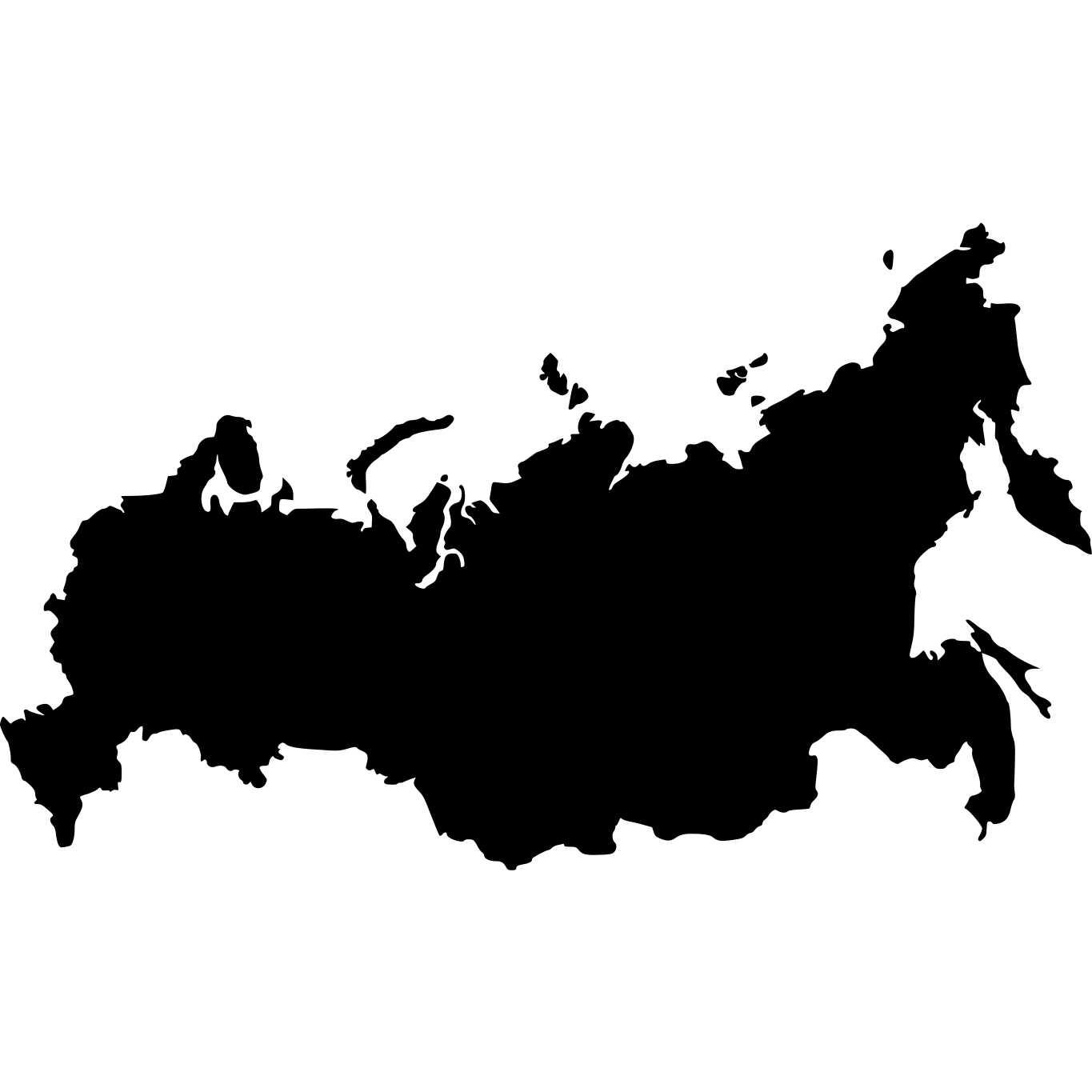
Geltek is a Russian brand
Often compared with

We're dedicated to providing you with the most up-to-date and science-backed ingredient info out there.
The data we've presented on this page has been verified by a member of the SkinSort Team.
Read more about us· Updated March 22, 2024 • Added by wessa


