Alaffia Everyday Shea Body Wash
A body wash with 26 ingredients.
Body wash with 26 ingredients
We independently verify ingredients, backed by peer-reviewed research. Suggest an update.
What's inside
Ingredients List
Water
Skin ConditioningCoco-Betaine
Cleansing
Potassium Shea Butterate


Potassium Cocoate
Emulsifying

Melia Azadirachta Leaf
Skin ConditioningPassiflora Incarnata Fruit Extract
Skin ConditioningJasminum Officinale Flower/Leaf Extract
Masking
Citrus Aurantium Dulcis Fruit Extract
MaskingCitrus Paradisi Fruit Extract
Skin ConditioningPrunus Armeniaca Fruit Extract
Skin ConditioningCaprylic/Capric Triglyceride
Masking

Pyrus Communis Fruit Extract
Skin ConditioningVanilla Planifolia Fruit Extract
Skin Conditioning
Pyrus Malus Fruit Extract
Skin Conditioning
Citrus Limon Peel Extract
EmollientCoffea Arabica Leaf/Seed Extract
MaskingCucumis Melo Cantalupensis Fruit Extract
AstringentPrunus Serotina Fruit Extract
MaskingAnanas Sativus Fruit Extract
Skin ConditioningCocos Nucifera Fruit Extract
Emollient
Rubus Idaeus Fruit Extract
AstringentButter Extract
Emollient
Ethylhexylglycerin
Skin ConditioningSodium Phytate
ChelatingPhenoxyethanol
Preservative
Potassium Hydroxide
BufferingWater, Coco-Betaine, Potassium Shea Butterate, Potassium Cocoate, Melia Azadirachta Leaf, Passiflora Incarnata Fruit Extract, Jasminum Officinale Flower/Leaf Extract, Citrus Aurantium Dulcis Fruit Extract, Citrus Paradisi Fruit Extract, Prunus Armeniaca Fruit Extract, Caprylic/Capric Triglyceride, Pyrus Communis Fruit Extract, Vanilla Planifolia Fruit Extract, Pyrus Malus Fruit Extract, Citrus Limon Peel Extract, Coffea Arabica Leaf/Seed Extract, Cucumis Melo Cantalupensis Fruit Extract, Prunus Serotina Fruit Extract, Ananas Sativus Fruit Extract, Cocos Nucifera Fruit Extract, Rubus Idaeus Fruit Extract, Butter Extract, Ethylhexylglycerin, Sodium Phytate, Phenoxyethanol, Potassium Hydroxide
Benefits
Concerns
Ingredients Explained
Water. It's the most common cosmetic ingredient of all. You'll usually see it at the top of ingredient lists, meaning that it makes up the largest part of the product.
So why is it so popular? Water most often acts as a solvent - this means that it helps dissolve other ingredients into the formulation.
You'll also recognize water as that liquid we all need to stay alive. If you see this, drink a glass of water. Remember to stay hydrated!
Learn more about WaterCoco-Betaine is the natural version of Cocamidopropyl Betaine. It is often derived from coconuts.
Coco-Betaine is a surfactant, meaning it helps remove dirt and oil from the skin.
Potassium Shea Butterate isn't fungal acne safe.
Potassium Cocoate is basically a liquid coconut soap that's made by cooking coconut oil with potassium hydroxide.
It's a cleanser, foaming, and emulsifying agent that mostly shows up in soaps and "natural" cleansers.
Rinse-off concentrations typically range from 2-25%.
The finished product sits at a fairly high pH (~9-11) because it's a true soap. This just means it can feel drying or slightly stripping if a formula isn't balance with emollients.
Allergy and irritation risk is low as this ingredient was found to be an irritant in less than 1% of subjects (2 of these subjects had active psoriasis and 3 had active eczema).
Fungal acne: The Malassezia yeast feeds on fatty acids in the ~C12-24 range, and Potassium Cocoate is made of exactly those (Lauric C12, Myristic C14, Palmitic C16, Oleic C18:1). Lab studies have shown the yeast can take up Lauric Acid and grows readily on Palmitic Acid. Therefore, this ingredient may not be fungal acne safe.
Learn more about Potassium CocoateWe don't have a description for Melia Azadirachta Leaf yet.
We don't have a description for Passiflora Incarnata Fruit Extract yet.
Jasmine flower and leaf has perfuming, antioxidant, and antimicrobial properties.
The antioxidant activity in Jasmine comes from flavonoids - a compound found in many plants. While antioxidants are great - Jasmine flowers also contain coumarin, a known EU allergen.
This ingredient can also help mask unpleasant scents from other ingredients.
Learn more about Jasminum Officinale Flower/Leaf ExtractCitrus Aurantium Dulcis Fruit Extract is more commonly known as the bitter orange. Native to Southeast Asia, this extract is commonly found in both cosmetics and foods.
The bitter orange possesses antibacterial and antioxidant properties.
It can also be mildly exfoliating due to the citric acid, an AHA.
Citrus fruits are rich in flavonoids, alkaloids, and vitamin C.
Learn more about Citrus Aurantium Dulcis Fruit ExtractWe don't have a description for Citrus Paradisi Fruit Extract yet.
This ingredient is also known as apricot extract. It has skin conditioning properties and is rich in vitamins and minerals.
Caprylic/Capric Triglyceride (aka MCT Oil) is a lightweight emollient, solvent, and texture enhancer. It is considered a skin-softener by helping to prevent moisture loss.
Though it behaves like an oil, it is not technically one due to its chemical composition. One perk of this ingredient is that it is very stable, resistant to oxidation, and unlikely to go rancid.
In practice, that translates to a long shelf life and a consistently elegant skin feel.
While there is an assumption Caprylic Triglyceride can clog pores due to it being derived from coconut oil, there is no research supporting this. Just patch test if you have concerns.
Fractionated coconut oil and MCT Oil are both listed as Caprylic/Capric Triglyceride according to INCI. This is because INCI names are based on the ingredient’s final chemical composition and not its marketing name or source.
This ingredient is treated as the gold standard fungal acne safe oil. Even though it is coconut derived, the problematic lauric acid is stripped out.
This leaves just caprylic (C8) and capric (C10) acid. These chain lengths actually trend antifungal; a 2020 study found caprylic acid was enough to disrupt Malassezia furfur cell membrane, with a caprylic acid derivative damaging membrane structures at concentrations as low as 0.2%.
Learn more about Caprylic/Capric TriglycerideThis ingredient comes from the common pear and has skin conditioning/skin protecting properties. Pears are rich in bioactive phenolic compounds, with the most notable ones being Arbutin, Chlorogenic Acid, and Catechin.
A small in-vivo study with 13 volunteers found using a 5% pear extract gel over 12 weeks significantly improved skin moisture and elasticity, and decreased melanin and sebum levels compared to placebo.
In phytochemical analysis, this extract has also demonstrated anti-tyrosinase activity which further supports its brightening properties.
Just so you know, individuals with birch pollen allergy should be careful and patch test this ingredient as pears belong to the same family. But topical use of this ingredient is generally well-tolerated.
Learn more about Pyrus Communis Fruit ExtractVanilla Planifolia Fruit Extract comes from the vanilla orchid native to central America. It is a skin-soothing ingredient.
This ingredient is skin-soothing and contains polyphenols that give it antioxidant properties.
This ingredient is not known to sensitize or irritate skin (unlike Vanilla Tahitensis). Vanilla tahitensis has shown to irritate skin in low amounts.
Learn more about Vanilla Planifolia Fruit ExtractPyrus Malus Fruit Extract is extract from Apples. Apples are rich in Vitamin C, sugars, and antioxidants.
The sugar in Apples are humectants and help hydrate the skin. On top of that, apples also contain some acids, such as malic acid. These acids may have a mild exfoliating effect.
Last, the phytochemicals found in apples are strong antioxidants. These antioxidants help with anti-aging as they protect your skin cells against oxidative damage.
Learn more about Pyrus Malus Fruit ExtractCitrus Limon Peel Extract is created from the peel of a lemon. Lemon peels contain Vitamin C. Lemon peels also exhibit antibacterial, antioxidant, and antifungal properties.
This ingredient comes from parts of the Coffee tree, Coffea Arabica.
Coffee leaves and beans (seeds) have plenty of skin benefits. They exhibit anti-aging, anti-inflammatory, and photo-protection properties.
Learn more about the benefits of coffee beans here.
Learn more about Coffea Arabica Leaf/Seed ExtractWe don't have a description for Cucumis Melo Cantalupensis Fruit Extract yet.
We don't have a description for Prunus Serotina Fruit Extract yet.
This extract comes from the pineapple fruit. Its main claim to fame is bromelain, a gentle exfoliator that helps remove dead skin cells from the outermost layer of skin.
Exfoliation from bromelain is considered a gentler alternative to physical or chemical exfoliants; this makes it suitable for sensitive skin types.
Beyond exfoliation, this extract also contains natural sugars with humectant properties and some vitamin C.
Overall, this is a well-tolerated and low-risk ingredient unless you have a pineapple allergy.
Learn more about Ananas Sativus Fruit ExtractCocos Nucifera Fruit Extract (coconut extract) is a water-soluble extract from coconut fruit.
It's a skin conditioning agent that helps keep the skin soft and hydrated. This ingredient is different from coconut oil with a totally different composition.
Direct research on this extract is limited and mostly comes from supplier safety dossiers:
Human testing found it to be non-irritating or sensitizing in a 50-subject occlusive patch test.
Real-world concentrations are very low: industry survey data puts it at 0.0007% to 0.02% in face and neck products, 0.0005% in moisturizers and cleansers, and up to 0.04% in hair conditioners.
Most human clinical skin research on coconut is on virgin coconut oil and not this extract. For example, a randomized double-blind trial found virgin coconut oil as effective and safe as mineral oil for mild to moderate xerosis with significant improvement in hydration and skin surface lipids. However, you can't transfer that to a water-based fruit extract at 0.01%.
There's no comedogenicity data for this specific ingredient; the "coconut clogs pores" reputation comes from coconut oil which scored high on the old rabbit ear assay.
That method tested pure ingredients on rabbit ears and later work showed the results translate inconsistently to human skin.
Some people still find it breaks them out. So if that's you, definitely trust your skin.
Learn more about Cocos Nucifera Fruit ExtractWe don't have a description for Rubus Idaeus Fruit Extract yet.
Butter Extract isn't fungal acne safe.
Ethylhexylglycerin is created from glycerin. It is a multitasker ingredient that:
The CIR Expert Panel found minimal skin absorption or sensitization of any kind in a safety assessment. Though this ingredient is considered well-tolerated, a small number of cases of allergic dermatitis have been published since 2002. Just be sure to patch test if you are unsure.
Industry-reported use ranges from 8% in rinse-off products and 2% in leave-on formulations.
Learn more about EthylhexylglycerinSodium Phytate is the sodium salt of Phytic acid, a compound that plants store phosphorus in. It's the plant-derived alternative to ingredients like Disodium EDTA.
In skincare, this ingredient is a chelator that grabs onto trace metal ions like iron and copper that sneak into formulas through water/raw materials.
Those metals speed up oxidation so binding them keeps oils, fragrance, and actives from going off, stops color changes, and helps the preservative system work harder.
Survey data shows usage levels range from 0.0099%-0.5% in leave-on products, 0.025%-0.3% in rinse-off, and up to 0.05% in eye-area products. Suppliers typically recommend a range between 0.05-0.5%.
Learn more about Sodium PhytatePhenoxyethanol is one of the most widely used preservatives in skincare (and for good reason!).
It has a large spectrum of antimicrobial activity and especially effective bacteria, yeast, and mold while only having a weak effect on your skin's natural microbiome.
On a cellular level, it disrupts the cell membranes of microbes by poking holes that make the cell leak. This shuts down the chemical reactions the microbe needs to make energy so it can no longer survive.
Another perk of this ingredient is that it stays functional across a wide pH range (3-10).
You'll often see it paired with boosters like Ethylhexylglycerin; one study showed that a 1:9 ratio of Ethylhexylglycerin to Phenoxyethanol damages bacterial membranes as effectively as doubling the Phenoxyethanol concentration on its own.
Typical use concentrations range from 0.3-1% depending on the formula, and this ingredient is capped at 1% int the EU.
Safety-wise, the fear mongering does not hold up to the evidence. The EU's Scientific Committee on Consumer Safety and FDA consider it safe as a preservative at up to 1%, including for children of all ages.
Adverse systemic effects only showed up in animal studies at exposures roughly 200x higher than what people get from cosmetics. And despite its very widespread use, this ingredient is a rare sensitizer and allergic reactions are uncommon.
Learn more about PhenoxyethanolPotassium Hydroxide (also known as potash) is a strong alkaline ingredient that does one job: it nudges a product's pH up so the whole formula lands in a skin-friendly range.
It's also the base that turns oils into liquid soap during the soap making process.
An expert safety panel reviewed it and found it safe when formulations are made to be non-irritating.
As a pH adjuster, it's typically used well under 1% though regulatory caps go much higher: 5% in nail cuticle removers and 2-4.5% in hair straighteners.
Though there is some concern for irritation from raw or high pH material, a well-balanced formula will be a non-issue for the vast majority of people.
Learn more about Potassium HydroxideReviews
No written reviews yet. Be the first to review this product.
Recent searches
Search reviews by skin type, ingredient, or keyword.
Where it's from
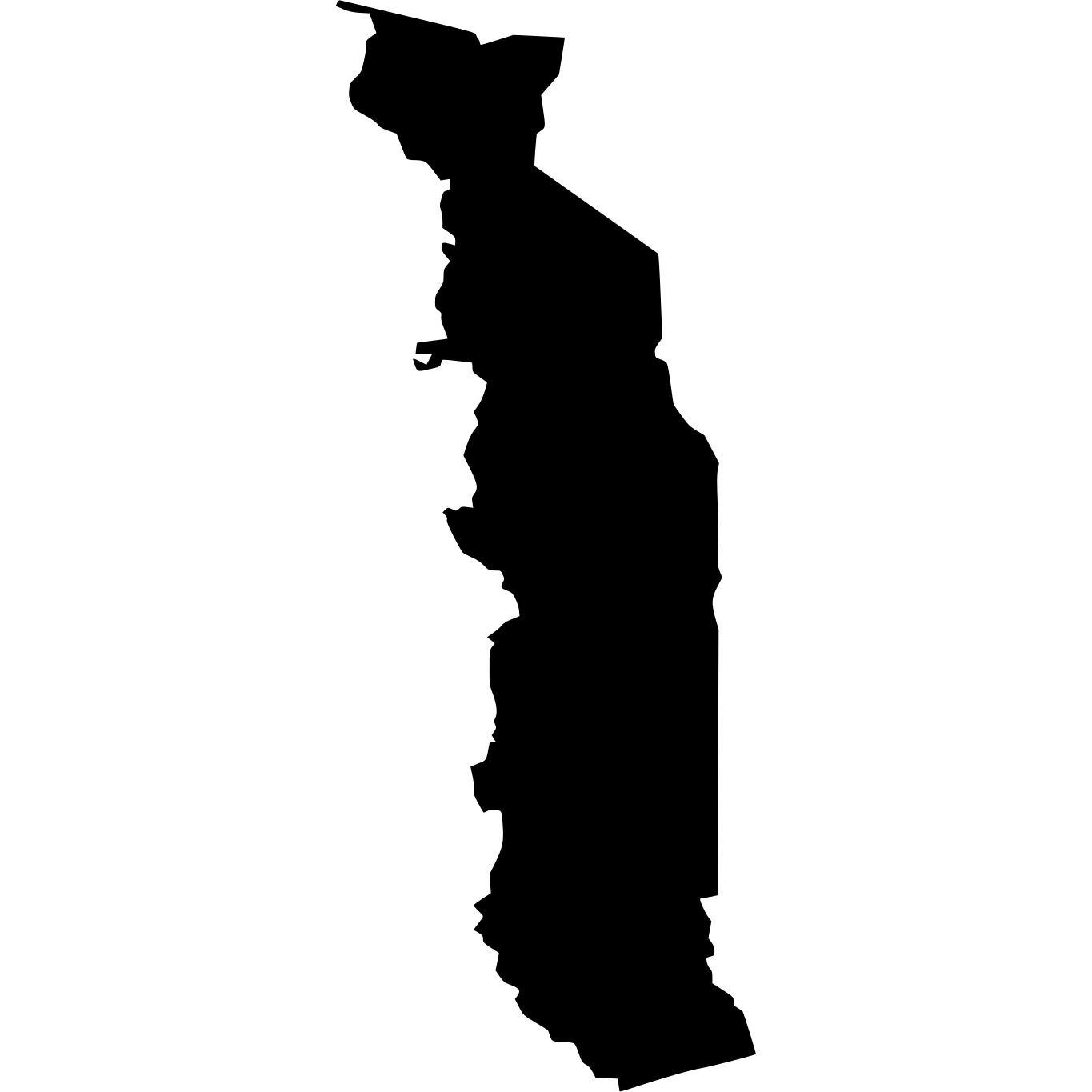
Alaffia is a Togolese brand

We're dedicated to providing you with the most up-to-date and science-backed ingredient info out there.
The data we've presented on this page has been verified by a member of the SkinSort Team.
Read more about us· Published June 11, 2024 • Added by weirdolei


