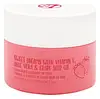
This hydrating lip mask is formulated around Vitis Vinifera Seed Oil to hydrate lips and calm redness.
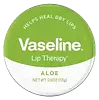
This calming lip moisturizer is formulated around Petrolatum and Aloe Barbadensis Leaf Extract to calm redness and hydrate lips.


What's inside
What's inside
 Key Ingredients
No key ingredients
Benefits
Concerns
Ingredients Side-by-side
Ethylhexyl Palmitate
Emollient




Polyisobutene
Hydrogenated Styrene/Isoprene Copolymer
Hydrogenated Poly(C6-20 Olefin)
Abrasive
Polyethylene
Abrasive
Methyl Hydrogenated Rosinate
Perfuming

Vitis Vinifera Seed Oil
Emollient


Paraffinum Liquidum
Emollient
Phytosteryl Oleate
Skin ConditioningTocopheryl Acetate
Antioxidant


Octyldodecanol
Emollient
Aroma
Alcohol
Antimicrobial

Neotame
MaskingBenzyl Benzoate
Antimicrobial
Cocos Nucifera Oil
Masking
Aloe Barbadensis Leaf Extract
Emollient
Benzyl Alcohol
Perfuming
Limonene
Perfuming
CI 16035
Cosmetic ColorantCI 77891
Cosmetic ColorantCI 19140
Cosmetic ColorantEthylhexyl Palmitate, Polyisobutene, Hydrogenated Styrene/Isoprene Copolymer, Hydrogenated Poly(C6-20 Olefin), Polyethylene, Methyl Hydrogenated Rosinate, Vitis Vinifera Seed Oil, Paraffinum Liquidum, Phytosteryl Oleate, Tocopheryl Acetate, Octyldodecanol, Aroma, Alcohol, Neotame, Benzyl Benzoate, Cocos Nucifera Oil, Aloe Barbadensis Leaf Extract, Benzyl Alcohol, Limonene, CI 16035, CI 77891, CI 19140
Reviews
Ingredients Explained
These ingredients are found in both products.
Ingredients higher up in an ingredient list are typically present in a larger amount.
Aloe Barbadensis Leaf Extract is a botanical extract pulled from the leaves of aloe vera and one of the most studied plant ingredients in cosmetics.
The inner leaf gel it comes from is mostly water (~99-99.5%) and the remaining fraction is made up of pretty good stuff: polysaccharides, vitamins, phenolics, and enzymes.
Its headline job is hydration.
The star polysaccharide in aloe, acemannan, is a humectant that retains moisture and helps reduce trans-epidermal water loss.
Aloe also has real soothing credentials; it contains anti-inflammatory compounds like bradykinase and C-glucosyl chromone that help calm irritation and redness.
On the repair side, lab work shows that acemannan wakes up your skin's repair cells (fibroblasts), prompting them to multiply and speed up healing.
There's some human data for cosmetic benefit too: a cream containing 10% Aloe Barbadensis leaf extract improved skin hydration and elasticity in a real-use study.
Safety-wise, this ingredient is well-regarded with just one rare downside; there have been some case reports of acute eczema, contact urticaria, and dermatitis in people who applied aloe-derived ingredients topically. Those with a known aloe or Liliaceae sensitivity should patch test.
Typical use levels range widely, from under 1% up to 90%+ depending on the format and the effect you are after.
Learn more about Aloe Barbadensis Leaf ExtractAroma refers to an ingredient, or mixture of ingredients, that impart or mask a flavor.
The name is slightly confusing. This is because INCI associates aroma with flavor instead of smell.
Here is the official definition from the The International Cosmetic Ingredient Dictionary and Handbook:
“Aroma is a term for ingredient labeling used to identify that a product contains a material or combination of materials normally added to a cosmetic to produce or to mask a particular flavor.”
INCI shows the only purpose of aroma to be "flavouring".
However, due to regulation differences, some companies may use aroma in place of parfum.
In Canada, this ingredient only has to be listed in concentrations above 1%.
Learn more about AromaBenzyl Alcohol is an aromatic alcohol with several roles: it's a preservative, solvent, and mild fragrance component with a floral scent.
This ingredient has been deemed safe for use in cosmetic formulations at concentrations up to 5%, and up to 10% in hair dyes. You'll typically see 0.5-2% in most rinse-off or leave-on products.
As a preservative, it works by disrupting the membrane of microbial proteins. This helps keep bacteria and fungi from growing in your products.
The sensitization picture is actually quite assuring as well:of nearly 71,000 patients patch tested with benzyl alcohol, only 0.21% showed a positive reaction with most of them being weakly positive.
This led researchers to conclude that benzyl alcohol cannot be regarded as a significant contact allergen.
It is worth noting this ingredient is classified as one of the EU's regulated fragrance allergens and restricted to 1% in finished products.
Labels must also declare it in concentrations above 0.001% in leave-on products and 0.01% in rinse-off products.
At concentrations around 5%, localized redness and itching can appear as a direct irritant response and not as a true allergic reaction.
Learn more about Benzyl AlcoholLimonene is a fragrance that adds scent and taste to a formulation.
It's found in the peel oil of citrus fruits and other plants such as lavender and eucalyptus. The scent of limonene is generally described as "sweet citrus".
Limonene acts as an antioxidant, meaning it helps neutralize free radicals.
When exposed to air, oxidized limonene may sensitize the skin. Because of this, limonene is often avoided by people with sensitive skin.
The term 'fragrance' is not regulated in many countries. In many cases, it is up to the brand to define this term. For instance, many brands choose to label themselves as "fragrance-free" because they are not using synthetic fragrances. However, their products may still contain ingredients such as essential oils that are considered a fragrance.
Learn more about Limonene

