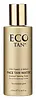
This tanning is formulated around Centella Asiatica Leaf Extract and Ascorbic Acid to hydrate skin and strengthen the skin barrier.
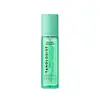
This hydrating toner is formulated around Aloe Barbadensis Leaf Juice and Sodium Hyaluronate to hydrate skin and calm redness.


What's inside
What's inside
 Key Ingredients
Benefits
Concerns
No concerns
Ingredients Side-by-side
Water
Skin ConditioningGlycerin
Humectant


Dihydroxyacetone
Skin ConditioningButylene Glycol
Humectant
Sorbitol
Humectant
Centella Asiatica Leaf Extract
Skin Conditioning


Sodium Hyaluronate
Humectant
Ascorbic Acid
Antioxidant




Glycyrrhiza Glabra Root Extract
Bleaching
Panthenol
Skin Conditioning
Hyaluronic Acid
Humectant
Glucose
Humectant
Xylitylglucoside
Humectant
Anhydroxylitol
Humectant
Xylitol
Humectant
Sodium Gluconate
Skin ConditioningSodium Benzoate
Masking
Potassium Sorbate
Preservative
Aloe Barbadensis Leaf Juice
Skin Conditioning
Dihydroxyacetone
Skin ConditioningGlycerin
Humectant
Caprylyl/Capryl Glucoside
CleansingLeuconostoc/Radish Root Ferment Filtrate
Antimicrobial

Sodium Hyaluronate
Humectant
Pelargonium Graveolens Oil
Masking




Citrus Aurantium Dulcis Peel Oil
Masking
Glyceryl Caprylate
EmollientSodium Cocoyl Glutamate
Cleansing
Dehydroxanthan Gum
Emulsion StabilisingPolyglyceryl-6 Oleate
Emulsifying
Sodium Surfactin
CleansingCitric Acid
Buffering
Limonene
Perfuming
Citronellol
Perfuming
Geraniol
Perfuming
Aloe Barbadensis Leaf Juice, Dihydroxyacetone, Glycerin, Caprylyl/Capryl Glucoside, Leuconostoc/Radish Root Ferment Filtrate, Sodium Hyaluronate, Pelargonium Graveolens Oil, Citrus Aurantium Dulcis Peel Oil, Glyceryl Caprylate, Sodium Cocoyl Glutamate, Dehydroxanthan Gum, Polyglyceryl-6 Oleate, Sodium Surfactin, Citric Acid, Limonene, Citronellol, Geraniol
Reviews
Ingredients Explained
These ingredients are found in both products.
Ingredients higher up in an ingredient list are typically present in a larger amount.
Dihydroxyacetone, or DHA, is the active ingredient in self-tanners.
It's a simply sugar that reacts with the free amino acids in your outermost layer of skin to produce brown-colored compounds called melanoidins.
DHA does not penetrate living skin cells, does not interact with melanocytes, and does not affect actualy melanin production.
There's a "safety controversy" that largely stems from misinterpreted studies:
Once concern is that DHA can generate unstable molecules that can damage cells (free radicals) when exposed to sunlight. This only happens in the outermost layer of dead skin cells and wearing SPF on top takes care of it.
The DNA damage claim comes from lab studies that doused living skin cells in much higher concentrations of DHA than you'd ever find in a self-tanner. That's not really a meaningful comparison to putting self-tanning lotion on your skin.
Regulatory bodies around the world, including the EU's Scientific Committee on Consumer Safety (SCCS) and the U.S. FDA consider it safe for use in cosmetics when applied topically (maximum 10%, and most self-tanners contain between 3-5%).
Learn more about DihydroxyacetoneGlycerin (or glycerol) is a compound naturally found in your skin. It's a powerhouse humectant that pulls water into the stratum corneum.
Topically, glycerin does several things at once:
Your skin makes glycerin on its own (mostly from sebaceous oil breakdown) and shuttles it to your outermost layer of skin, or your epidermis, via aquaporin-3.
Aquaporin-3 is a transporter that is essential for normal skin hydration, elasticity, and repair. Interestingly, mice lacking in AQP3 have dry and less elastic skin that can be fully corrected with glycerin.
This ingredient is non-irritating, plays well with almost every ingredient, and works across all skin types. Typical use is anywhere between 3-10% but can go up to 79% in some leave-on products.
Just know very high concentrations (>40%) can feel tacky in low humidity.
Glycerin is the name for this ingredient in American English. British English uses Glycerol/Glycerine.
Learn more about GlycerinSodium Hyaluronate is the salt form of hyaluronic acid. It is a long sugar chain that is naturally found in your skin, joints, and connective tissue that maintains hydration and elasticity.
In skincare, it works as a humectant. It pulls water from the environment and deeper layers of skin and binds it to the surface.
Interestingly, the size of the molecule affects its behavior:
Some clinical evidence links low molecular weight versions to improved wrinkle depth, elasticity, anti-inflammatory effects, and barrier repair.
Many serums use a blend of both weights so you can get surface hydration plus longer-lasting and deeper effects.
You'll typically see concentrations between 0.1-2% for this ingredient.
Learn more about Sodium Hyaluronate

