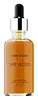
This tanning is formulated around Rubus Idaeus Seed Oil to hydrate skin.


What's inside
What's inside
 Key Ingredients
Benefits
Concerns
Ingredients Side-by-side
Water
Skin ConditioningDihydroxyacetone
Skin ConditioningAlcohol Denat.
Antimicrobial




Glycerin
Humectant


Rubus Idaeus Seed Oil
Emollient

Hydrolyzed Silk
Humectant
Aloe Barbadensis Leaf Juice
Skin Conditioning

Polysorbate 80
Emulsifying
Erythrulose
TanningCaramel
Cosmetic ColorantXanthan Gum
EmulsifyingParfum
Masking

Limonene
Perfuming
Geraniol
Perfuming
Hexyl Cinnamal
Perfuming
Benzyl Salicylate
Perfuming
Butylphenyl Methylpropional
Perfuming
Lecithin
Emollient
Caffeine
Skin Conditioning
Tocopheryl Acetate
Antioxidant


Palmitoyl Carnitine
Skin ConditioningSodium Hydroxide
BufferingBenzoic Acid
Masking
Phenoxyethanol
Preservative
Dehydroacetic Acid
Preservative
Water, Dihydroxyacetone, Alcohol Denat., Glycerin, Rubus Idaeus Seed Oil, Hydrolyzed Silk, Aloe Barbadensis Leaf Juice, Polysorbate 80, Erythrulose, Caramel, Xanthan Gum, Parfum, Limonene, Geraniol, Hexyl Cinnamal, Benzyl Salicylate, Butylphenyl Methylpropional, Lecithin, Caffeine, Tocopheryl Acetate, Palmitoyl Carnitine, Sodium Hydroxide, Benzoic Acid, Phenoxyethanol, Dehydroacetic Acid







Reviews
Ingredients Explained
These ingredients are found in both products.
Ingredients higher up in an ingredient list are typically present in a larger amount.
Dihydroxyacetone, or DHA, is the active ingredient in self-tanners.
It's a simply sugar that reacts with the free amino acids in your outermost layer of skin to produce brown-colored compounds called melanoidins.
DHA does not penetrate living skin cells, does not interact with melanocytes, and does not affect actualy melanin production.
There's a "safety controversy" that largely stems from misinterpreted studies:
Once concern is that DHA can generate unstable molecules that can damage cells (free radicals) when exposed to sunlight. This only happens in the outermost layer of dead skin cells and wearing SPF on top takes care of it.
The DNA damage claim comes from lab studies that doused living skin cells in much higher concentrations of DHA than you'd ever find in a self-tanner. That's not really a meaningful comparison to putting self-tanning lotion on your skin.
Regulatory bodies around the world, including the EU's Scientific Committee on Consumer Safety (SCCS) and the U.S. FDA consider it safe for use in cosmetics when applied topically (maximum 10%, and most self-tanners contain between 3-5%).
Learn more about DihydroxyacetonePhenoxyethanol is one of the most widely used preservatives in skincare (and for good reason!).
It has a large spectrum of antimicrobial activity and especially effective bacteria, yeast, and mold while only having a weak effect on your skin's natural microbiome.
On a cellular level, it disrupts the cell membranes of microbes by poking holes that make the cell leak. This shuts down the chemical reactions the microbe needs to make energy so it can no longer survive.
Another perk of this ingredient is that it stays functional across a wide pH range (3-10).
You'll often see it paired with boosters like Ethylhexylglycerin; one study showed that a 1:9 ratio of Ethylhexylglycerin to Phenoxyethanol damages bacterial membranes as effectively as doubling the Phenoxyethanol concentration on its own.
Typical use concentrations range from 0.3-1% depending on the formula, and this ingredient is capped at 1% int the EU.
Safety-wise, the fear mongering does not hold up to the evidence. The EU's Scientific Committee on Consumer Safety and FDA consider it safe as a preservative at up to 1%, including for children of all ages.
Adverse systemic effects only showed up in animal studies at exposures roughly 200x higher than what people get from cosmetics. And despite its very widespread use, this ingredient is a rare sensitizer and allergic reactions are uncommon.
Learn more about PhenoxyethanolWater. It's the most common cosmetic ingredient of all. You'll usually see it at the top of ingredient lists, meaning that it makes up the largest part of the product.
So why is it so popular? Water most often acts as a solvent - this means that it helps dissolve other ingredients into the formulation.
You'll also recognize water as that liquid we all need to stay alive. If you see this, drink a glass of water. Remember to stay hydrated!
Learn more about Water

