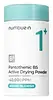
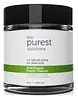
Numbuzin No.1 Pantothenic B5 Active Drying Powder Versus The Purest Solutions Fruit Enzyme Powder Cleanser
This oil-control treatment is formulated around Niacinamide to balance excess oil and clear breakouts.


What's inside
What's inside
 Key Ingredients
Benefits
Ingredients Side-by-side
Distarch Phosphate
AbsorbentSilica
Abrasive


Zinc Oxide
Cosmetic Colorant

Niacinamide
Smoothing









Pantothenic Acid
Skin ConditioningMaltodextrin
Absorbent
Allantoin
Skin Conditioning
Pueraria Lobata Root Extract
HumectantDipotassium Glycyrrhizate
Humectant
Piper Methysticum Root Extract
Skin ConditioningMadecassoside
Antioxidant
Asiaticoside
Antioxidant
Hydroxypropyl Cyclodextrin
MaskingSalix Alba Bark Extract
Astringent
Punica Granatum Pericarp Extract
Skin ConditioningWater
Skin ConditioningDextrin
AbsorbentDistarch Phosphate, Silica, Zinc Oxide, Niacinamide, Pantothenic Acid, Maltodextrin, Allantoin, Pueraria Lobata Root Extract, Dipotassium Glycyrrhizate, Piper Methysticum Root Extract, Madecassoside, Asiaticoside, Hydroxypropyl Cyclodextrin, Salix Alba Bark Extract, Punica Granatum Pericarp Extract, Water, Dextrin





Reviews
Ingredients Explained
These ingredients are found in both products.
Ingredients higher up in an ingredient list are typically present in a larger amount.
Allantoin is a soothing ingredient known for its protective and moisturizing properties; it's basically a quiet workhorse ingredient you can find in a huge range of cosmetics.
Though it can be derived from the comfrey plant, allantoin is produced synthetically for cosmetic products to ensure purity.
Research shows it can encourage your skin cells to turn over and renew by stimulating keratinocyte and fibroblast proliferation.
It also has mild keratolytic properties to help loosen and shed dead skin cells without being harsh.
Studies also suggest allantoin can help calm inflammation by dialing down some of the chemical signals your skin sends out when it is irritated.
This ingredient is typically used in the 0.1-0.5% range, and the FDA recognizes it as a skin protectant in OTC products up to 2%.
Overall, allantoin is a wonderful addition to most routines; it is stable across a wide pH range (~4-8), works well with other ingredients, and is considered non-sensitizing/non-irritating.
Fun fact: Allantoin is naturally occurring in comfrey root, beets, chamomile, and wheat sprouts. Our bodies even produce it as a byproduct of uric acid metabolism.
Learn more about AllantoinMaltodextrin is a plant-derived carbohydrate made by breaking down starch (usually from corn, potato, or rice). In cosmetic formulas, it's a multitasking absorbent, emulsion stabilizer, and skin conditioner.
This ingredient is mostly used to stabilize emulsions and improve the powdery, non-greasy feel of products (like dry shampoos).
Safety-wise, this ingredient is pretty solid; it's even recognized as a food additive. Both animal and clinical studies found no adverse effects at the levels used in cosmetics.
Industry data shows this ingredient is used up to 45.7% in spray products and up to 33% in powder products.
Learn more about Maltodextrin

