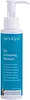
This oil-based makeup remover is made to dissolve makeup, sunscreen, and daily buildup.
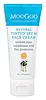
This mineral sunscreen covers the full UV range and blocks ~98% of UVB at SPF 40.

What's inside
What's inside
 Key Ingredients
Benefits
Concerns
Ingredients Side-by-side







Water
Skin ConditioningZinc Oxide
Cosmetic Colorant


Coco-Caprylate/Caprate
Emollient
Simmondsia Chinensis Seed Oil
Emollient





Sorbitan Olivate
Emulsifying
Glycerin
Humectant
Lecithin
Emollient
Polyglyceryl-2 Dipolyhydroxystearate
Skin Conditioning
Iron Oxides
Galactoarabinan

Polyglyceryl-3 Polyricinoleate
Emulsifying
Copernicia Cerifera Wax
Polyhydroxystearic Acid
Emulsifying
Cetyl Phosphate
EmulsifyingSodium Chloride
MaskingOleic Acid
Emollient


1,2-Hexanediol
Skin Conditioning
Caprylyl Glycol
Emollient
Tropolone
Skin ConditioningWater, Zinc Oxide, Coco-Caprylate/Caprate, Simmondsia Chinensis Seed Oil, Sorbitan Olivate, Glycerin, Lecithin, Polyglyceryl-2 Dipolyhydroxystearate, Iron Oxides, Galactoarabinan, Polyglyceryl-3 Polyricinoleate, Copernicia Cerifera Wax, Polyhydroxystearic Acid, Cetyl Phosphate, Sodium Chloride, Oleic Acid, 1,2-Hexanediol, Caprylyl Glycol, Tropolone
Reviews
Ingredients Explained
These ingredients are found in both products.
Ingredients higher up in an ingredient list are typically present in a larger amount.
Jojoba oil is one of the most well-studied plant-derived ingredients in cosmetics. It is an emollient with a special structure.
Because it is made up of 97-98% wax esters, it closely mirrors the linear monoesters found in human sebum. This makes it skin compatible, non-greasy, and lightweight.
Unlike other plant oils, jojoba wax doesn't easily penetrate skin. It mostly works in the uppermost layers as an emollient. This just means it forms a light barrier on the skin to help retain moisture.
Formulations with jojoba esters up to 90% reduced transepidermal water loss (TEWL) and increased barrier recovery by 81% (outperforming bisabolol at 47%).
Besides barrier support, the science also suggests jojoba to have anti-inflammatory effects and potential applications for skin infections, aging, and wound healing.
Fun fact: Indigenous cultures have used jojoba as a moisturizer and to help treat burns for centuries.
Fungal acne: The Malassezia yeast is known to metabolize fatty acids in the C11-24 range and jojoba's dominant fatty acid components fall into this range. This ingredient may not be fungal acne safe.
Learn more about Simmondsia Chinensis Seed Oil

