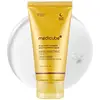
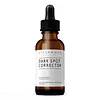
MediCube Kojic Acid Turmeric Night Wrapping Mask Versus Asterwood Naturals Dark Spot Corrector Serum
This brightening overnight mask is formulated around Niacinamide and Kojic Acid to fade the look of dark spots and brighten dull-looking skin.
This brightening serum is formulated around Niacinamide and Acetyl Glucosamine to fade the look of dark spots and brighten dull-looking skin.


What's inside
What's inside
 Key Ingredients
Benefits
Concerns
Ingredients Side-by-side
Polyvinyl Alcohol
Glycerin
Humectant


Butylene Glycol
Humectant
Niacinamide
Smoothing









1,2-Hexanediol
Skin Conditioning
Sodium Hyaluronate
Humectant
Isopentyldiol
Humectant
Curcuma Longa Root Extract
Antioxidant

Polyglyceryl-10 Laurate
Skin Conditioning

Propanediol
Solvent
Glyceryl Glucoside
Humectant
Ethylhexylglycerin
Skin ConditioningXanthan Gum
EmulsifyingAdenosine
Skin Conditioning
Disodium EDTA
ChelatingGlucose
Humectant
Kojic Acid
Antioxidant
Ascorbic Acid
Antioxidant
Glycine Soja Oil
Emollient



Collagen Extract
Skin Conditioning
Retinol
Skin Conditioning

Polyvinyl Alcohol, Glycerin, Butylene Glycol, Niacinamide, 1,2-Hexanediol, Sodium Hyaluronate, Isopentyldiol, Curcuma Longa Root Extract, Polyglyceryl-10 Laurate, Propanediol, Glyceryl Glucoside, Ethylhexylglycerin, Xanthan Gum, Adenosine, Disodium EDTA, Glucose, Kojic Acid, Ascorbic Acid, Glycine Soja Oil, Collagen Extract, Retinol
Water
Skin ConditioningNiacinamide
Smoothing
Sodium Hyaluronate
Humectant
Propanediol
Solvent
Acetyl Glucosamine
Skin Conditioning
Tranexamic Acid
Astringent
Gluconolactone
Chelating
Sodium Benzoate
Masking
Sodium Hydroxide
BufferingKojic Acid
Antioxidant
Glycolic Acid
Buffering

Hydroxyphenoxy Propionic Acid
Skin ConditioningCurcuma Longa Root Extract
Antioxidant
Glycerin
Humectant
Xanthan Gum
EmulsifyingSalicylic Acid
Masking

Tetrasodium Glutamate Diacetate
Chelating
Reviews
Ingredients Explained
These ingredients are found in both products.
Ingredients higher up in an ingredient list are typically present in a larger amount.
Curcuma Longa Root Extract comes from the rhizome (underground stem) of the turmeric plant.
While the official EU Cosing Database lists this ingredient as a fragrance, it actually does more than give products a scent.
This ingredient contains a group of yellow pigments called curcuminoids (mostly curcumin) that give it genuine antioxidant and anti-inflammatory activity in skin.
Reviews of topical clinical studies have found turmeric/curcumin to be generally well-tolerated and useful across conditions like eczema and mild inflammation.
One thing working in its favor is that curcumin barely penetrates; in lab skin-permeation testing, the curcuminoids mostly stayed in the outermost layer of skin. This is a good thing because its soothing and antioxidant activity is a surface-level job anyway.
At this time, industry data shows there's no single "correct" cosmetic percentage. It's used across a wide range depending on the product and varies from tiny fractions of a percent up to a few percent.
Allergy-wise, curcumin is a documented (but uncommon) contact allergen. It can also cross react with related plants, so anyone with a turmeric/ginger/cinnamon allergy or reactive skin should patch test first.
Learn more about Curcuma Longa Root ExtractGlycerin (or glycerol) is a compound naturally found in your skin. It's a powerhouse humectant that pulls water into the stratum corneum.
Topically, glycerin does several things at once:
Your skin makes glycerin on its own (mostly from sebaceous oil breakdown) and shuttles it to your outermost layer of skin, or your epidermis, via aquaporin-3.
Aquaporin-3 is a transporter that is essential for normal skin hydration, elasticity, and repair. Interestingly, mice lacking in AQP3 have dry and less elastic skin that can be fully corrected with glycerin.
This ingredient is non-irritating, plays well with almost every ingredient, and works across all skin types. Typical use is anywhere between 3-10% but can go up to 79% in some leave-on products.
Just know very high concentrations (>40%) can feel tacky in low humidity.
Glycerin is the name for this ingredient in American English. British English uses Glycerol/Glycerine.
Learn more about GlycerinKojic Acid is a naturally occurring organic acid that is produced during the fermentation of certain fungi. It is one of the most well-studied brightening ingredients (tyrosinase inhibitors) out there.
That's why you'll see Kojic Acid in products that target dark spots, hyperpigmentation, and general uneven skin tone. It also pairs well with other brightening actives like Alpha Arbutin, Glycolic Acid, and Vitamin C derivatives.
By latching onto the copper that the enzyme tyrosinase needs to function, Kojic Acid prevents less pigment from being made. It's so well-established that researchers regularly use it as the go-to benchmark when testing new brightening ingredients.
Some other perks include documented antioxidant and antimicrobial properties. The The CIR (Cosmetic Ingredient Review) Expert Panel concluded Kojic Acid is safe for use in cosmetic products at concentrations up to 1% and the EU's SCCS (Scientific Committee on Consumer Safety) considers it safe as a skin lightening agent at concentrations up to 0.7%.
One thing to know about Kojic Acid is that stability is its weak spot; it is sensitive to light, heat, and air exposure and will oxidize/turn brown in formulations. Its derivative, Kojic Dipalmitate, was developed as a stable alternative.
Some individuals have reported contact sensitization so be sure to patch test if you have reactive or sensitive skin.
Fun fact: It was first discovered in 1907 and naturally occurs in the production of sake, soy sauce, and miso.
Learn more about Kojic AcidNiacinamide is a multitasking form of vitamin B3 that strengthens the skin barrier, reduces pores and dark spots, regulates oil, and improves signs of aging.
And the best part? It's gentle and well-tolerated by most skin types, including sensitive and reactive skin.
You might have heard of "niacin flush", or the reddening of skin that causes itchiness. Niacinamide has not been found to cause this.
In very rare cases, some individuals may not be able to tolerate niacinamide at all or experience an allergic reaction to it.
If you are experiencing flaking, irritation, and dryness with this ingredient, be sure to double check all your products as this ingredient can be found in all categories of skincare.
When incorporating niacinamide into your routine, look out for concentration amounts. Typically, 5% niacinamide provides benefits such as fading dark spots. However, if you have sensitive skin, it is better to begin with a smaller concentration.
When you apply niacinamide to your skin, your body converts it into nicotinamide adenine dinucleotide (NAD). NAD is an essential coenzyme that is already found in your cells as "fuel" and powers countless biological processes.
In your skin, NAD helps repair cell damage, produce new healthy cells, support collagen production, strengthen the skin barrier, and fight environmental stressors (like UV and pollution).
Our natural NAD levels start to decline with age, leading to slower skin repair, visible aging, and a weaker skin barrier. By providing your skin niacinamide, you're recharging your skin's NAD levels. This leads to stronger, healthier, and younger looking skin.
Another name for vitamin B3 is nicotinamide. This vitamin is water-soluble and our bodies don't store it. We obtain Vitamin B3 from either food or skincare. Meat, fish, wheat, yeast, and leafy greens contain vitamin B3.
The type of niacinamide used in skincare is synthetically created.
Learn more about NiacinamidePropanediol is an all-star ingredient. It softens, hydrates, and smooths the skin.
It’s often used to:
Propanediol is not likely to cause sensitivity and considered safe to use. It is derived from corn or petroleum with a clear color and no scent.
Learn more about PropanediolSodium Hyaluronate is the salt form of hyaluronic acid. It is a long sugar chain that is naturally found in your skin, joints, and connective tissue that maintains hydration and elasticity.
In skincare, it works as a humectant. It pulls water from the environment and deeper layers of skin and binds it to the surface.
Interestingly, the size of the molecule affects its behavior:
Some clinical evidence links low molecular weight versions to improved wrinkle depth, elasticity, anti-inflammatory effects, and barrier repair.
Many serums use a blend of both weights so you can get surface hydration plus longer-lasting and deeper effects.
You'll typically see concentrations between 0.1-2% for this ingredient.
Learn more about Sodium HyaluronateXanthan gum is used as a stabilizer and thickener within cosmetic products. It helps give products a sticky, thick feeling - preventing them from being too runny.
On the technical side of things, xanthan gum is a polysaccharide - a combination consisting of multiple sugar molecules bonded together.
Xanthan gum is a pretty common and great ingredient. It is a natural, non-toxic, non-irritating ingredient that is also commonly used in food products.
Learn more about Xanthan Gum

