
What's inside
What's inside
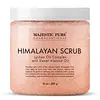 Key Ingredients
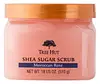
Benefits
Concerns
Ingredients Side-by-side

Sucrose
Humectant
Glycerin
Humectant

Polysorbate 20
Emulsifying

Silica
Abrasive


Parfum
Masking



Oenothera Biennis Oil
Emollient



Persea Gratissima Oil
Skin Conditioning
Rosa Canina Fruit Oil
Emollient
Argania Spinosa Kernel Oil
Emollient
Prunus Amygdalus Dulcis Oil
Skin Conditioning
Butyrospermum Parkii Butter
Skin Conditioning
Carthamus Tinctorius Seed Oil
Masking
Citrus Aurantium Dulcis Oil
Masking
Macadamia Ternifolia Seed Oil
Emollient
Retinyl Palmitate
Skin Conditioning

Ascorbic Acid
Antioxidant



Phenoxyethanol
Preservative
Caprylyl Glycol
Emollient
Sorbic Acid
Preservative
Blue 1 Lake
Cosmetic ColorantCI 14700
Cosmetic ColorantSucrose, Glycerin, Polysorbate 20, Silica, Parfum, Oenothera Biennis Oil, Persea Gratissima Oil, Rosa Canina Fruit Oil, Argania Spinosa Kernel Oil, Prunus Amygdalus Dulcis Oil, Butyrospermum Parkii Butter, Carthamus Tinctorius Seed Oil, Citrus Aurantium Dulcis Oil, Macadamia Ternifolia Seed Oil, Retinyl Palmitate, Ascorbic Acid, Phenoxyethanol, Caprylyl Glycol, Sorbic Acid, Blue 1 Lake, CI 14700
Ingredients Explained
These ingredients are found in both products.
Ingredients higher up in an ingredient list are typically present in a larger amount.
Glycerin (or glycerol) is a compound naturally found in your skin. It's a powerhouse humectant that pulls water into the stratum corneum.
Topically, glycerin does several things at once:
Your skin makes glycerin on its own (mostly from sebaceous oil breakdown) and shuttles it to your outermost layer of skin, or your epidermis, via aquaporin-3.
Aquaporin-3 is a transporter that is essential for normal skin hydration, elasticity, and repair. Interestingly, mice lacking in AQP3 have dry and less elastic skin that can be fully corrected with glycerin.
This ingredient is non-irritating, plays well with almost every ingredient, and works across all skin types. Typical use is anywhere between 3-10% but can go up to 79% in some leave-on products.
Just know very high concentrations (>40%) can feel tacky in low humidity.
Glycerin is the name for this ingredient in American English. British English uses Glycerol/Glycerine.
Learn more about GlycerinThis ingredient is also known as sweet almond oil. It is a lightweight, cold-pressed oil from the ripe seeds of the sweet almond tree.
Sweet almond oil is rich in skin-nourishing fatty acids such as oleic acid (55-86%) and linolenic acid (7-35%).
As an emollient, it softens and hydrates skin by forming a thin barrier that locks in moisture.
Clinical studies have found it to be non-irritating and non-sensitizing. The CIR Expert Panel has evaluated the available safety data and concluded it is safe for topical use.
Because of the oleic acid content, this ingredient may not be fungal acne safe.
This ingredient does have a comedogenic rating of 3, but this doesn't mean a formula with this ingredient will clog pores.
Human testing has proved that any finished product with a comedogenic ingredient won't automatically make you break out; it really comes down to concentration, formula, and your skin.
Learn more about Prunus Amygdalus Dulcis Oil

