
What's inside
What's inside
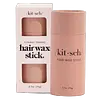 Key Ingredients
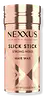
Benefits
Concerns
Ingredients Side-by-side
Lauryl Laurate
Skin Conditioning

Maranta Arundinacea Root Extract
SmoothingRicinus Communis Seed Oil
Masking


Oryza Sativa Bran Wax
Skin Conditioning
Kaolin
Abrasive



Hydrogenated Castor Oil
Emollient
Glyceryl Stearate
Emollient
Polyhydroxystearic Acid
Emulsifying
Water
Skin ConditioningPolyquaternium-69
Silica
Abrasive
Tocopheryl Acetate
Antioxidant


Phenoxyethanol
Preservative
Alcohol Denat.
Antimicrobial



Butylene Glycol
Humectant
Iodopropynyl Butylcarbamate
Preservative
Lauryl Laurate, Maranta Arundinacea Root Extract, Ricinus Communis Seed Oil, Oryza Sativa Bran Wax, Kaolin, Hydrogenated Castor Oil, Glyceryl Stearate, Polyhydroxystearic Acid, Water, Polyquaternium-69, Silica, Tocopheryl Acetate, Phenoxyethanol, Alcohol Denat., Butylene Glycol, Iodopropynyl Butylcarbamate
Petrolatum
Emollient
Cocos Nucifera Oil
Masking

Hydrogenated Castor Oil
Emollient
Caprylic/Capric Triglyceride
Masking
Euphorbia Cerifera Wax
Oryza Sativa Bran Wax
Skin Conditioning
Lauryl Laurate
Skin Conditioning
C18-21 Alkane
SolventParfum
Masking
Tocopheryl Acetate
Antioxidant
Benzyl Alcohol
Perfuming
Benzyl Salicylate
Perfuming
Citronellol
Perfuming
Eugenol
Perfuming
Geraniol
Perfuming
Hexyl Cinnamal
Perfuming
Limonene
Perfuming
Linalool
Perfuming
Ingredients Explained
These ingredients are found in both products.
Ingredients higher up in an ingredient list are typically present in a larger amount.
Hydrogenated Castor Oil (aka "castor wax") is what you get when castor oil is turned into a wax.
Its dominant fatty acid is ricinoleic acid, giving it both emollient and mild humectant properties.
According to EU CosIng, this ingredient helps soften skin, keep oil and water stay mixed, and thickens products.
Hydrogenated castor oil at 30% did not trigger a positive patch-test reaction and is well-tolerated.
Since this ingredient is based on an 18-carbon fatty acid, it falls into the chain-length range that Malassezia can feed on and may not be fungal acne safe.
Learn more about Hydrogenated Castor OilLauryl Laurate isn't fungal acne safe.
Oryza Sativa Bran Wax is wax from the outer layer of a rice kernel. It has moisturizing properties due to its polysaccharides and omega-3 fatty acids content.
This ingredient is a byproduct of milling rice, or the operation to produce a whole grain rice product.
Tocopheryl Acetate is a stable, shelf-friendly form of vitamin E.
Formulators love it because plain vitamin E oxidizes quickly once it hits air. This acetate version stays stable and resists going off, helping to extend a product's shelf life.
It's actually inactive on its own and works like a slow-release "storage" form; the enzymes in your skin called esterases gradually convert it into active vitamin E over time.
One in vivo study showed 5% of the acetate in the living layer of the epidermis converted to vitamin E after 5 days of application. This study also found the skin gained protection against UV damage even though the conversion was slow and small.
Once converted, vitamin E acts as a skin's main fat-soluble antioxidant that fights free radicals to protect skin from damage.
Topical vitamin E generally boosts the skin's photoprotection, and it reduced UV-damage in animal models.
This ingredient has some brightening potential but it's more of a prevention ingredient than spot-fader. Cell studies show it can slow down melanin production but it's worth noting that it's not the most powerful brightener out there.
Overall, it has a pretty solid safety profile and has been found to be non-irritating and non-comedogenic. Allergic reactions may happen but stay rare due to how widely the ingredient gets used.
The concentration will vary depending on the formula; industry data shows 0.1% in baby lotions, 3% in lipsticks, and 5% in foot powders. You can also find this ingredient at 100% in a pure vitamin E oil.
Most leave-on skincare keeps it at the lower end, often between 0.5-1%.
Learn more about Tocopheryl Acetate


