Suisai Beauty Clear Powder Versus Orbis U Lotion
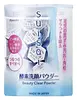
This smoothing exfoliator is formulated around Lactic Acid and Protease to refine skin texture and refine the look of pores.
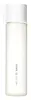
This hydrating toner is formulated around Centaurea Cyanus Flower Extract and Prunus Persica Leaf Extract to hydrate skin.

What's inside
What's inside
 Key Ingredients
No key ingredients
Benefits
Concerns
Ingredients Side-by-side
Talc
Abrasive
Sodium Cocoyl Isethionate
Cleansing
Sodium C12-14 Olefin Sulfonate
CleansingSodium Lauroyl Glutamate
SurfactantSodium Myristoyl Glutamate
CleansingPotassium Laurate
EmulsifyingCarrageenan



Silk Powder
Skin ConditioningWater
Skin ConditioningMethicone
Emollient
Butylene Glycol
Humectant

Isostearyl Alcohol
Emollient


BHT
Antioxidant
Alcohol
Antimicrobial


Polyquaternium-51
Skin Conditioning
Lactobacillus/Soymilk Ferment Filtrate
Skin ConditioningNasturtium Officinale Extract
Perfuming
Lactic Acid
Buffering







Potassium Hydroxide
BufferingProtease
Exfoliating
Lipase
Skin ConditioningMethylparaben
Preservative


Phenoxyethanol
Preservative
Talc, Sodium Cocoyl Isethionate, Sodium C12-14 Olefin Sulfonate, Sodium Lauroyl Glutamate, Sodium Myristoyl Glutamate, Potassium Laurate, Carrageenan, Silk Powder, Water, Methicone, Butylene Glycol, Isostearyl Alcohol, BHT, Alcohol, Polyquaternium-51, Lactobacillus/Soymilk Ferment Filtrate, Nasturtium Officinale Extract, Lactic Acid, Potassium Hydroxide, Protease, Lipase, Methylparaben, Phenoxyethanol
Water
Skin ConditioningButylene Glycol
Humectant
Glycerin
Humectant
Diglycerin
Humectant
Propanediol
Solvent
PPG-24-Glycereth-24
EmulsifyingPhenoxyethanol
Preservative
Glycosyl Trehalose
Emulsion StabilisingPEG-75
HumectantPolyglyceryl-10 Eicosanedioate/Tetradecanedioate
Skin ConditioningHydrogenated Starch Hydrolysate
HumectantMethylparaben
Preservative
PEG-400
Emulsion StabilisingCarbomer
Emulsion StabilisingXanthan Gum
EmulsifyingPotassium Hydroxide
BufferingCentaurea Cyanus Flower Extract
Astringent
Prunus Persica Leaf Extract
Emollient
Tilia Cordata Flower Extract
Skin Conditioning
Zostera Marina Extract
Skin ConditioningWater, Butylene Glycol, Glycerin, Diglycerin, Propanediol, PPG-24-Glycereth-24, Phenoxyethanol, Glycosyl Trehalose, PEG-75, Polyglyceryl-10 Eicosanedioate/Tetradecanedioate, Hydrogenated Starch Hydrolysate, Methylparaben, PEG-400, Carbomer, Xanthan Gum, Potassium Hydroxide, Centaurea Cyanus Flower Extract, Prunus Persica Leaf Extract, Tilia Cordata Flower Extract, Zostera Marina Extract
Reviews
Ingredients Explained
These ingredients are found in both products.
Ingredients higher up in an ingredient list are typically present in a larger amount.
Butylene Glycol (or BG) is used within cosmetic products for a few different reasons:
Overall, Butylene Glycol is a safe and well-rounded ingredient that works well with other ingredients.
Though this ingredient works well with most skin types, some people with sensitive skin may experience a reaction such as allergic rashes, closed comedones, or itchiness.
Learn more about Butylene GlycolMethylparaben is a synthetic preservative and one of the most widely used in the world. It has a simple, but important job: prevent your products from going bad by stopping bacteria, yeast, and mold from growing.
Typical use levels are low, often 0.1-0.3%.
This is also one of the most heavily studied preservatives out there and major regulatory bodies have repeatedly given it the green light.
In 2023, the EU's Scientific Committee on Consumer Safety (SCCS) confirmed that this ingredient is safe up to 0.4% on its own, of up to 0.8% when mixed with other paraben esters.
Here's the science behind the noise behind parabens/hormones as well:
Methylparaben shows very weak estrogen-like activity in vitro tests (more than 1,000x weaker than your body's own estradiol). In vivo (live-organism) studies don't support a meaningful endocrine-disrupting effect either.
You get a stronger estrogenic effect from eating tofu, actually.
It's also a low sensitizer and allergic reactions are uncommon; they usually happen on damage or broken skin.
There is a caveat: France has proposed to formally re-examine its endocrine classification in 2025 so the regulatory conversation isn't fully closed as of yet.
But as it stands today, this ingredient is considered safe at permitted levels.
Learn more about MethylparabenPhenoxyethanol is one of the most widely used preservatives in skincare (and for good reason!).
It has a large spectrum of antimicrobial activity and especially effective bacteria, yeast, and mold while only having a weak effect on your skin's natural microbiome.
On a cellular level, it disrupts the cell membranes of microbes by poking holes that make the cell leak. This shuts down the chemical reactions the microbe needs to make energy so it can no longer survive.
Another perk of this ingredient is that it stays functional across a wide pH range (3-10).
You'll often see it paired with boosters like Ethylhexylglycerin; one study showed that a 1:9 ratio of Ethylhexylglycerin to Phenoxyethanol damages bacterial membranes as effectively as doubling the Phenoxyethanol concentration on its own.
Typical use concentrations range from 0.3-1% depending on the formula, and this ingredient is capped at 1% int the EU.
Safety-wise, the fear mongering does not hold up to the evidence. The EU's Scientific Committee on Consumer Safety and FDA consider it safe as a preservative at up to 1%, including for children of all ages.
Adverse systemic effects only showed up in animal studies at exposures roughly 200x higher than what people get from cosmetics. And despite its very widespread use, this ingredient is a rare sensitizer and allergic reactions are uncommon.
Learn more about PhenoxyethanolPotassium Hydroxide (also known as potash) is a strong alkaline ingredient that does one job: it nudges a product's pH up so the whole formula lands in a skin-friendly range.
It's also the base that turns oils into liquid soap during the soap making process.
An expert safety panel reviewed it and found it safe when formulations are made to be non-irritating.
As a pH adjuster, it's typically used well under 1% though regulatory caps go much higher: 5% in nail cuticle removers and 2-4.5% in hair straighteners.
Though there is some concern for irritation from raw or high pH material, a well-balanced formula will be a non-issue for the vast majority of people.
Learn more about Potassium HydroxideWater. It's the most common cosmetic ingredient of all. You'll usually see it at the top of ingredient lists, meaning that it makes up the largest part of the product.
So why is it so popular? Water most often acts as a solvent - this means that it helps dissolve other ingredients into the formulation.
You'll also recognize water as that liquid we all need to stay alive. If you see this, drink a glass of water. Remember to stay hydrated!
Learn more about Water

