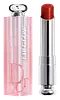
This barrier-repair lip moisturizer is formulated around Helianthus Annuus Seed Oil and Butyrospermum Parkii Butter to strengthen the lip barrier and hydrate lips.
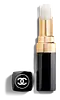
This barrier-repair lip moisturizer is formulated around Caprylic/Capric Triglyceride and Squalane to strengthen the lip barrier and hydrate lips.

What's inside
What's inside
 Key Ingredients
Benefits
Concerns
Ingredients Side-by-side
Polyglyceryl-2 Triisostearate
Emulsifying

Helianthus Annuus Seed Oil
Emollient

Hydrogenated Castor Oil Dimer Dilinoleate
Skin Conditioning
Phytosteryl/Octyldodecyl Lauroyl Glutamate
Skin ConditioningJojoba Esters
Emollient
Polyglyceryl-2 Isostearate/Dimer Dilinoleate Copolymer
EmollientEuphorbia Cerifera Wax
Behenyl Behenate
EmollientHelianthus Annuus Seed Wax
Skin Conditioning
Butyrospermum Parkii Butter
Skin Conditioning



Oryza Sativa Bran Wax
Skin Conditioning
Caprylic/Capric Triglyceride
Masking
Parfum
Masking


Trimethylolpropane Triisostearate
Emollient
Diisostearyl Malate
EmollientButyrospermum Parkii Butter Unsaponifiables
Skin Conditioning
Prunus Avium Seed Oil
Emollient
Tocopherol
Antioxidant





Ethyl Vanillin
MaskingAscorbyl Palmitate
Antioxidant

Undaria Pinnatifida Extract
Skin ConditioningPropyl Gallate
Antioxidant
CI 15850
Cosmetic ColorantCI 15985
Cosmetic ColorantCI 19140
Cosmetic ColorantCI 42090
Cosmetic ColorantCI 45410
Cosmetic ColorantCI 45380
Cosmetic ColorantCI 73360
Cosmetic ColorantCI 77491
Cosmetic ColorantCI 77492
Cosmetic ColorantCI 77499
Cosmetic ColorantCI 77891
Cosmetic ColorantPolyglyceryl-2 Triisostearate, Helianthus Annuus Seed Oil, Hydrogenated Castor Oil Dimer Dilinoleate, Phytosteryl/Octyldodecyl Lauroyl Glutamate, Jojoba Esters, Polyglyceryl-2 Isostearate/Dimer Dilinoleate Copolymer, Euphorbia Cerifera Wax, Behenyl Behenate, Helianthus Annuus Seed Wax, Butyrospermum Parkii Butter, Oryza Sativa Bran Wax, Caprylic/Capric Triglyceride, Parfum, Trimethylolpropane Triisostearate, Diisostearyl Malate, Butyrospermum Parkii Butter Unsaponifiables, Prunus Avium Seed Oil, Tocopherol, Ethyl Vanillin, Ascorbyl Palmitate, Undaria Pinnatifida Extract, Propyl Gallate, CI 15850, CI 15985, CI 19140, CI 42090, CI 45410, CI 45380, CI 73360, CI 77491, CI 77492, CI 77499, CI 77891
Bis-Behenyl/Isostearyl/Phytosteryl Dimer Dilinoleyl Dimer Dilinoleate
EmollientPhytosteryl/Octyldodecyl Lauroyl Glutamate
Skin ConditioningPentaerythrityl Tetraethylhexanoate
Emollient
Diisostearyl Malate
EmollientCaprylic/Capric Triglyceride
Masking
Squalane
Emollient
Isotridecyl Isononanoate
EmollientSynthetic Wax
Abrasive
Ethylene/Propylene Copolymer
Abrasive
Meadowfoam Delta-Lactone
Skin ConditioningSorbitan Isostearate
Emulsifying
Lauryl PCA
HumectantTocopheryl Acetate
Antioxidant
Parfum
Masking
Silica
Abrasive

Tocopherol
Antioxidant
Alumina
Abrasive
CI 77891
Cosmetic ColorantMica
Cosmetic ColorantBis-Behenyl/Isostearyl/Phytosteryl Dimer Dilinoleyl Dimer Dilinoleate, Phytosteryl/Octyldodecyl Lauroyl Glutamate, Pentaerythrityl Tetraethylhexanoate, Diisostearyl Malate, Caprylic/Capric Triglyceride, Squalane, Isotridecyl Isononanoate, Synthetic Wax, Ethylene/Propylene Copolymer, Meadowfoam Delta-Lactone, Sorbitan Isostearate, Lauryl PCA, Tocopheryl Acetate, Parfum, Silica, Tocopherol, Alumina, CI 77891, Mica
Reviews
Ingredients Explained
These ingredients are found in both products.
Ingredients higher up in an ingredient list are typically present in a larger amount.
Caprylic/Capric Triglyceride (aka MCT Oil) is a lightweight emollient, solvent, and texture enhancer. It is considered a skin-softener by helping to prevent moisture loss.
Though it behaves like an oil, it is not technically one due to its chemical composition. One perk of this ingredient is that it is very stable, resistant to oxidation, and unlikely to go rancid.
In practice, that translates to a long shelf life and a consistently elegant skin feel.
While there is an assumption Caprylic Triglyceride can clog pores due to it being derived from coconut oil, there is no research supporting this. Just patch test if you have concerns.
Fractionated coconut oil and MCT Oil are both listed as Caprylic/Capric Triglyceride according to INCI. This is because INCI names are based on the ingredient’s final chemical composition and not its marketing name or source.
This ingredient is treated as the gold standard fungal acne safe oil. Even though it is coconut derived, the problematic lauric acid is stripped out.
This leaves just caprylic (C8) and capric (C10) acid. These chain lengths actually trend antifungal; a 2020 study found caprylic acid was enough to disrupt Malassezia furfur cell membrane, with a caprylic acid derivative damaging membrane structures at concentrations as low as 0.2%.
Learn more about Caprylic/Capric TriglycerideCi 77891 is a white pigment from Titanium dioxide. It is naturally found in minerals such as rutile and ilmenite.
It's main function is to add a white color to cosmetics. It can also be mixed with other colors to create different shades.
Ci 77891 is commonly found in sunscreens due to its ability to block UV rays.
Learn more about CI 77891Diisostearyl Malate is an emollient and most often used in lip products. It comes from isostearyl alcohol, a fatty acid, and malic acid, an AHA.
As an emollient, Diisostearyl Malate helps create a thin film on your skin to trap moisture in. This helps keep your skin soft and smooth.
Parfum is a catch-all term for an ingredient or more that is used to give a scent to products.
Also called "fragrance", this ingredient can be a blend of hundreds of chemicals or plant oils. This means every product with "fragrance" or "parfum" in the ingredients list is a different mixture.
For instance, Habanolide is a proprietary trade name for a specific aroma chemical. When used as a fragrance ingredient in cosmetics, most aroma chemicals fall under the broad labeling category of “FRAGRANCE” or “PARFUM” according to EU and US regulations.
The term 'parfum' or 'fragrance' is not regulated in many countries. In many cases, it is up to the brand to define this term.
For instance, many brands choose to label themselves as "fragrance-free" because they are not using synthetic fragrances. However, their products may still contain ingredients such as essential oils that are considered a fragrance by INCI standards.
One example is Calendula flower extract. Calendula is an essential oil that still imparts a scent or 'fragrance'.
Depending on the blend, the ingredients in the mixture can cause allergies and sensitivities on the skin. Some ingredients that are known EU allergens include linalool and citronellol.
Parfum can also be used to mask or cover an unpleasant scent.
The bottom line is: not all fragrances/parfum/ingredients are created equally. If you are worried about fragrances, we recommend taking a closer look at an ingredient. And of course, we always recommend speaking with a professional.
Learn more about ParfumWe don't have a description for Phytosteryl/Octyldodecyl Lauroyl Glutamate yet.
Tocopherol is a fat-soluble antioxidant known as Vitamin E.
You'll find this ingredient in the vast majority of skincare (for good reason). It works to neutralize free radicals, or unstable molecules generated by UV exposure, pollution, and other environmental stressors, before they can cause oxidative damage to your skin cells.
Topically applied tocopherol has been shown to protect against UV damage by ramping up the skin's own natural defense enzymes.
It also acts as a skin conditioning agent; some studies show that regular topical use can improve the skin's water-binding capacity over 2-4 weeks.
This ingredient is especially loved for being a team player. When combined with Vitamin C, the photoprotective effect of both ingredients roughly doubles and the combo also helps reduce UV-induced DNA damage.
This ingredient has some brightening potential but it's more of a prevention ingredient than spot-fader. Cell studies show it can slow down melanin production but it's worth noting that it's not the most powerful brightener out there.
In formulations, it also serves as a stabilizer that helps protect other oxidation-prone ingredients from degrading.
Concentrations usually range from 0.1-1% in most leave-on products.
Learn more about Tocopherol

