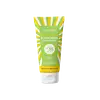
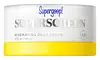
Azarine Calm My Acne Sunscreen Moisturiser SPF 35 PA+++ Versus Supergoop! Superscreen Hydrating Daily Cream SPF 40
This chemical sunscreen covers most of the UV range, lighter on the deep UVA that drives aging.
This chemical sunscreen covers most of the UV range, lighter on the deep UVA that drives aging.


What's inside
What's inside
 Key Ingredients
Benefits
Concerns
Ingredients Side-by-side
Water
Skin ConditioningGlycerin
Humectant


Ethylhexyl Methoxycinnamate
UV Absorber


Butyl Methoxydibenzoylmethane
UV Absorber
Epilobium Angustifolium Flower/Leaf/Stem Extract
Skin ConditioningAcrylates Crosspolymer
AbsorbentInulin Lauryl Carbamate
Emulsion StabilisingEthylhexyl Triazone
UV Absorber
Chlorphenesin
Antimicrobial
Bisabolol
Antioxidant


Sodium Hyaluronate
Humectant

Bakuchiol
Antimicrobial




Ectoin
Skin Conditioning
Phenoxyethanol
Preservative
Octocrylene
UV Absorber
Sodium Surfactin
CleansingQuaternium-73
Water, Glycerin, Ethylhexyl Methoxycinnamate, Butyl Methoxydibenzoylmethane, Epilobium Angustifolium Flower/Leaf/Stem Extract, Acrylates Crosspolymer, Inulin Lauryl Carbamate, Ethylhexyl Triazone, Chlorphenesin, Bisabolol, Sodium Hyaluronate, Bakuchiol, Ectoin, Phenoxyethanol, Octocrylene, Sodium Surfactin, Quaternium-73
Butyl Methoxydibenzoylmethane 3%
UV Absorber
Homosalate 6%
Skin Conditioning
Ethylhexyl Salicylate 5%
UV Absorber
Octocrylene 1.5%
UV Absorber
Water
Skin ConditioningCarthamus Tinctorius Oleosomes
Emollient

Glycerin
Humectant
C12-15 Alkyl Benzoate
AntimicrobialPolyester-7
Skin ConditioningAmmonium Acryloyldimethyltaurate/Vp Copolymer
Neopentyl Glycol Diheptanoate
EmollientEctoin
Skin Conditioning
Hydroxyacetophenone
Antioxidant
Chlorphenesin
Antimicrobial
Inulin Lauryl Carbamate
Emulsion StabilisingAphanizomenon Flos-Aquae Extract
HumectantDiethylhexyl Syringylidenemalonate
Skin Protecting
Caprylic/Capric Triglyceride
Masking
Triolein
Skin Conditioning
Ceramide NP
Skin Conditioning
Glyceryl Dioleate
Emollient
Butyl Methoxydibenzoylmethane 3%, Homosalate 6%, Ethylhexyl Salicylate 5%, Octocrylene 1.5%, Water, Carthamus Tinctorius Oleosomes, Glycerin, C12-15 Alkyl Benzoate, Polyester-7, Ammonium Acryloyldimethyltaurate/Vp Copolymer, Neopentyl Glycol Diheptanoate, Ectoin, Hydroxyacetophenone, Chlorphenesin, Inulin Lauryl Carbamate, Aphanizomenon Flos-Aquae Extract, Diethylhexyl Syringylidenemalonate, Caprylic/Capric Triglyceride, Triolein, Ceramide NP, Glyceryl Dioleate
Reviews
Ingredients Explained
These ingredients are found in both products.
Ingredients higher up in an ingredient list are typically present in a larger amount.
Also known as Avobenzone, this ingredient is an oil-soluble used to absorb the full spectrum of UVA rays (peak 357 nm).
It's one of the most effective UVA filters available but has a major caveat of photostability: avobenzone is susceptible to photodegradation.
This means it can lose efficacy when exposed to sunlight without the help of a stabilizing agent.
Studies show antioxidants (like vitamin E or vitamin C) and some UV filters (like octocrylene and Tinosorb S) can meaningfully improve its stability in a formulation.
The maximum allowable concentration according to regulation is 3% in the US + Canada, and 5% in the EU, Australia, China, Korea, and ASEAN countries.
It has a well-support safety profile: a comprehensive 2025 review found minimal toxicity with no evidence of carcinogenicity.
Overall, avobenzone is a safe and regulated ingredient used in sunscreen for over 40 years.
Learn more about Butyl MethoxydibenzoylmethaneChlorphenesin is a synthetic preservative. It helps protect a product against bacteria in order to extend shelf life. In most cases, Chlorphenesin is paired with other preservatives such as phenoxyethanol and caprylyl glycol.
Chlorphenesin is a biocide. This means it is able to help fight the microorganisms on our skin. It is also able to fight odor-releasing bacteria.
Chlorphenesin is soluble in both water and glycerin.
Studies show Chlorphenesin is easily absorbed by our skin. You should speak with a skincare professional if you have concerns about using Chlorphenesin.
Learn more about ChlorphenesinEctoin is a compound found naturally in some species of bacteria. It can be synthetically created for skincare use.
This ingredient is an osmolyte; Osmolytes help organisms survive osmotic shock (it protects them from extreme conditions). It does this by influencing the properties of biological fluids within cells.
When applied to the skin, ectoin helps bind water molecules to protect our skin. The water forms a sort of armor for the parts of our skin cells, enzymes, proteins, and more.
Besides this, ectoin has many uses in skincare:
A study from 2004 found ectoin to counteract the damage from UV-A exposure at different cell levels. It has also been shown to protect skin against both UV-A, UV-B rays, infrared light, and visible light.
Studies show ectoin to have dual-action pollution protection: first, it protects our skin from further pollution damage. Second, it helps repair damage from pollution.
In fact, ectoin has been shown to help with:
Fun fact: In the EU, ectoin is used in inhalation medication as an anti-pollution ingredient.
Ectoin is a highly stable ingredient. It has a wide pH range of 1-9. Light, oxygen, and temperature do not affect this ingredient.
The chemical name for this ingredient is Tetrahydromethylpyrimidine Carboxylic Acid.
Learn more about EctoinGlycerin (or glycerol) is a compound naturally found in your skin. It's a powerhouse humectant that pulls water into the stratum corneum.
Topically, glycerin does several things at once:
Your skin makes glycerin on its own (mostly from sebaceous oil breakdown) and shuttles it to your outermost layer of skin, or your epidermis, via aquaporin-3.
Aquaporin-3 is a transporter that is essential for normal skin hydration, elasticity, and repair. Interestingly, mice lacking in AQP3 have dry and less elastic skin that can be fully corrected with glycerin.
This ingredient is non-irritating, plays well with almost every ingredient, and works across all skin types. Typical use is anywhere between 3-10% but can go up to 79% in some leave-on products.
Just know very high concentrations (>40%) can feel tacky in low humidity.
Glycerin is the name for this ingredient in American English. British English uses Glycerol/Glycerine.
Learn more about GlycerinInulin Lauryl Carbamate is a plant-derived emulsifier and emulsion stabilizer.
It has an interesting party trick: one end of the molecule grabs onto oil while the long (sugar) chains of the molecule wrap around each little oil droplet to hold water against it.
This keeps everything from separating in a formula and also breaks down the oily into tiny droplets so your skin can't feel them (also why these formulas feel light and non-greasy).
Typical usage dose ranges anywhere from 0.2-4.8% depending on how much oil is in the formula, and this ingredient works across a wide pH (4-11) + temperature range.
Safety-wise, it's pretty solid. It is reported as a non-irritant and is even recommended for sensitive-skin and sun care.
Learn more about Inulin Lauryl CarbamateOctocrylene is an oil-soluble organic UV filter that mainly absorbs UVB and short wave UVA II light.
Its real superpower is teamwork: octocrylene is remarkably photostable and is most famous for stabilizing avobenzone (the workhorse UVA filter).
This ingredient is commonly used to enhance both UVB and UVA protection due to its unique property in stabilizing avobenzone. It also pulls double duty by boosting water resistance and giving formulas a smooth, spreadable feel.
The EU's Scientific Committee on Consumer Safety (SCCS) has deemed octocrylene to be safe as a UV-filter at concentrations up to 10% (capped at 9% in propellant sprays). The US also permits it up to 10%.
Two things worth knowing:
You'll usually see this ingredient used in concentrations between 2-10% (higher amounts when used as a stabilizer for avobenzone).
Learn more about OctocryleneWater. It's the most common cosmetic ingredient of all. You'll usually see it at the top of ingredient lists, meaning that it makes up the largest part of the product.
So why is it so popular? Water most often acts as a solvent - this means that it helps dissolve other ingredients into the formulation.
You'll also recognize water as that liquid we all need to stay alive. If you see this, drink a glass of water. Remember to stay hydrated!
Learn more about Water

