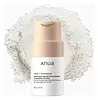
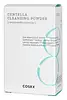
This tartaric acid powder cleanser is formulated around Tartaric Acid to exfoliate and smooth skin.
This mild powder cleanser is mild enough to cleanse without leaving skin feeling tight or stripped.

What's inside
What's inside
 Key Ingredients
Benefits
Concerns
No concerns
Ingredients Side-by-side
Zea Mays Starch
Absorbent
CI 77004
Cosmetic ColorantSodium Bicarbonate
Abrasive
Sodium Cocoyl Isethionate
Cleansing
Sodium Lauroyl Glutamate
SurfactantCitric Acid
Buffering


Sodium Polyacrylate
Absorbent
Diglycerin
Humectant
Allantoin
Skin Conditioning



Water
Skin ConditioningMaltodextrin
Absorbent
Papain
Skin Conditioning
Oryza Sativa Powder
Oryza Sativa Lees Extract
Skin ConditioningOryza Sativa Bran Water
Masking
Butylene Glycol
Humectant
1,2-Hexanediol
Skin Conditioning
Ceramide NP
Skin Conditioning

Ascorbic Acid
Antioxidant


Alpha-Arbutin
Antioxidant
Glucose
Humectant
Oryza Sativa Extract
Absorbent
Protease
Exfoliating
Dipropylene Glycol
HumectantGlycerin
Humectant
Tartaric Acid
Buffering
Lactic Acid
Buffering

Oryza Sativa Seed Protein
Antioxidant
Hydrolyzed Rice Protein
Skin ConditioningCaprylyl Glycol
Emollient
Zea Mays Starch, CI 77004, Sodium Bicarbonate, Sodium Cocoyl Isethionate, Sodium Lauroyl Glutamate, Citric Acid, Sodium Polyacrylate, Diglycerin, Allantoin, Water, Maltodextrin, Papain, Oryza Sativa Powder, Oryza Sativa Lees Extract, Oryza Sativa Bran Water, Butylene Glycol, 1,2-Hexanediol, Ceramide NP, Ascorbic Acid, Alpha-Arbutin, Glucose, Oryza Sativa Extract, Protease, Dipropylene Glycol, Glycerin, Tartaric Acid, Lactic Acid, Oryza Sativa Seed Protein, Hydrolyzed Rice Protein, Caprylyl Glycol
Reviews
Ingredients Explained
These ingredients are found in both products.
Ingredients higher up in an ingredient list are typically present in a larger amount.
Allantoin is a soothing ingredient known for its protective and moisturizing properties; it's basically a quiet workhorse ingredient you can find in a huge range of cosmetics.
Though it can be derived from the comfrey plant, allantoin is produced synthetically for cosmetic products to ensure purity.
Research shows it can encourage your skin cells to turn over and renew by stimulating keratinocyte and fibroblast proliferation.
It also has mild keratolytic properties to help loosen and shed dead skin cells without being harsh.
Studies also suggest allantoin can help calm inflammation by dialing down some of the chemical signals your skin sends out when it is irritated.
This ingredient is typically used in the 0.1-0.5% range, and the FDA recognizes it as a skin protectant in OTC products up to 2%.
Overall, allantoin is a wonderful addition to most routines; it is stable across a wide pH range (~4-8), works well with other ingredients, and is considered non-sensitizing/non-irritating.
Fun fact: Allantoin is naturally occurring in comfrey root, beets, chamomile, and wheat sprouts. Our bodies even produce it as a byproduct of uric acid metabolism.
Learn more about AllantoinMaltodextrin is a plant-derived carbohydrate made by breaking down starch (usually from corn, potato, or rice). In cosmetic formulas, it's a multitasking absorbent, emulsion stabilizer, and skin conditioner.
This ingredient is mostly used to stabilize emulsions and improve the powdery, non-greasy feel of products (like dry shampoos).
Safety-wise, this ingredient is pretty solid; it's even recognized as a food additive. Both animal and clinical studies found no adverse effects at the levels used in cosmetics.
Industry data shows this ingredient is used up to 45.7% in spray products and up to 33% in powder products.
Learn more about MaltodextrinProtease is an enzyme that works as a gentle exfoliant by mimicking something your skin already does naturally.
Your skin uses proteolytic enzymes to carry out desquamation; this is the process of shedding dead skin cells from the stratum corneum.
In skincare, proteases act as biological catalysts that mimic this natural desquamation process. You can think of it as giving your skin's own renewal system a nudge.
By breaking down the bonds that hold dead skin cells together, proteases help accelerate cell turnover to:
One reason they're becoming a popular AHA alternative is because proteases are considered effective while also being well-tolerated on skin. Because they work at a protein level rather than by lowering the skin pH, they can be a good option for those sensitive to AHAs.
Available in vitro and in vivo studies show positive exfoliant results but clinical (human) trials specifically on enzymatic exfoliation are still limited at this time.
Just one thing worth noting: temperature, pH, and stabilization are important factors that affect enzyme activity. The formulation quality definitely matters with this ingredient.
This ingredient can be either microbial sourced or plant-derived (papain from papaya, bromelain from pineapple).
Learn more about ProteaseSodium cocoyl isethionate is a natural ingredient from coconut oil. It is an ultra gentle cleanser that gives a nice foam without drying the skin or impacting the skin barrier.
The amount of foam created depends on the amount of sodium cocoyl isethionate used in the product.
This ingredient also helps improve the spreadability of a product.
This ingredient hasn’t been shown in studies to feed fungal acne yeast.
Learn more about Sodium Cocoyl IsethionateSodium Lauroyl Glutamate is an amino-acid based mild surfactant that is used in formulas as a primary or secondary cleansing agent. This means it helps lift away oil, dirt, and makeup.
You'll see this ingredient in facial cleansers, shampoos, and even toothpaste because it foams reasonably well while being much gentler than harsher surfactants like SLS.
A study comparing surfactant mixtures found that Sodium Lauroyl Glutamate caused visibly less disruption to skin lipid structure and less irritation than SLS when tested on human subjects; this correlated with the data from in vivo results as well.
The Tenside, Surfactants, Detergents cosmetics industry journal has also concluded that amino acid based surfactants are generally milder than their corresponding alkyl sulfate counterparts. They also stated glutamates in particular are considered one of the gentler options in the category.
The Cosmetic Ingredient Review (CIR) Expert Panel has reviewed dermal irritation and sensitization data for this ingredient at the highest reported use concentration and concluded it to be safe in present practices.
Typical use concentrations tend to run low (generally less than 10%) though the CIR's review noted the highest reported use concentration was 40% as a raw material blend (and not a diluted finished cosmetic product).
Learn more about Sodium Lauroyl GlutamateZea Mays Starch is starch made from corn. You might know this as cornstarch . It is used to thicken a product. It can replace talc as an absorbent.
The pH of cornstarch is 5.92.
Cornstarch is a common food ingredient used to thicken soups or to make corn syrup.
Learn more about Zea Mays Starch

