Trichup Hair Fall Control Shampoo
A shampoo with 21 ingredients.
Shampoo with 21 ingredients
We independently verify ingredients, backed by peer-reviewed research. Suggest an update.
What's inside
Ingredients List
Water
Skin ConditioningAmmonium Lauryl Sulfate
Cleansing




Cocamidopropyl Betaine
Cleansing
Cocamide DEA
Emulsifying
Dimethiconol
Emollient
Tea-Dodecylbenzenesulfonate
CleansingGlycol Distearate
Emollient
Emblica Officinalis Fruit Extract
Skin ConditioningEclipta Prostrata Extract
Skin Conditioning
Glycyrrhiza Glabra Root Extract
Bleaching





Cocamide Mea
Emulsifying
Polyquaternium-39
Panthenol
Skin Conditioning
Guar Hydroxypropyltrimonium Chloride
Skin ConditioningParfum
Masking

Disodium EDTA
ChelatingMagnesium Nitrate
Methylchloroisothiazolinone
Preservative
Magnesium Chloride
Methylisothiazolinone
Preservative
CI 19140
Cosmetic ColorantWater, Ammonium Lauryl Sulfate, Cocamidopropyl Betaine, Cocamide DEA, Dimethiconol, Tea-Dodecylbenzenesulfonate, Glycol Distearate, Emblica Officinalis Fruit Extract, Eclipta Prostrata Extract, Glycyrrhiza Glabra Root Extract, Cocamide Mea, Polyquaternium-39, Panthenol, Guar Hydroxypropyltrimonium Chloride, Parfum, Disodium EDTA, Magnesium Nitrate, Methylchloroisothiazolinone, Magnesium Chloride, Methylisothiazolinone, CI 19140
Benefits
Concerns
Ingredients Explained
Water. It's the most common cosmetic ingredient of all. You'll usually see it at the top of ingredient lists, meaning that it makes up the largest part of the product.
So why is it so popular? Water most often acts as a solvent - this means that it helps dissolve other ingredients into the formulation.
You'll also recognize water as that liquid we all need to stay alive. If you see this, drink a glass of water. Remember to stay hydrated!
Learn more about WaterAmmonium Lauryl Sulfate is a type of sulfate. It can be bad for dry skin, cause irritation, and worsen rosacea.
Cocamidopropyl Betaine is a fatty acid created by mixing similar compounds in coconut oil and dimethylaminopropylamine, a compound with two amino groups.
This ingredient is a surfactant and cleanser. It helps gather the dirt, pollutants, and other impurities in your skin to be washed away. It also helps thicken a product and make the texture more creamy.
Being created from coconut oil means Cocamidopropyl Betaine is hydrating for the skin.
While Cocamidopropyl Betaine was believed to be an allergen, a study from 2012 disproved this. It found two compounds in unpure Cocamidopropyl Betaine to be the irritants: aminoamide and 3-dimethylaminopropylamine. High-grade and pure Cocamidopropyl Betaine did not induce allergic reactions during this study.
Learn more about Cocamidopropyl BetaineCocamide DEA is a coconut-derived cleansing agent that creates rich foam and helps to thicken the consistency of cleansing products.
This ingredient effectively removes dirt and oil while helping to stabilize formulations, making it a common addition to shampoos, body washes, and facial cleansers.
It has become less popular in recent formulations due to potential irritation in sensitive skin types and concerns about trace amounts of diethanolamine (DEA), which can potentially form nitrosamines.
While still considered safe at regulated concentrations, many manufacturers now opt for gentler alternatives like cocamidopropyl betaine or other surfactants that offer similar benefits with fewer potential drawbacks.
Learn more about Cocamide DEADimethiconol is a silicone that resembles the popular dimethicone. Like other silicones, it is an emollient. Emollients create a thin film on skin to prevent moisture from escaping.
This ingredient helps to create a silky texture and improve spreadability. Due to its high molecular weight and thickness, it is often combined with cyclopentasiloxane.
We don't have a description for Tea-Dodecylbenzenesulfonate yet.
Glycol Distearate is an emulsifier and emollient that adds a "pearly" appearance to formulations.
That lustrous look you see in many shampoos is due to this ingredient: when cooled, it crystallizes into small platelets that reflect light to give products that rich, shimmering look.
This ingredient is considered safe at present practices of use and concentration and repeated insult patch test with 50% Glycol Distearate on 125 subjects found no evidence of skin irritation, hypersensitivity, or acute toxicity.
Typical use concentrations range from 0.1-10%.
Because it's an ester of stearic acid, it falls into the range that Malassezia likes to metabolize. This ingredient may not be fungal acne safe.
Learn more about Glycol DistearateWe don't have a description for Emblica Officinalis Fruit Extract yet.
This ingredient is also known as Bhringaraj extract or False Daisy. It is a skin conditioning ingredient that keeps skin soft and hydrated.
Research shows it has antioxidant properties; lab studies have found it can protect skin cells from UV-induced damage and help suppress inflammation.
There's also some interesting research on its potential to support hair growth by promoting the growth phase of the hair cycle.
Those with an allergy to plants in the daisy family may want to patch test this ingredient. This ingredient is generally well-tolerated otherwise.
Learn more about Eclipta Prostrata ExtractGlycyrrhiza Glabra Root Extract is an extract of the roots of Licorice. It has been found to have several benefits such as skin hydrating, conditioning, and soothing.
One component, glabridin, has extra potent antioxidant and soothing properties. It has also been found to block pigmentation from UVB rays in guinea pigs.
Licorice Root also contains a flavonoid. Flavonoids are a natural substance from in plants. Flavonoids also have antioxidant properties.
Another component, glycyrrhizin, has been found to have anti-inflammatory and antimicrobial benefits. This may make licorice root extract effective at treating acne. However, more research is needed to support this.
Liquiritin is one of the flavone compounds found in licorice. It has been found to help lighten skin by preventing tyrosinase from reacting with tyrosine. When the two react, protein is converted to melanin. Melanin is the substance in your body that gives your features pigmentation.
Learn more about Glycyrrhiza Glabra Root ExtractThis ingredient is made by combining the fatty acids from coconut oil with monoethanolamine. It is an emulsifier that helps boost foam, thicken texture, and help keep ingredients together in a formula.
We don't have a description for Polyquaternium-39 yet.
Panthenol is a common ingredient that helps hydrate and soothe the skin. It is found naturally in our skin and hair.
There are two forms of panthenol: D and L.
D-panthenol is also known as dexpanthenol. Most cosmetics use dexpanthenol or a mixture of D and L-panthenol.
Panthenol is famous due to its ability to go deeper into the skin's layers. Using this ingredient has numerous pros (and no cons):
Like hyaluronic acid, panthenol is a humectant. Humectants are able to bind and hold large amounts of water to keep skin hydrated.
This ingredient works well for wound healing. It works by increasing tissue in the wound and helps close open wounds.
Once oxidized, panthenol converts to pantothenic acid. Panthothenic acid is found in all living cells.
This ingredient is also referred to as pro-vitamin B5.
Learn more about PanthenolThis ingredient is derived from guar gum. It is a skin conditioning agent that creates a thin, breathable film to reduce water loss during cleansing.
This leaves the skin feeling soft rather than stripped and also contributes to a creamier lather.
Due to the large molecule size, this ingredient is unlikely to penetrate skin.
Learn more about Guar Hydroxypropyltrimonium ChlorideParfum is a catch-all term for an ingredient or more that is used to give a scent to products.
Also called "fragrance", this ingredient can be a blend of hundreds of chemicals or plant oils. This means every product with "fragrance" or "parfum" in the ingredients list is a different mixture.
For instance, Habanolide is a proprietary trade name for a specific aroma chemical. When used as a fragrance ingredient in cosmetics, most aroma chemicals fall under the broad labeling category of “FRAGRANCE” or “PARFUM” according to EU and US regulations.
The term 'parfum' or 'fragrance' is not regulated in many countries. In many cases, it is up to the brand to define this term.
For instance, many brands choose to label themselves as "fragrance-free" because they are not using synthetic fragrances. However, their products may still contain ingredients such as essential oils that are considered a fragrance by INCI standards.
One example is Calendula flower extract. Calendula is an essential oil that still imparts a scent or 'fragrance'.
Depending on the blend, the ingredients in the mixture can cause allergies and sensitivities on the skin. Some ingredients that are known EU allergens include linalool and citronellol.
Parfum can also be used to mask or cover an unpleasant scent.
The bottom line is: not all fragrances/parfum/ingredients are created equally. If you are worried about fragrances, we recommend taking a closer look at an ingredient. And of course, we always recommend speaking with a professional.
Learn more about ParfumDisodium EDTA is a chelating agent. It grabs onto and deactivates metal ions that sneak into your products from water, packaging, or air.
This ingredient mainly works behind the scenes and helps with:
On top of that, this ingredient can counteract the effects of hard water by binding to the minerals in it.
One thing worth knowing is that Disodium EDTA has been shown to be a mild penetration enhancer. It can help other ingredients absorb into skin more effectively which can be a double-edged sword (great for actives, but can also make the active too strong if you have sensitive skin).
Clinical patch testing showed no significant skin irritation at typical use concentrations and minimal dermal absorption.
You'll most likely see this ingredient near the end of an ingredient list. It's typically found in concentrations less than 1%.
Learn more about Disodium EDTAWe don't have a description for Magnesium Nitrate yet.
Methylchloroisothiazolinone, or MCI, is a synthetic preservative used to protect against the growth of bacteria, yeasts, and fungi in water-based products.
MCI is commonly combined with methylisothiazolinone (MI) in a 3:1 ratio.
This ingredient is safe in cosmetics when formulated to be non-sensitizing and concentrations must not exceed 7.5 ppm in leave-on products / 15 ppm in rinse-off products.
Unfortunately, this ingredient has a well-documented sensitization story. Studies spanning several decades have shown this ingredient + MI to cause skin irritation and allergies.
The use of this ingredient varies around the world:
This just means this ingredient is most likely non-sensitizing in rinse-off products unless you've been diagnosed with a contact allergy to isothiazolinones.
Learn more about MethylchloroisothiazolinoneMagnesium chloride is a mineral salt made from magnesium and chloride. It is mainly used to control product stability and texture in cosmetics.
This ingredient can also play a role in soothing the skin and supporting normal skin function.
Magnesium chloride is water-soluble, generally well tolerated, and does not act as a strong “active” ingredient on its own.
Learn more about Magnesium ChlorideMI is a preservative and known skin irritant. In the past, MI was used for its ability to prevent bacteria, yeast, and fungi growth in low doses.
Nowadays, you'll most likely see MI combined with Methylchloroisothiazolinone (MCI).
Since then, numerous studies have shown this ingredient to cause contact dermatitis, or skin irritation.
The use of this ingredient varies around the world:
Learn more about MethylisothiazolinoneCI 19140 is also known as Tartrazine. Tartrazine is a synthetic dye used in cosmetics, foods, and medicine to add a yellow color.
Tartrazine is created from petroleum and is water-soluble.
Some people may experience allergies from this dye, especially asthmatics and those with an aspirin intolerance.
Learn more about CI 19140Reviews
Recent searches
Search reviews by skin type, ingredient, or keyword.
Where it's from
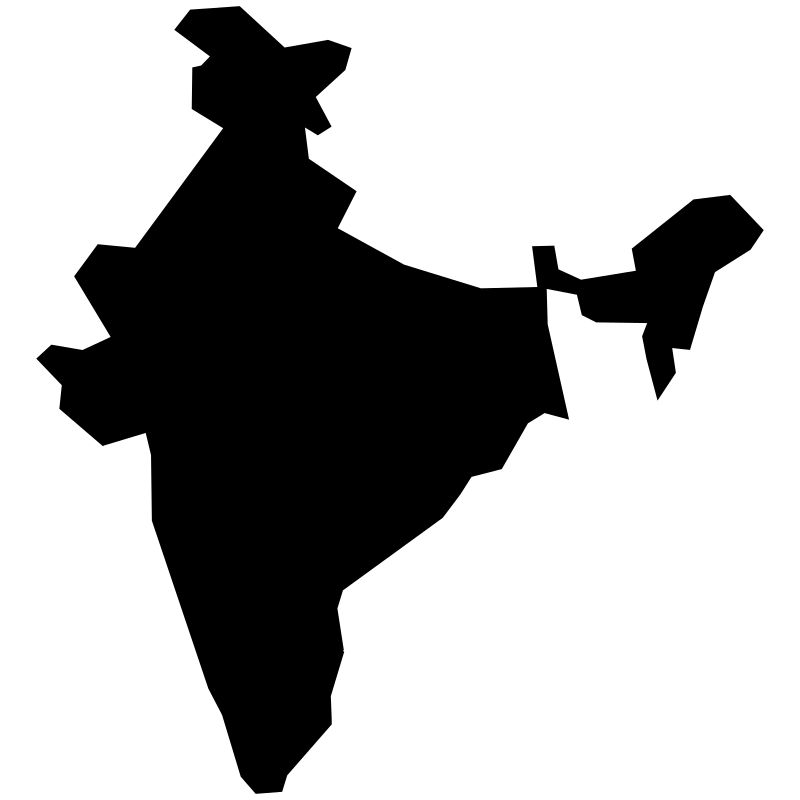
Trichup is a Indian brand

We're dedicated to providing you with the most up-to-date and science-backed ingredient info out there.
The data we've presented on this page has been verified by a member of the SkinSort Team.
Read more about us· Published May 27, 2026 • Added by Ilovememetchi


