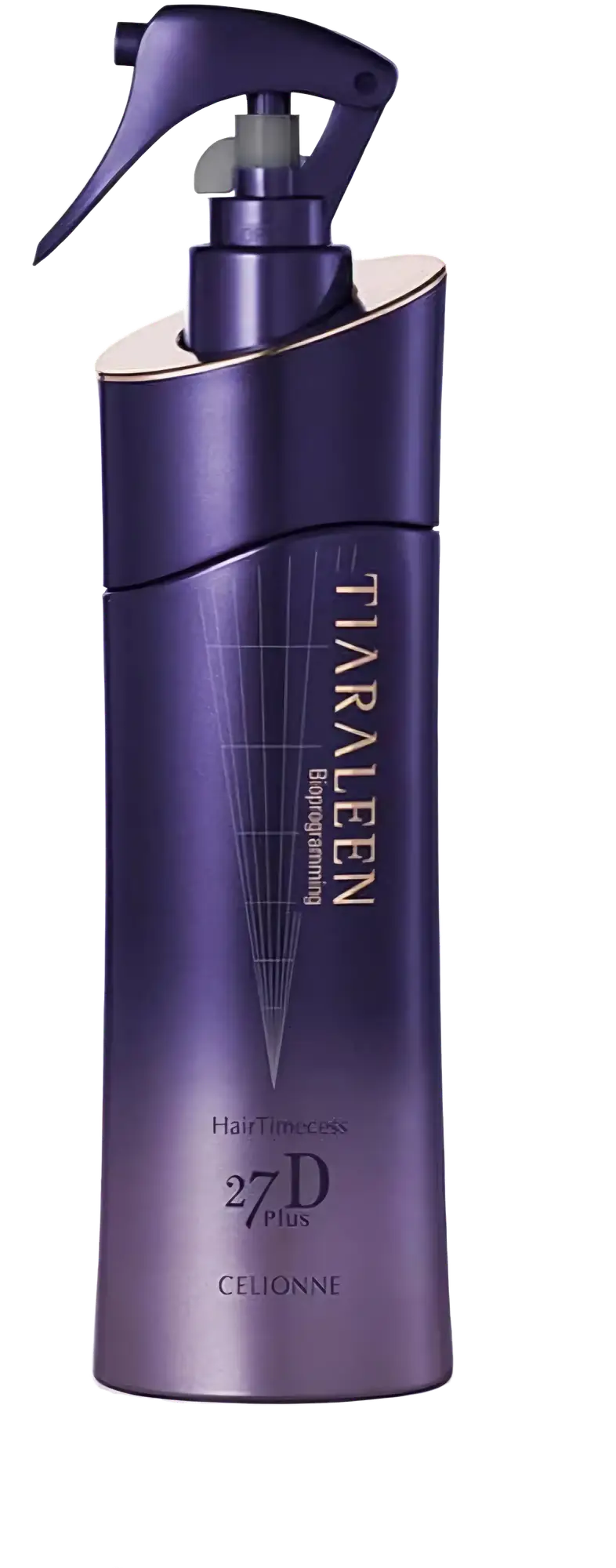
Tiaraleen Bioprogramming Hairtimecess 27D Plus Celionne
A leave-in treatment with 30 ingredients, including vitamin E.
Leave-in treatment with 30 ingredients that contains Vitamin E
We independently verify ingredients, backed by peer-reviewed research. Suggest an update.
What's inside
Ingredients List
Water
Skin ConditioningAlcohol Denat.
Antimicrobial




Diglycerin
Humectant
Lycium Barbarum Fruit Extract
Astringent
Astragalus Membranaceus Root Extract
Emollient
Zanthoxylum Piperitum Peel Extract
AntimicrobialPaeonia Albiflora Root Extract
Skin ConditioningPrunus Armeniaca Kernel Extract
Skin ConditioningPoria Cocos Extract
Skin ConditioningPueraria Lobata Root Extract
HumectantLilium Candidum Bulb Extract
Skin ConditioningJasminum Sambac Flower Extract
Masking
Dioscorea Villosa Root Extract
Skin Conditioning
Citrus Tamurana Fruit Extract
HumectantEchinacea Purpurea Root Extract
MoisturisingCentaurea Cyanus Flower Extract
Astringent
Prunus Domestica Seed Extract
EmollientCitrus Unshiu Peel Extract
Masking
Rhodiola Rosea Root Extract
EmollientCurcuma Zedoaria Root Extract
Skin ConditioningGanoderma Lucidum Extract
Skin Protecting
Betula Alba Bark Extract
Masking
Nelumbo Nucifera Seed Extract
Antimicrobial
Panax Ginseng Root Extract
Emollient
PEG-20 Sorbitan Isostearate
Emulsifying
Steartrimonium Chloride
Preservative
Tocopherol
Antioxidant




Isopropyl Alcohol
Solvent
Sodium Lactate
Buffering
Phenoxyethanol
Preservative
Water, Alcohol Denat., Diglycerin, Lycium Barbarum Fruit Extract, Astragalus Membranaceus Root Extract, Zanthoxylum Piperitum Peel Extract, Paeonia Albiflora Root Extract, Prunus Armeniaca Kernel Extract, Poria Cocos Extract, Pueraria Lobata Root Extract, Lilium Candidum Bulb Extract, Jasminum Sambac Flower Extract, Dioscorea Villosa Root Extract, Citrus Tamurana Fruit Extract, Echinacea Purpurea Root Extract, Centaurea Cyanus Flower Extract, Prunus Domestica Seed Extract, Citrus Unshiu Peel Extract, Rhodiola Rosea Root Extract, Curcuma Zedoaria Root Extract, Ganoderma Lucidum Extract, Betula Alba Bark Extract, Nelumbo Nucifera Seed Extract, Panax Ginseng Root Extract, PEG-20 Sorbitan Isostearate, Steartrimonium Chloride, Tocopherol, Isopropyl Alcohol, Sodium Lactate, Phenoxyethanol
Key Ingredients
Benefits
Concerns
Ingredients Explained
Water. It's the most common cosmetic ingredient of all. You'll usually see it at the top of ingredient lists, meaning that it makes up the largest part of the product.
So why is it so popular? Water most often acts as a solvent - this means that it helps dissolve other ingredients into the formulation.
You'll also recognize water as that liquid we all need to stay alive. If you see this, drink a glass of water. Remember to stay hydrated!
Learn more about WaterAlcohol Denat. is an alcohol with a denaturant property. It is created by mixing ethanol with other additives.
The "denat" part just means "denatured"; common denaturants include Denatonium Benzoate, t-butyl alcohol, and Diethyl Phthalate. This step makes the alcohol undrinkable (and lets brand skip taxes related to beverage alcohol).
This ingredient gets a bad rep because it is irritating and drying due to its astringent property. Astringents draw out natural oils in tissue to constrict pores and dry out your skin.
However, alcohol denat. is not all that bad.
Due to its low molecular weight, alcohol denat. tends to evaporate quickly. One study on pig skin found half of applied alcohol evaporated in 10 seconds and less than 3% stayed on skin.
This also helps other ingredients become better absorbed upon application.
Studies are conflicted about whether this ingredient causes skin dehydration. One study from 2005 found adding emollients to propanol-based sanitizer decreased skin dryness and irritation. Another study found irritation only occurs if your skin is already damaged.
Small amounts of alcohol are generally tolerated by oily skin or people who live in humid environments.
The rule of thumb is this ingredient will probably not affect your skin much if it is near the end of an ingredients list.
One thing to note:
People with ALDH2 (aldehyde dehydrogenase 2) deficiency may experience skin irritation from continued alcohol use. About 8% of the world's population have this deficiency.
The Cosmetic Ingredient Review Expert Panel has determined denatured alcohols to be safe for use in concentrations between 0.05% and 12% (depending on which denaturant is used).
Also...
This ingredient has antimicrobial and solvent properties.
The antimicrobial property helps preserve products and increase their shelf life. As a solvent, it helps dissolve other ingredients.
Look for formulas that contain glycerin, hyaluronic acid, or panthenol if you want to offset any drying effect.
This ingredient will trip away your skin's natural oils/lipids that help it lock in moisture. This can worsen dryness, trigger eczema flare-ups, and aggravate rosacea.
Be sure to patch test any product with this ingredient if you have dry or sensitive skin, eczema, or rosacea.
Learn more about Alcohol Denat.Diglycerin is a humectant. It is derived from glycerin, which is naturally found in your skin.
As a humectant, it helps draw moisture to the skin from the air.
Lycium Barbarum Fruit Extract comes from the Goji Berry. Goji berries are native to China and can be found across Eurasia.
Goji berries contain polysaccharides, carotenoids and flavonoids. Antioxidants help your body fight off free-radical molecules. These molecules are unstable and may damage your skin. By making free-radicals more stable, antioxidants can help with anti-aging.
Polysaccharides help hydrate the top layer of skin due to its ability to mimic natural carbohydrates.
Learn more about Lycium Barbarum Fruit ExtractAstragalus Membranaceus Root Extract is from an herb called Huang Qi. The roots of this plant have traditionally used in traditional Chinese medicine.
This ingredient contains hydrating, antioxidant, and anti-inflammatory compounds such as polysaccharides, saponins, and flavonoids. These compounds have also been studied for its effects on skin repair like fibroblast activity, growth-factor signaling, and wound closure models. However, human evidence is still limited.
Recent clinical work on a proprietary Astragalus + Centella saponin system showed improvement in skin aging and quality.
Overall, this ingredient is a great supportive ingredient with low irritation risk.
Learn more about Astragalus Membranaceus Root ExtractWe don't have a description for Zanthoxylum Piperitum Peel Extract yet.
This ingredient comes from the root of Paeonia albiflora, aka as Radix Paeoniae Alba or the Chinese peony. It has skin conditioning properties and is rich in antioxidant compounds.
Recent research shows Paeonia Albiflora root extract helps slow down glycation. Glycation is a process where sugars damage skin proteins and contribute to dullness/uneven skin tone.
In human studies, a lotion with 1% Paeonia Albiflora Root Extract led to lower melanin levels and fewer visible dark spots after two weeks of use. In vitro and ex vivo studies support its role in regulating the process of pigment production and reducing inflammation in skin cells.
Additionally, this ingredient has been shown to promote keratinocyte migration and proliferation in wound healing models.
Paeonia Albiflora root extract is water-soluble and has a low irritation profile for most skin types. Like other botanical extracts, patch testing is recommended for people who have known plant allergies or reactive skin.
Learn more about Paeonia Albiflora Root ExtractWe don't have a description for Prunus Armeniaca Kernel Extract yet.
This ingredient comes from a medicinal mushroom commonly used in East Asian medicine. It has skin conditioning properties. It is also known as Wolfiporia extensa.
It is particularly great at soothing inflammation and protecting skin from stress due to its high content of polysaccharides and triterpenoids.
Some studies link the triterpenes to reduced oxidative stress and collagen protection in skin models. This suggests potential benefits for early signs of aging.
On top of that, studies also report tyrosinase inhibition and reduced melanin production in melanocyte models to help brighten skin (though more clinical evidence is needed for definitive claims).
The polysaccharides can also help hydrate the skin as humectants.
Safety data shows a low irritation risk for this ingredient. However, like any extract, some may experience an allergic reaction when using this ingredient. Be sure to patch test!
Learn more about Poria Cocos ExtractThis ingredient comes from the Kudzu root.
We don't have a description for Lilium Candidum Bulb Extract yet.
Jasminum Sambac Flower Extract is a fragrance.
Dioscorea Villosa Root Extract comes from the Wild Yam. Wild Yam has soothing and skin-conditioning properties.
Wild Yam Root contains diosgenin, a plant steroid. Diosgenin exhibits anti-inflammatory properties.
Emerging studies show diosgenin may help encourage skin cell turnover. By telling your skin to produce new skin-cells, Wild Yam root may help with reducing the signs of aging. Other studies are looking into the potential of Wild Yam Root to protect skin against UV damage. However, further research is needed to confirm these claims.
Wild Yam Root has been used in traditional medicine to treat arthritis.
Learn more about Dioscorea Villosa Root ExtractWe don't have a description for Citrus Tamurana Fruit Extract yet.
We don't have a description for Echinacea Purpurea Root Extract yet.
Centaurea Cyanus Flower extract comes from the cornflower, Centaurea cyanus. The cornflower is native to Europe.
Cornflowers contain antioxidant and anti-inflammatory properties. It contains high amounts of anxiotidants such as Vitamin C. They also contain flavonoids and anthocyanins.
Folk medicine in European cultures used cornflowers to help treat eye inflammation.
Fun fact: Cornflowers were used to determine if love was returned. Young men would wear cornflowers and if the color faded quickly, it meant the love was not reciprocated.
Learn more about Centaurea Cyanus Flower ExtractWe don't have a description for Prunus Domestica Seed Extract yet.
This ingredient comes from the peel of the satsuma mandarin fruit native to Japan.
Unlike other citrus ingredients, this one is not known to cause photosensitivity. This is because the citrus ingredients that cause sensitivity are high in furanocoumarins. When exposed to UV, furocoumarins bind to and destabilize your DNA, speeding up the rate of sunburn.
Citrus Unshiu Peel Extract is unique in that the peel contains very low levels of furanocoumarins and tested products with this ingredient confirmed no detectable furanocoumarins.
The peel is rich in antioxidants and lab studies show it can help brighten skin by inhibiting tyrosinase, the enzyme responsible for melanin production.
One study on the fermented version of this ingredient found it could help reduce UVA-induced collagen breakdown. Though it is worth noting that while results are promising, robust human clinical trials are still needed.
This ingredient naturally contains limonene and other aromatic compounds that make it a perfuming ingredient.
The official COSING database only lists this ingredient as having "Perfuming" properties at this time. The brightening, antioxidant, and skin conditioning benefits that brands market come from the research literature and from how formulators choose to use the ingredient.
Learn more about Citrus Unshiu Peel ExtractWe don't have a description for Rhodiola Rosea Root Extract yet.
We don't have a description for Curcuma Zedoaria Root Extract yet.
This is the extract of the Reishi mushroom.
The Reishi mushroom has antioxidant, anti-inflammatory, and antimicrobial properties.
This is due to its content of terpenoids, polysaccharides, macronutrients, and phenolic acids.
Learn more about Ganoderma Lucidum ExtractBetula Alba Bark Extract is from the birch tree named Betula Alba.
Extract from Betula Alba tree can help sooth and protect the skin. Betula Alba contains tannins and triterpenes. Tannins have antioxidant and astringent properties. Triterpenes have been shown to help heal wounds.
Betula Alba Bark Extract may also be used to add scent to a product or to cover an unpleasant scent.
Learn more about Betula Alba Bark ExtractNelumbo Nucifera Seed Extract is an antioxidant.
Ginseng root is a well-loved ingredient in Asian skincare for good reason. It hydrates the skin, soothes irritation, and helps even out skin tone.
In traditional East Asian medicine, ginseng has been used for centuries both as food and as a healing remedy, and modern research continues to confirm its skin benefits.
One of the standout features of ginseng is its ability to improve blood circulation and oxygen delivery to the skin, bringing a fresh supply of nutrients to support overall skin health. It also has antioxidant and anti-inflammatory properties. This helps to protect your skin against damage from UV exposure, pollution, and daily stress.
Additionally, studies suggest that ginseng may help reduce hyperpigmentation by inhibiting tyrosinase, the enzyme involved in melanin production.
There are different types of ginseng used in skincare, and while they all share core benefits, their potency can vary.
Most products use fresh or white ginseng because it’s more affordable. However, red ginseng, produced by steaming the root, contains higher levels of ginsenosides, which are compounds with proven anti-aging effects. These ginsenosides help reduce the appearance of wrinkles and improve skin elasticity.
Note: All forms of ginseng are listed simply as “Panax ginseng” in ingredient lists. We recommend reaching out to the brand if you have questions about which type of ginseng is used in their ingredients.
For general antioxidant benefits, any ginseng extract will do, but for wrinkle care or firmer skin, red or fermented ginseng is often more effective.
In short, ginseng is a powerhouse ingredient that supports hydration, radiance, and resilience.
Learn more about Panax Ginseng Root ExtractPEG-20 Sorbitan Isostearate isn't fungal acne safe.
Steartrimonium Chloride is a preservative.
Tocopherol is a fat-soluble antioxidant known as Vitamin E.
You'll find this ingredient in the vast majority of skincare (for good reason). It works to neutralize free radicals, or unstable molecules generated by UV exposure, pollution, and other environmental stressors, before they can cause oxidative damage to your skin cells.
Topically applied tocopherol has been shown to protect against UV damage by ramping up the skin's own natural defense enzymes.
It also acts as a skin conditioning agent; some studies show that regular topical use can improve the skin's water-binding capacity over 2-4 weeks.
This ingredient is especially loved for being a team player. When combined with Vitamin C, the photoprotective effect of both ingredients roughly doubles and the combo also helps reduce UV-induced DNA damage.
This ingredient has some brightening potential but it's more of a prevention ingredient than spot-fader. Cell studies show it can slow down melanin production but it's worth noting that it's not the most powerful brightener out there.
In formulations, it also serves as a stabilizer that helps protect other oxidation-prone ingredients from degrading.
Concentrations usually range from 0.1-1% in most leave-on products.
Learn more about TocopherolIsopropyl Alcohol is more commonly known as rubbing alcohol. It is most commonly used as a solvent, meaning it helps other ingredients dissolve.
This ingredient is an astringent alcohol. Astringent alcohols may also irritate skin as they high amounts may strip away your skin's natural oils.
Other types of astringent alcohols include:
According to the National Rosacea Society based in the US, you should be mindful of products with these alcohols in the top half of ingredients.
Any type of sanitizing product will have high amounts of alcohol to help kill bacteria and viruses.
Learn more about Isopropyl AlcoholSodium Lactate is the sodium salt of lactic acid, an AHA. It is a humectant and sometimes used to adjust the pH of a product.
This ingredient is part of our skin's NMF, or natural moisturizing factor. Our NMF is essential for the hydration of our top skin layers and plasticity of skin. NMF also influences our skin's natural acid mantle and pH, which protects our skin from harmful bacteria.
High percentages of Sodium Lactate can have an exfoliating effect.
Fun fact: Sodium Lactate is produced from fermented sugar.
Learn more about Sodium LactatePhenoxyethanol is one of the most widely used preservatives in skincare (and for good reason!).
It has a large spectrum of antimicrobial activity and especially effective bacteria, yeast, and mold while only having a weak effect on your skin's natural microbiome.
On a cellular level, it disrupts the cell membranes of microbes by poking holes that make the cell leak. This shuts down the chemical reactions the microbe needs to make energy so it can no longer survive.
Another perk of this ingredient is that it stays functional across a wide pH range (3-10).
You'll often see it paired with boosters like Ethylhexylglycerin; one study showed that a 1:9 ratio of Ethylhexylglycerin to Phenoxyethanol damages bacterial membranes as effectively as doubling the Phenoxyethanol concentration on its own.
Typical use concentrations range from 0.3-1% depending on the formula, and this ingredient is capped at 1% int the EU.
Safety-wise, the fear mongering does not hold up to the evidence. The EU's Scientific Committee on Consumer Safety and FDA consider it safe as a preservative at up to 1%, including for children of all ages.
Adverse systemic effects only showed up in animal studies at exposures roughly 200x higher than what people get from cosmetics. And despite its very widespread use, this ingredient is a rare sensitizer and allergic reactions are uncommon.
Learn more about PhenoxyethanolReviews
No written reviews yet. Be the first to review this product.
Recent searches
Search reviews by skin type, ingredient, or keyword.
Where it's from
Tiaraleen Bioprogramming is a Japanese brand


We're dedicated to providing you with the most up-to-date and science-backed ingredient info out there.
The data we've presented on this page has been verified by a member of the SkinSort Team.
Read more about us· Updated February 20, 2025 • Added by BlackCat808


