Joocyee Cream Blush Duo
Blush with 17 ingredients that contains exfoliants and Vitamin E
We independently verify ingredients, backed by peer-reviewed research. Suggest an update.
What's inside
Ingredients List
Hydrogenated Polyisobutene
EmollientDiisostearyl Malate
EmollientIsononyl Isononanoate
EmollientSynthetic Wax
Abrasive

Stearyl Dimethicone
Emollient
Bis-Diglyceryl Polyacyladipate-2
Emollient


Ethylhexyl Palmitate
Emollient

Polyglyceryl-2 Triisostearate
Emulsifying
Disteardimonium Hectorite
StabilisingPropylene Carbonate
SolventAluminum Hydroxide
EmollientTocopherol
Antioxidant






CI 77891
Cosmetic ColorantCI 77492
Cosmetic ColorantCI 77491
Cosmetic ColorantCI 77499
Cosmetic ColorantCI 15850
Cosmetic ColorantHydrogenated Polyisobutene, Diisostearyl Malate, Isononyl Isononanoate, Synthetic Wax, Stearyl Dimethicone, Bis-Diglyceryl Polyacyladipate-2, Ethylhexyl Palmitate, Polyglyceryl-2 Triisostearate, Disteardimonium Hectorite, Propylene Carbonate, Aluminum Hydroxide, Tocopherol, CI 77891, CI 77492, CI 77491, CI 77499, CI 15850
Key Ingredients
Benefits
Concerns
Ingredients Explained
Hydrogenated Polyisobutene is a synthetic polymer. Polymers are compounds with high molecular weight. Hydrogenated Polyisobutene is an emollient and texture enhancer.
In one study, Hydrogenated Polyisobutene showed better skin hydration levels than Caprylic/Capric Triglyceride. As an emollient, it helps keep your skin soft and hydrated by trapping moisture in.
Hydrogenated Polyisobutene is often used as a mineral oil replacement.
Learn more about Hydrogenated PolyisobuteneDiisostearyl Malate is an emollient and most often used in lip products. It comes from isostearyl alcohol, a fatty acid, and malic acid, an AHA.
As an emollient, Diisostearyl Malate helps create a thin film on your skin to trap moisture in. This helps keep your skin soft and smooth.
Isononyl Isononanoate is a synthetic skin-conditioner and texture enhancer. It is created from nonanoic acid, a fatty acid found in cocoa and lavender oil.
As an emollient, Isononyl Isononanoate helps keep your skin soft and smooth. This is because emollients create a barrier on the skin to trap moisture in.
Isononyl Isononanoate helps give products a velvet feel and improves spreadability.
Learn more about Isononyl IsononanoateSynthetic Wax is a manufactured hydrocarbon wax. In formulas, it works as an occlusive emollient that helps reduce water loss and improves the spreadability of products.
Research comparing synthetic wax to traditional mineral-derived products found that formulas containing it perform as well for skin hydration.
It is considered non-comedogenic and vegan-friendly.
This ingredient has a well-established safety record by the CIR Expert Panel for Cosmetic Ingredient Safety.
Synthetic Waxes are straight/branched-chain hydrocarbons with no ester bond or fatty acids. That means there is nothing for the Malassezia yeast to feed on.
Learn more about Synthetic WaxStearyl Dimethicone is a type of silicone.
Bis-Diglyceryl Polyacyladipate-2 is a synthetic emollient that works as a lanolin substitute.
This ingredient is a great vegan option for those avoiding animal-derived ingredients.
It mostly stays on the surface of skin where it helps hydrate due to its large molecular size and low water solubility.
Due to it being derived from fatty acids, this ingredient may not be Malassezia or fungal acne safe.
Learn more about Bis-Diglyceryl Polyacyladipate-2Ethylhexyl Palmitate, also known as octyl palmitate, is created from 2-ethylhexyl alcohol and palmitic acid.
In cosmetics, it plays many roles:
One thing worth noting: a controlled study found this ingredient applied under occlusion to acne-prone subjects increased microcomedones. Just keep in mind this was under occlusive conditions and don't reflect how most products are used day-to-day.
For most people, this is a well-tolerated and lightweight ingredient.
This ingredient may not be fungal acne safe because it is an ester of palmitic acid, a C16 fatty acid that falls within the C11-24 range that Malassezia can metabolize.
You'll see this one rated 4 comedogenic all over the internet. That number isn't from a single study, and the actual research is more interesting.
The original rating comes from 1980s rabbit ear tests (which are a shaky basis for anything). But Ethylhexyl Palmitate is one of the few ingredients with real human data behind it. A 2021 controlled trial found this ingredient increased microcomedones by an average of 365% over four weeks.
Just know that test used the pure ingredient under an occlusive pad on back skin; most products use it at much lower levels alongside other ingredients and plenty of people use those with no issue.
Learn more about Ethylhexyl PalmitatePolyglyceryl-2 Triisostearate is a plant-derived emulsifier and pigment-dispersing agent with a non-sticky skin feel.
It helps products glide on smoothly and prevents oil and water from separating in a formula, making it suitable for sunscreen and makeup formulations.
The EU inventory of cosmetics has no use restrictions on this ingredient and it is considered well-tolerated.
This ingredient may not be fungal acne safe because it is derived from isostearic acid.
Learn more about Polyglyceryl-2 TriisostearateDisteardimonium Hectorite comes from the clay mineral named hectorite. It is used to add thickness to a product.
It can also help stabilize a product by helping to disperse other ingredients.
Hectorite is a rare, white clay mineral.
Learn more about Disteardimonium HectoriteThis ingredient is a solvent. It helps dissolve active ingredients and alter the texture of products.
Propylene Carbonate is commonly used in makeup and with clay, such as montmorillonite or bentonite.
Studies show this ingredient to be safe for cosmetics. When it is undiluted, it can cause skin irritation. (It is always diluted in skincare and makeup). This ingredient is water-soluble.
Propylene Carbonate is created from propylene glycol and carbonic acid.
Learn more about Propylene CarbonateAluminum Hydroxide is a form of aluminum. It can be naturally found in nature as the mineral gibbsite. In cosmetics, Aluminum Hydroxide is used as a colorant, pH adjuster, and absorbent.
As a colorant, Aluminum Hydroxide may add opacity, or reduce the transparency. Aluminum hydroxide is contains both basic and acidic properties.
According to manufacturers, this ingredient is an emollient and humectant. This means it helps hydrate the skin.
In medicine, this ingredient is used to help relieve heartburn and help heal ulcers.
There is currently no credible scientific evidence linking aluminum hydroxide in cosmetics to increased cancer risk.
Major health organizations allow the use of aluminum hydroxide in personal care products and have not flagged it as a carcinogenic risk at typical usage levels.
Learn more about Aluminum HydroxideTocopherol is a fat-soluble antioxidant known as Vitamin E.
You'll find this ingredient in the vast majority of skincare (for good reason). It works to neutralize free radicals, or unstable molecules generated by UV exposure, pollution, and other environmental stressors, before they can cause oxidative damage to your skin cells.
Topically applied tocopherol has been shown to protect against UV damage by ramping up the skin's own natural defense enzymes.
It also acts as a skin conditioning agent; some studies show that regular topical use can improve the skin's water-binding capacity over 2-4 weeks.
This ingredient is especially loved for being a team player. When combined with Vitamin C, the photoprotective effect of both ingredients roughly doubles and the combo also helps reduce UV-induced DNA damage.
This ingredient has some brightening potential but it's more of a prevention ingredient than spot-fader. Cell studies show it can slow down melanin production but it's worth noting that it's not the most powerful brightener out there.
In formulations, it also serves as a stabilizer that helps protect other oxidation-prone ingredients from degrading.
Concentrations usually range from 0.1-1% in most leave-on products.
Learn more about TocopherolCi 77891 is a white pigment from Titanium dioxide. It is naturally found in minerals such as rutile and ilmenite.
It's main function is to add a white color to cosmetics. It can also be mixed with other colors to create different shades.
Ci 77891 is commonly found in sunscreens due to its ability to block UV rays.
Learn more about CI 77891CI 77492 is also hydrated iron III oxide. It's sole purpose is to give a yellow hue to products.
Iron III oxides are classified as inorganic chemicals for coloring.
Synthetically created CI 77492 is considered safer than those naturally found. This is because the synthetically created version may contain less impurities. Iron oxides are generally non-toxic and non-allergenic.
Learn more about CI 77492Ci 77491 is also hydrated iron III oxide. It's sole purpose is to give a red/pink hue to products.
Iron III oxides are classified as inorganic chemicals for coloring.
Synthetically created Ci 77491 is considered safer than those naturally found. This is because the synthetically created version may contain less impurities. Iron oxides are generally non-toxic and non-allergenic.
Learn more about CI 77491Ci 77499 is also hydrated iron III oxide. It is created from mixing red and black iron oxides. This helps give shades of darkness to a product.
Iron III oxides are classified as inorganic chemicals for coloring.
Ci 15850 is the pigment color red. It is an azo dye and created synthetically.
Azo dyes need to be thoroughly purified before use. This allows them to be more stable and longer-lasting.
This ingredient is common in foundations, lipsticks, and blushes. This color is described as brown/orangey red.
It has many secondary names such as Red 6 and Red 7. According to a manufacturer, Red 6 usually contains aluminum.
Learn more about CI 15850Reviews
No written reviews yet. Be the first to review this product.
Recent searches
Search reviews by skin type, ingredient, or keyword.
Where it's from
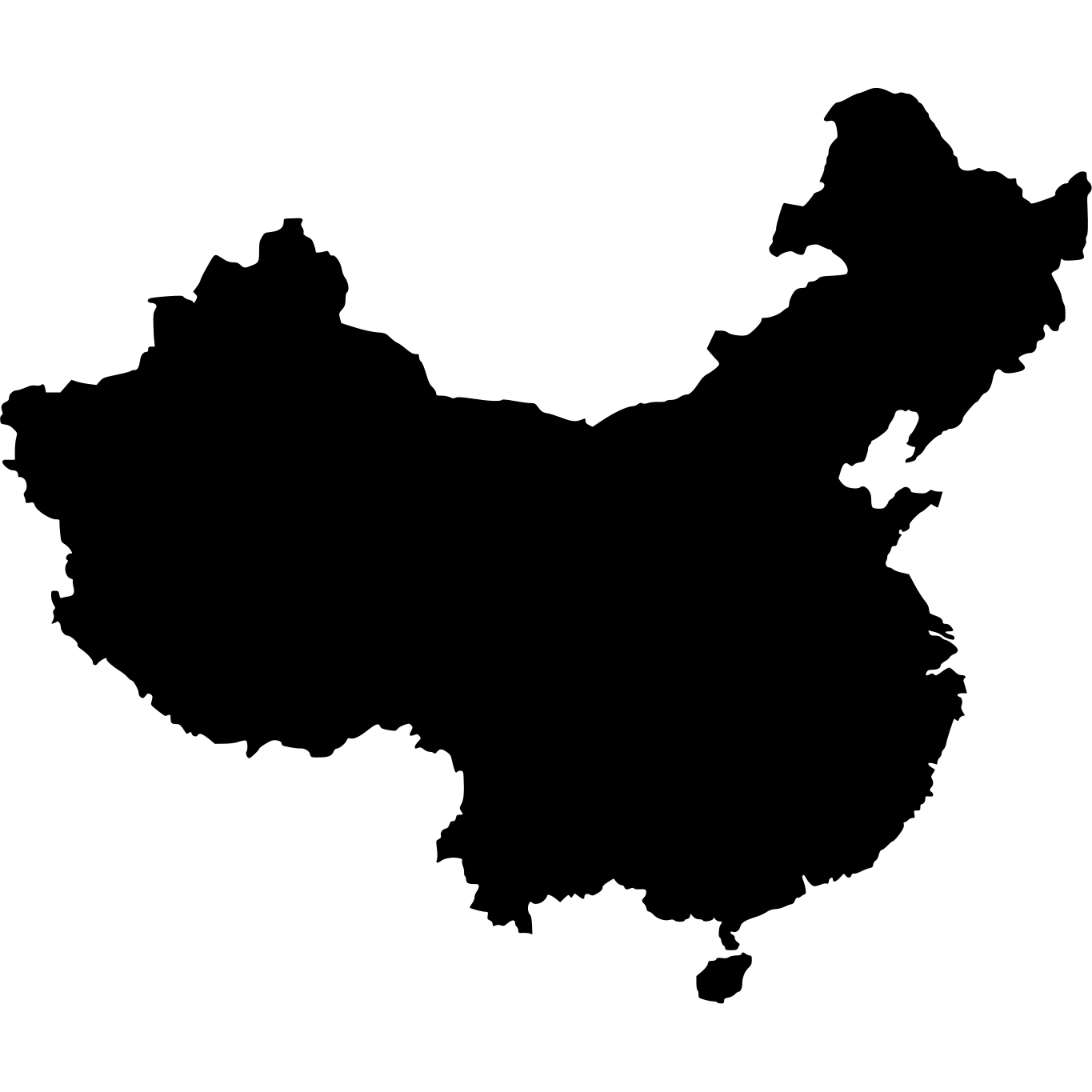
Joocyee is a Chinese brand

We're dedicated to providing you with the most up-to-date and science-backed ingredient info out there.
The data we've presented on this page has been verified by a member of the SkinSort Team.
Read more about us· Updated May 18, 2026 • Added by shengingxuyu


