Azarine Glowkiss Sunscreen Lip Balm SPF 35
Lip moisturizer with 19 ingredients that contains exfoliants and SPF
Worth noting
Contains Menthol, an EU-listed fragrance allergen.
We independently verify ingredients, backed by peer-reviewed research. Suggest an update.
What's inside
Ingredients List
Tridecyl Trimellitate
EmollientEthylhexyl Methoxycinnamate
UV Absorber


Pentaerythrityl Tetraisostearate
Emollient

Diphenylsiloxy Phenyl Trimethicone
Skin Conditioning
Hydrogenated Polydecene
EmollientDiisostearyl Malate
EmollientSynthetic Wax
Abrasive

Octocrylene
UV Absorber
Hydrogenated Styrene/Methylstyrene/Indene Copolymer
Beeswax
Emulsion Stabilising
Diethylamino Hydroxybenzoyl Hexyl Benzoate
UV Filter
Candelilla Wax Esters
Parfum
Masking

Phenoxyethanol
Preservative
Menthol
Masking

Caprylyl Glycol
Emollient
Copernicia Cerifera Wax
Pentaerythrityl Tetra-Di-T-Butyl Hydroxyhydrocinnamate
Antioxidant
BHT
Antioxidant
Tridecyl Trimellitate, Ethylhexyl Methoxycinnamate, Pentaerythrityl Tetraisostearate, Diphenylsiloxy Phenyl Trimethicone, Hydrogenated Polydecene, Diisostearyl Malate, Synthetic Wax, Octocrylene, Hydrogenated Styrene/Methylstyrene/Indene Copolymer, Beeswax, Diethylamino Hydroxybenzoyl Hexyl Benzoate, Candelilla Wax Esters, Parfum, Phenoxyethanol, Menthol, Caprylyl Glycol, Copernicia Cerifera Wax, Pentaerythrityl Tetra-Di-T-Butyl Hydroxyhydrocinnamate, BHT
Key Ingredients
Concerns
Ingredients Explained
Tridecyl Trimellitate is a synthetic ingredient with emollient and skin conditioning properties. It also acts as a texture enhancer and helps products spread easily without feeling greasy.
As an emollient, it forms a light layer on the skin that keeps moisture in and improves water resistance. This is why you'll often find this ingredient in eye creams and other rich treatments.
This ingredient is seen as the elegant alternative to mineral oil.
Learn more about Tridecyl TrimellitateThis ingredient is also known as Octinoxate and is one of the oldest and most widely used chemical UV filters in skincare.
It has a simple job: soap up UVB radiation (290-320 nm), the wavelengths responsible for sunburn and a big chunk of long-term sun damage.
In formulas, it's always paired with a separate UVA filter because octinoxate solely protects skin from UVB.
Because it's an oil-soluble liquid, it's easy to blend into the oil phase of lotions/creams and gives a cosmetically elegant feel.
The one quirk about formulating this ingredient is photostability; the molecule slowly changes shape into a less effective version when sunlight hits it. So the longer you're in the sun, the weaker its protection gets. The drop can be more than 30% in some formulas.
It also doesn't play nice with Avobenzone (the common UVA filter) since avobenzone destabilizes octinoxate and the two degrade each other. But don't worry: brands have solved this issue by adding photostabilizers like Tinosorb S to prevent degradation and keep SPF stable under heavy UV exposure.
The maximum allowed level is 10% in the EU and Australia, 7.5% in the US and Canada, and 20% in Japan.
The Cosmetic Ingredient Review Panel has concluded this ingredient to be safe in cosmetics up to 10%.
One last thing worth knowing for context:
Octinoxate has been the subject of ongoing review in Europe where the Scientific Committee on Consumer Safety's (SCCS) 2025 final opinion is that this ingredient is an endocrine-active substance.
Lab and animal studies suggest it can act a bit like a hormone in the body (mildly mimicking estrogen and slightly blocking male hormones). It's important to know this hasn't really been shown to happen in everyday human use.
This ingredient is also banned in Hawaii over coral reef concerns.
Learn more about Ethylhexyl MethoxycinnamatePentaerythrityl Tetraisostearate is a synthetic emollient and "skin-feel" ingredient that spreads well and leaves a non-sticky finish with high gloss.
In makeup, it also doubles as a pigment-wetting agent for better color payoff.
It's a well-vetted ingredient for safety and does not penetrate into skin due to its large molecule size.
Because it's a long-chain fatty acid ester, this ingredient may not be fungal acne or Malassezia safe.
Learn more about Pentaerythrityl TetraisostearateDiphenylsiloxy Phenyl Trimethicone is a silicone. It has a high refractive index and adds shine to formulations.
According to the safety review by the Cosmetic Ingredient Review (CIR) Expert Panel, it is safe for use in cosmetics under the current practices and concentrations.
Hydrogenated Polydecene is a synthetic emollient. It forms a non-occlusive film on the skin's surface to provide a silky feel without being greasy.
In vivo studies in volunteers with atopic and dry skin showed no irritation or intolerance. The volunteers also saw a positive effect in dryness, scaling, and roughness after 28 days of use.
Concentrations up to 100% in guinea pig tests found it to be non-sensitizing and completely safe for use in cosmetics.
Learn more about Hydrogenated PolydeceneDiisostearyl Malate is an emollient and most often used in lip products. It comes from isostearyl alcohol, a fatty acid, and malic acid, an AHA.
As an emollient, Diisostearyl Malate helps create a thin film on your skin to trap moisture in. This helps keep your skin soft and smooth.
Synthetic Wax is a manufactured hydrocarbon wax. In formulas, it works as an occlusive emollient that helps reduce water loss and improves the spreadability of products.
Research comparing synthetic wax to traditional mineral-derived products found that formulas containing it perform as well for skin hydration.
It is considered non-comedogenic and vegan-friendly.
This ingredient has a well-established safety record by the CIR Expert Panel for Cosmetic Ingredient Safety.
Synthetic Waxes are straight/branched-chain hydrocarbons with no ester bond or fatty acids. That means there is nothing for the Malassezia yeast to feed on.
Learn more about Synthetic WaxOctocrylene is an oil-soluble organic UV filter that mainly absorbs UVB and short wave UVA II light.
Its real superpower is teamwork: octocrylene is remarkably photostable and is most famous for stabilizing avobenzone (the workhorse UVA filter).
This ingredient is commonly used to enhance both UVB and UVA protection due to its unique property in stabilizing avobenzone. It also pulls double duty by boosting water resistance and giving formulas a smooth, spreadable feel.
The EU's Scientific Committee on Consumer Safety (SCCS) has deemed octocrylene to be safe as a UV-filter at concentrations up to 10% (capped at 9% in propellant sprays). The US also permits it up to 10%.
Two things worth knowing:
You'll usually see this ingredient used in concentrations between 2-10% (higher amounts when used as a stabilizer for avobenzone).
Learn more about OctocryleneWe don't have a description for Hydrogenated Styrene/Methylstyrene/Indene Copolymer yet.
Beeswax is natural wax produced by honey bees to build their honeycomb.
Because it forms a protective layer on your skin, it can help lock in moisture and reduce water loss. It is also widely used as a thickener and emulsifier in lip balms and lotions. Research suggests beeswax containing moisturizers can support skin barrier integrity.
In comedogenic testing, Beeswax scored a 0-2, which is on the low end. Whether or not a product clogs your pores really comes down to the formula as a whole (not any single ingredient on its own) and your skin.
Cera Alba is the white, bleached form of this ingredient.
Just so you know, beeswax is not vegan since it is animal-derived. It cannot be removed with water, but can be taken off with an oil cleanser.
People with a known Propolis allergy also report to have reactions from beeswax.
Beeswax's wax esters are derived primarily from palmitic and oleic acid (C16 and C18:1). Both of these fall within the C11-C24 feeding window.
The Malassezia yeast can potentially cleave these esters and release usable fatty acids, so this ingredient may not be fungal acne safe. However, not everyone will react to this ingredient.
Learn more about BeeswaxDiethylamino Hydroxybenzoyl Hexyl Benzoate (DHHB) is a chemical UV-A absorber. It is formulated for high UVA protection (320-400 nm).
DHHB is well-liked for:
DHHB has been approved by the EU, Japan, Taiwan, and South America for use up to 10%. Unfortunately, it has not been approved for use in the US or Canada due to slow regulatory processes.
This ingredient is soluble in oils, fats, and lipids.
Learn more about Diethylamino Hydroxybenzoyl Hexyl BenzoateWe don't have a description for Candelilla Wax Esters yet.
Parfum is a catch-all term for an ingredient or more that is used to give a scent to products.
Also called "fragrance", this ingredient can be a blend of hundreds of chemicals or plant oils. This means every product with "fragrance" or "parfum" in the ingredients list is a different mixture.
For instance, Habanolide is a proprietary trade name for a specific aroma chemical. When used as a fragrance ingredient in cosmetics, most aroma chemicals fall under the broad labeling category of “FRAGRANCE” or “PARFUM” according to EU and US regulations.
The term 'parfum' or 'fragrance' is not regulated in many countries. In many cases, it is up to the brand to define this term.
For instance, many brands choose to label themselves as "fragrance-free" because they are not using synthetic fragrances. However, their products may still contain ingredients such as essential oils that are considered a fragrance by INCI standards.
One example is Calendula flower extract. Calendula is an essential oil that still imparts a scent or 'fragrance'.
Depending on the blend, the ingredients in the mixture can cause allergies and sensitivities on the skin. Some ingredients that are known EU allergens include linalool and citronellol.
Parfum can also be used to mask or cover an unpleasant scent.
The bottom line is: not all fragrances/parfum/ingredients are created equally. If you are worried about fragrances, we recommend taking a closer look at an ingredient. And of course, we always recommend speaking with a professional.
Learn more about ParfumPhenoxyethanol is one of the most widely used preservatives in skincare (and for good reason!).
It has a large spectrum of antimicrobial activity and especially effective bacteria, yeast, and mold while only having a weak effect on your skin's natural microbiome.
On a cellular level, it disrupts the cell membranes of microbes by poking holes that make the cell leak. This shuts down the chemical reactions the microbe needs to make energy so it can no longer survive.
Another perk of this ingredient is that it stays functional across a wide pH range (3-10).
You'll often see it paired with boosters like Ethylhexylglycerin; one study showed that a 1:9 ratio of Ethylhexylglycerin to Phenoxyethanol damages bacterial membranes as effectively as doubling the Phenoxyethanol concentration on its own.
Typical use concentrations range from 0.3-1% depending on the formula, and this ingredient is capped at 1% int the EU.
Safety-wise, the fear mongering does not hold up to the evidence. The EU's Scientific Committee on Consumer Safety and FDA consider it safe as a preservative at up to 1%, including for children of all ages.
Adverse systemic effects only showed up in animal studies at exposures roughly 200x higher than what people get from cosmetics. And despite its very widespread use, this ingredient is a rare sensitizer and allergic reactions are uncommon.
Learn more about PhenoxyethanolMenthol is a compound found in mint plants, such as peppermint. In its pure form, it is a clear crystalline substance.
Menthol is known for its cooling sensation; however, the cooling is actually from your skin being sensitized. Menthol can worsen rosacea. We recommend speaking with a professional if you have concerns.
Menthol also has antimicrobial properties.
Learn more about MentholCaprylyl Glycol is a humectant, skin conditioner, emollient, and preservative booster derived from either caprylic acid or synthetically created.
Typical use levels vary from 0.3-1% as a preservative booster and go up to 2% to condition skin.
Because it is not a free-fatty acid, this ingredient is fungal acne safe (there's nothing for Malassezia to feed on).
Learn more about Caprylyl GlycolCopernicia Cerifera Wax comes from a palm tree native to Brazil; another name for this ingredient is Carnauba Wax.
This ingredient is used to thicken texture and also leaves behind a film when applied.
Fun fact: This wax has the highest melting point of all natural waxes and low solubility.
Learn more about Copernicia Cerifera WaxPentaerythrityl Tetra-Di-T-Butyl Hydroxyhydrocinnamate (long name, huh?) is a synthetic antioxidant.
It is used to help stabilize other antioxidants or prevent the color from changing in a product.
As an antioxidant, it helps fight free-radical molecules. Free-radical molecules are capable of damaging our cells and other genetic material. Thus, antioxidants may reduce the signs of aging.
This ingredient is oil-soluble.
Learn more about Pentaerythrityl Tetra-Di-T-Butyl HydroxyhydrocinnamateBHT is a synthetic antioxidant and preservative.
As an antioxidant, it helps your body fight off free-radicals. Free-radicals are molecules that may damage your skin cells.
As a preservative, it is used to stabilize products and prevent them from degrading. Specifically, BHT prevents degradation from oxidation.
The concerns related to BHT come from oral studies; this ingredient is currently allowed for use by both the FDA and EU.
However, it was recently restricted for use in the UK as of April 2024.
Learn more about BHTReviews
No written reviews yet. Be the first to review this product.
Recent searches
Search reviews by skin type, ingredient, or keyword.
Where it's from
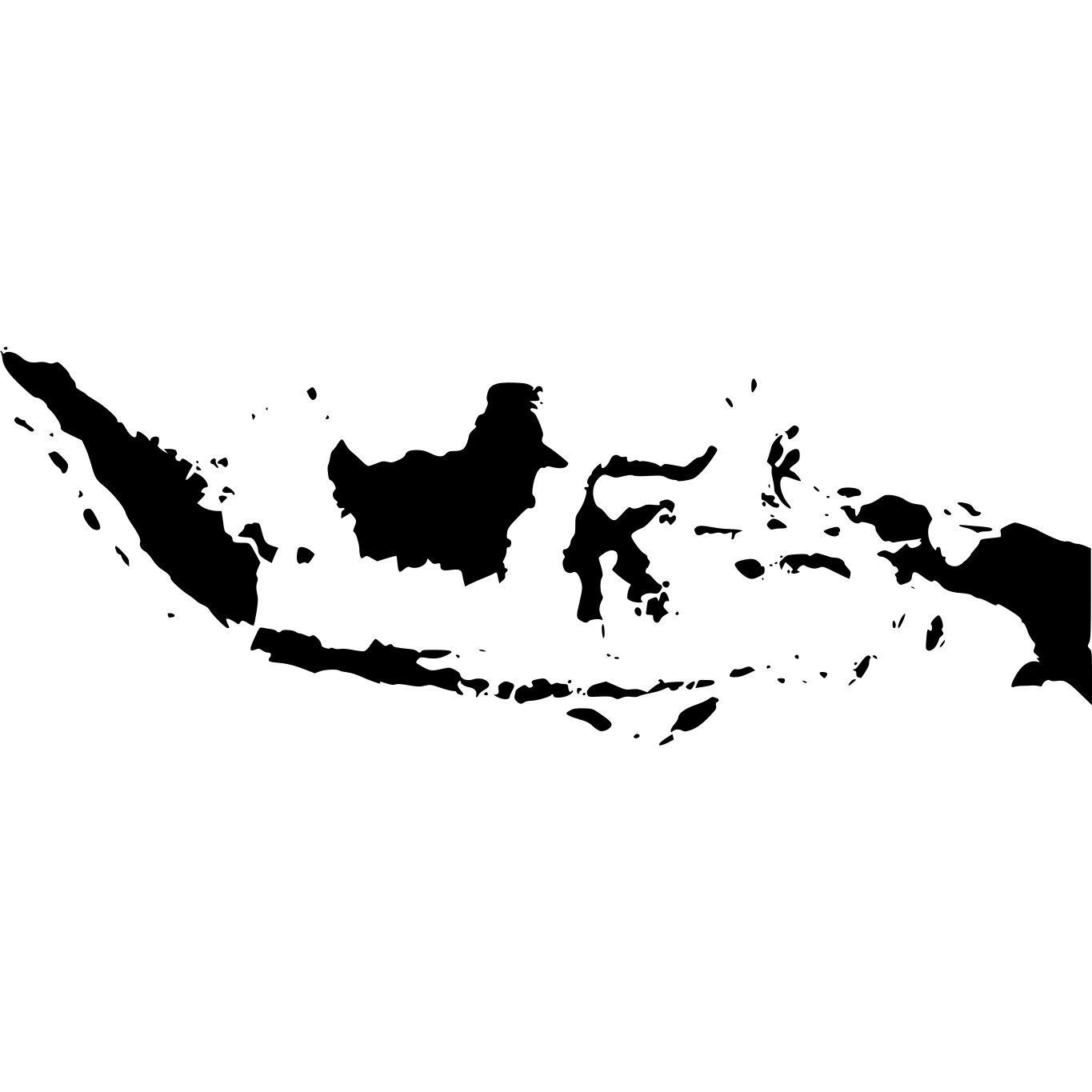
Azarine is a Indonesian brand
35 SPF Rating
With an SPF rating of 35, this product protects against 97.1% of UVB rays
Often compared with

We're dedicated to providing you with the most up-to-date and science-backed ingredient info out there.
The data we've presented on this page has been verified by a member of the SkinSort Team.
Read more about us· Updated September 5, 2025 • Added by primrose1


