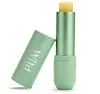
This barrier-repair lip moisturizer is formulated around Cocos Nucifera Oil and Caprylic/Capric Triglyceride to strengthen the lip barrier and hydrate lips.
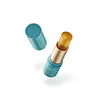
This barrier-repair lip moisturizer is formulated around Tocopherol and Sodium Hyaluronate to strengthen the lip barrier and hydrate lips.


What's inside
What's inside
 Key Ingredients
Benefits
Concerns
Ingredients Side-by-side
C10-18 Triglycerides
Emollient

Cocos Nucifera Oil
Masking






Caprylic/Capric Triglyceride
Masking
Mangifera Indica Seed Butter
Skin Conditioning
Diethylhexyl Butamido Triazone
UV Absorber
Oryza Sativa Bran Cera
Skin ConditioningHelianthus Annuus Seed Cera
Emollient
Hydrogenated Castor Oil
Emollient
Butyrospermum Parkii Butter
Skin Conditioning
Diethylamino Hydroxybenzoyl Hexyl Benzoate
UV Filter
Ethylhexyl Triazone
UV Absorber
Persea Gratissima Oil
Skin Conditioning
Theobroma Cacao Seed Butter
Emollient
Rhus Succedanea Fruit Cera
EmollientC10-18 Triglycerides, Cocos Nucifera Oil, Caprylic/Capric Triglyceride, Mangifera Indica Seed Butter, Diethylhexyl Butamido Triazone, Oryza Sativa Bran Cera, Helianthus Annuus Seed Cera, Hydrogenated Castor Oil, Butyrospermum Parkii Butter, Diethylamino Hydroxybenzoyl Hexyl Benzoate, Ethylhexyl Triazone, Persea Gratissima Oil, Theobroma Cacao Seed Butter, Rhus Succedanea Fruit Cera
Coco-Caprylate/Caprate
Emollient
Dicaprylyl Carbonate
EmollientBis-Ethylhexyloxyphenol Methoxyphenyl Triazine
UV Absorber
Dibutyl Lauroyl Glutamide
Skin ConditioningDiethylamino Hydroxybenzoyl Hexyl Benzoate
UV Filter
Diethylhexyl Butamido Triazone
UV Absorber
Ethylhexyl Triazone
UV Absorber
Dibutyl Ethylhexanoyl Glutamide
Skin ConditioningEthyl Vanillin
MaskingTocopherol
Antioxidant





Diethylhexyl Syringylidenemalonate
Skin Protecting
Ricinus Communis Seed Oil
Masking
Caprylic/Capric Triglyceride
Masking
Sodium Hyaluronate
Humectant
Haematococcus Pluvialis Extract
Antioxidant
Hydrogenated Castor Oil
Emollient
Maltodextrin
Absorbent
Lecithin
Emollient
Silica
Abrasive


Ascorbyl Palmitate
Antioxidant

Rosmarinus Officinalis Flower/Leaf/Stem Extract
MaskingCoco-Caprylate/Caprate, Dicaprylyl Carbonate, Bis-Ethylhexyloxyphenol Methoxyphenyl Triazine, Dibutyl Lauroyl Glutamide, Diethylamino Hydroxybenzoyl Hexyl Benzoate, Diethylhexyl Butamido Triazone, Ethylhexyl Triazone, Dibutyl Ethylhexanoyl Glutamide, Ethyl Vanillin, Tocopherol, Diethylhexyl Syringylidenemalonate, Ricinus Communis Seed Oil, Caprylic/Capric Triglyceride, Sodium Hyaluronate, Haematococcus Pluvialis Extract, Hydrogenated Castor Oil, Maltodextrin, Lecithin, Silica, Ascorbyl Palmitate, Rosmarinus Officinalis Flower/Leaf/Stem Extract
Reviews
Ingredients Explained
These ingredients are found in both products.
Ingredients higher up in an ingredient list are typically present in a larger amount.
Caprylic/Capric Triglyceride (aka MCT Oil) is a lightweight emollient, solvent, and texture enhancer. It is considered a skin-softener by helping to prevent moisture loss.
Though it behaves like an oil, it is not technically one due to its chemical composition. One perk of this ingredient is that it is very stable, resistant to oxidation, and unlikely to go rancid.
In practice, that translates to a long shelf life and a consistently elegant skin feel.
While there is an assumption Caprylic Triglyceride can clog pores due to it being derived from coconut oil, there is no research supporting this. Just patch test if you have concerns.
Fractionated coconut oil and MCT Oil are both listed as Caprylic/Capric Triglyceride according to INCI. This is because INCI names are based on the ingredient’s final chemical composition and not its marketing name or source.
This ingredient is treated as the gold standard fungal acne safe oil. Even though it is coconut derived, the problematic lauric acid is stripped out.
This leaves just caprylic (C8) and capric (C10) acid. These chain lengths actually trend antifungal; a 2020 study found caprylic acid was enough to disrupt Malassezia furfur cell membrane, with a caprylic acid derivative damaging membrane structures at concentrations as low as 0.2%.
Learn more about Caprylic/Capric TriglycerideDiethylamino Hydroxybenzoyl Hexyl Benzoate (DHHB) is a chemical UV-A absorber. It is formulated for high UVA protection (320-400 nm).
DHHB is well-liked for:
DHHB has been approved by the EU, Japan, Taiwan, and South America for use up to 10%. Unfortunately, it has not been approved for use in the US or Canada due to slow regulatory processes.
This ingredient is soluble in oils, fats, and lipids.
Learn more about Diethylamino Hydroxybenzoyl Hexyl BenzoateDiethylhexyl Butamido Triazone (aka Iscotrizinol) is an oil-soluble organic UV filter that mainly absorbs UVB and a bit of UVA II light.
This ingredient is great at preventing sunburn but doesn't cover the deep UVA I range. This is why it's often paired with a UVA filter like Avobenzone or Bemotrizinol.
Two of its biggest selling points are efficiency and stability:
Most of the other chemical filters are considered "photostable" if they can last for two hours.
Because this ingredient is oil-loving, it can sit neatly into the oil phase of emulsions and shines in water-repellent/water-resistant formulations.
The EU and Canada allow it to be used up to 10% and Japan allows it up to 5%.
Unfortunately, it's not yet an FDA approved sunscreen agent so you won't be able to find it in sunscreens in the US.
Safety-wise, it has a pretty solid record: the EU's Scientific Committee on Consumer Safety (SCCS) has reviewed it and found low skin absorption, no capacity to produce skin irritation or photo-irritation.
In vitro testing has found less than 0.1% of the applied dose is absorbed by the skin over 24 hours (mostly due to its large molecule size).
Fun fact: This ingredient even has anti-inflammatory properties similar to those of ketoprofe, an anti-inflammatory medication.
Learn more about Diethylhexyl Butamido TriazoneEthylhexyl Triazone (aka Octyl Triazone) is an oil-soluble organic UVB filter. It has peak absorption around 314 nm, right in the middle of the UVB range.
This ingredient is described as one of the most effective UVB filters available and small concentrations are enough to deliver a high SPF thanks to its strong UV absorbing power.
Formulators love it for its stability; its ability to filter UV stays practically unchanged even under intense radiation and it can also help boost the photostability of less stable filters like avobenzone.
It's also a great pick for water resistant products because it's insoluble in water and has a good affinity for keratin.
Because it's a big, heavy molecule, the European Scientific Committee has found to to have very low dermal penetration and negative results for allergenicity.
In vitro testing also showed a low absorption rate and clean results on irritation.
Typical use levels are 1-5% with 5% being the maximum in the EU, Japan, and other markets that allow it. However, this ingredient is not approved yet in the US or Canada.
Learn more about Ethylhexyl TriazoneHydrogenated Castor Oil (aka "castor wax") is what you get when castor oil is turned into a wax.
Its dominant fatty acid is ricinoleic acid, giving it both emollient and mild humectant properties.
According to EU CosIng, this ingredient helps soften skin, keep oil and water stay mixed, and thickens products.
Hydrogenated castor oil at 30% did not trigger a positive patch-test reaction and is well-tolerated.
Since this ingredient is based on an 18-carbon fatty acid, it falls into the chain-length range that Malassezia can feed on and may not be fungal acne safe.
Learn more about Hydrogenated Castor Oil

