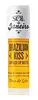
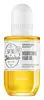
Sol De Janeiro Brazilian Kiss Cupuaçu Lip Butter Versus Sol De Janeiro Brazilian Glossy Nourishing Hair Oil
This lip moisturizer is formulated around Cera Alba and Cocos Nucifera Oil to hydrate lips.

What's inside
What's inside
 Key Ingredients
Benefits
Concerns
Ingredients Side-by-side
Cera Alba
Emollient





Cocos Nucifera Oil
Masking


Helianthus Annuus Seed Oil
Emollient
Olea Europaea Fruit Extract
BleachingGlycine Soja Oil
Emollient

Aroma

Cannabis Sativa Seed Oil
Emollient
Vitis Vinifera Seed Oil
Emollient
Tocopherol
Antioxidant




Euterpe Oleracea Fruit Extract
Theobroma Grandiflorum Seed Butter
Skin Conditioning
Rosmarinus Officinalis Leaf Extract
AntimicrobialSunflower Seed Oil Glycerides
Emollient
Aloe Barbadensis Leaf Juice
Skin Conditioning
Canola Oil
Emollient
Benzyl Benzoate
Antimicrobial

Cera Alba, Cocos Nucifera Oil, Helianthus Annuus Seed Oil, Olea Europaea Fruit Extract, Glycine Soja Oil, Aroma, Cannabis Sativa Seed Oil, Vitis Vinifera Seed Oil, Tocopherol, Euterpe Oleracea Fruit Extract, Theobroma Grandiflorum Seed Butter, Rosmarinus Officinalis Leaf Extract, Sunflower Seed Oil Glycerides, Aloe Barbadensis Leaf Juice, Canola Oil, Benzyl Benzoate
Dimethicone
Emollient

Phenyl Trimethicone
Skin Conditioning
Coco-Caprylate
Emollient
Parfum
Masking
Theobroma Grandiflorum Seed Butter
Skin Conditioning
Caryocar Brasiliense Fruit Oil
Skin Conditioning
Oenocarpus Bataua Fruit Oil
Emollient
Oryza Sativa Bran Extract
Skin Conditioning
Helianthus Annuus Extract
Emollient
Rosmarinus Officinalis Leaf Extract
AntimicrobialTocopherol
Antioxidant
Zea Mays Oil
Emulsifying
Trimethylsiloxysilicate
Emollient
Dimethiconol
Emollient
Benzyl Alcohol
Perfuming

Benzyl Salicylate
Perfuming
Hydroxycitronellal
Perfuming
Coumarin
Perfuming
Limonene
Perfuming
CI 40800
Cosmetic ColorantDimethicone, Phenyl Trimethicone, Coco-Caprylate, Parfum, Theobroma Grandiflorum Seed Butter, Caryocar Brasiliense Fruit Oil, Oenocarpus Bataua Fruit Oil, Oryza Sativa Bran Extract, Helianthus Annuus Extract, Rosmarinus Officinalis Leaf Extract, Tocopherol, Zea Mays Oil, Trimethylsiloxysilicate, Dimethiconol, Benzyl Alcohol, Benzyl Salicylate, Hydroxycitronellal, Coumarin, Limonene, CI 40800
Reviews
Ingredients Explained
These ingredients are found in both products.
Ingredients higher up in an ingredient list are typically present in a larger amount.
This is a botanical extract from the rosemary plant (the same one you cook with). In skincare, it mostly works as a skin conditioning agent.
Its activity comes from a handful of polyphenols, carnosic acid, carnosol, and rosmarinic acid. Almost 90% of the antioxidant activity of this ingredient can be attributed to canosol and carnosic acid.
These compounds protect your skin two ways:
1) They fight off free radicals, or the unstable molecules from things like sun and pollution that age and damage skin.
2) They help calm inflammation by switching off the chemical signals that tell skin to get red and irritated.
Lab studies also suggest that rosmarinic acid may help protect collagen and slow sugar-related damage to it.
The Cosmetic Ingredient Review has concluded rosemary-derived ingredients to be safe when formulated to be non-sensitizing.
Rosemary can occasionally cause allergic contact dermatitis (due to carnosol), so be sure to patch test if you have reactive or fragrance-sensitive skin.
Learn more about Rosmarinus Officinalis Leaf ExtractThis ingredient is also known as cupuacu butter. It's a soft, creamy plant fat that works as a skin-conditioning agent and often marketed as the plant-based alternative to lanolin.
The composition of this butter is dominated by oleic acid, stearic acid, and smaller amounts of palmitic, linoleic, and arachidic acids. There's also a useful dose of phystosterols.
That fatty-acid-and-sterol combo is why this ingredient behaves like a richer cousin of shea butter: the lipids reinforce the skin's surface and slow water loss while the sterols help support the barrier.
There's some early research too: a mouse study found cupuacu butter emulgels had antioxidant activity and a measurable photoprotective effect against UVB damage.
Overall, this is a well-tolerated ingredient but those prone to congestion might prefer formulations with lower concentrations.
Fungal acne: Cupuacu butter's fatty acids are mostly "locked up" in triglycerides that Malassezia can't easily feed on, but the yeast can slowly break these down to access the free fatty acids. Therefore, ingredient may not be fungal acne safe.
Learn more about Theobroma Grandiflorum Seed ButterTocopherol is a fat-soluble antioxidant known as Vitamin E.
You'll find this ingredient in the vast majority of skincare (for good reason). It works to neutralize free radicals, or unstable molecules generated by UV exposure, pollution, and other environmental stressors, before they can cause oxidative damage to your skin cells.
Topically applied tocopherol has been shown to protect against UV damage by ramping up the skin's own natural defense enzymes.
It also acts as a skin conditioning agent; some studies show that regular topical use can improve the skin's water-binding capacity over 2-4 weeks.
This ingredient is especially loved for being a team player. When combined with Vitamin C, the photoprotective effect of both ingredients roughly doubles and the combo also helps reduce UV-induced DNA damage.
This ingredient has some brightening potential but it's more of a prevention ingredient than spot-fader. Cell studies show it can slow down melanin production but it's worth noting that it's not the most powerful brightener out there.
In formulations, it also serves as a stabilizer that helps protect other oxidation-prone ingredients from degrading.
Concentrations usually range from 0.1-1% in most leave-on products.
Learn more about Tocopherol

