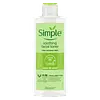
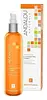
Simple Skincare Kind to Skin Soothing Facial Toner for All Skin Types Versus Andalou Naturals Clementine + C Illuminating Toner
This calming toner is formulated around Allantoin and Niacinamide to calm redness and strengthen the skin barrier.
This brightening toner is formulated around Aloe Barbadensis Leaf Juice and Magnesium Ascorbyl Phosphate to brighten dull-looking skin and hydrate skin.


What's inside
What's inside
 Key Ingredients
Benefits
Concerns
No concerns
Ingredients Side-by-side







Aloe Barbadensis Leaf Juice
Skin Conditioning


Water
Skin ConditioningGlycerin
Humectant

Panthenol
Skin Conditioning
Sodium PCA
Humectant
Tocopherol
Antioxidant




Sorbitan Oleate Decylglucoside Crosspolymer
CleansingMalus Domestica Fruit Cell Culture Extract
Skin ConditioningMagnesium Ascorbyl Phosphate
Antioxidant


Citrus Clementina Fruit Extract
Skin ConditioningCucumis Melo Fruit Extract
Skin ConditioningAllantoin
Skin Conditioning
Aspalathus Linearis Extract
Skin ConditioningHibiscus Sabdariffa Flower Extract
Skin ConditioningCamellia Sinensis Leaf Extract
Antimicrobial
Phenethyl Alcohol
MaskingEthylhexylglycerin
Skin ConditioningCitrus Aurantium Dulcis Peel Oil
Masking

Cymbopogon Martini Oil
Masking
Aloe Barbadensis Leaf Juice, Water, Glycerin, Panthenol, Sodium PCA, Tocopherol, Sorbitan Oleate Decylglucoside Crosspolymer, Malus Domestica Fruit Cell Culture Extract, Magnesium Ascorbyl Phosphate, Citrus Clementina Fruit Extract, Cucumis Melo Fruit Extract, Allantoin, Aspalathus Linearis Extract, Hibiscus Sabdariffa Flower Extract, Camellia Sinensis Leaf Extract, Phenethyl Alcohol, Ethylhexylglycerin, Citrus Aurantium Dulcis Peel Oil, Cymbopogon Martini Oil
Reviews
Ingredients Explained
These ingredients are found in both products.
Ingredients higher up in an ingredient list are typically present in a larger amount.
Allantoin is a soothing ingredient known for its protective and moisturizing properties; it's basically a quiet workhorse ingredient you can find in a huge range of cosmetics.
Though it can be derived from the comfrey plant, allantoin is produced synthetically for cosmetic products to ensure purity.
Research shows it can encourage your skin cells to turn over and renew by stimulating keratinocyte and fibroblast proliferation.
It also has mild keratolytic properties to help loosen and shed dead skin cells without being harsh.
Studies also suggest allantoin can help calm inflammation by dialing down some of the chemical signals your skin sends out when it is irritated.
This ingredient is typically used in the 0.1-0.5% range, and the FDA recognizes it as a skin protectant in OTC products up to 2%.
Overall, allantoin is a wonderful addition to most routines; it is stable across a wide pH range (~4-8), works well with other ingredients, and is considered non-sensitizing/non-irritating.
Fun fact: Allantoin is naturally occurring in comfrey root, beets, chamomile, and wheat sprouts. Our bodies even produce it as a byproduct of uric acid metabolism.
Learn more about AllantoinPanthenol is a common ingredient that helps hydrate and soothe the skin. It is found naturally in our skin and hair.
There are two forms of panthenol: D and L.
D-panthenol is also known as dexpanthenol. Most cosmetics use dexpanthenol or a mixture of D and L-panthenol.
Panthenol is famous due to its ability to go deeper into the skin's layers. Using this ingredient has numerous pros (and no cons):
Like hyaluronic acid, panthenol is a humectant. Humectants are able to bind and hold large amounts of water to keep skin hydrated.
This ingredient works well for wound healing. It works by increasing tissue in the wound and helps close open wounds.
Once oxidized, panthenol converts to pantothenic acid. Panthothenic acid is found in all living cells.
This ingredient is also referred to as pro-vitamin B5.
Learn more about PanthenolSodium PCA (the salt of PCA) is one of the most well-established humectants in skincare.
Why is it so special? Your skin already makes it naturally; it's a natural component of your skin's Natural Moisturizing Factor (NMF), or the mix of water-binding compounds inside your skin cells that keeps things soft and hydrated.
As a cosmetic ingredient, it grabs water and holds it in the upper layers of skin to smooth roughness and ease dehydration.
There's some clinical support for the NMF approach with a study showing that a cream built to mimic the skin's NMF significantly boosted hydration.
Safety-wise, this ingredient non-irritating, non-comedogenic, and non-phototoxic in testing, with minimal skin absorption.
It also works really well with other hydrators like glycerin or hyaluronic acid, and typical usage is somewhere between 0.2-4%.
Learn more about Sodium PCAWater. It's the most common cosmetic ingredient of all. You'll usually see it at the top of ingredient lists, meaning that it makes up the largest part of the product.
So why is it so popular? Water most often acts as a solvent - this means that it helps dissolve other ingredients into the formulation.
You'll also recognize water as that liquid we all need to stay alive. If you see this, drink a glass of water. Remember to stay hydrated!
Learn more about Water

