SHEGLAM Insta-Ready Face & Under Eye Setting Powder Duo Versus Huda Beauty Easy Bake & Snatch Pressed Brightening & Setting Powder


What's inside
What's inside
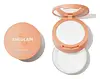 Key Ingredients
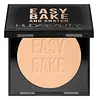
Benefits
Concerns
Ingredients Side-by-side
Talc
Abrasive
Mica
Cosmetic ColorantSilica
Abrasive

Dimethicone
Emollient

Magnesium Myristate


Nylon-12

Boron Nitride
Absorbent
Phenyl Trimethicone
Skin Conditioning
Isononyl Isononanoate
EmollientTriethoxycaprylylsilane
Phenoxyethanol
Preservative
Caprylyl Glycol
Emollient
Lauroyl Lysine
Skin Conditioning
Tocopheryl Acetate
Antioxidant


Ethylhexylglycerin
Skin ConditioningCaffeine
Skin Conditioning

Cyclodextrin
AbsorbentAluminum Starch Octenylsuccinate
Absorbent
Magnesium Stearate
Cosmetic ColorantTalc, Mica, Silica, Dimethicone, Magnesium Myristate, Nylon-12, Boron Nitride, Phenyl Trimethicone, Isononyl Isononanoate, Triethoxycaprylylsilane, Phenoxyethanol, Caprylyl Glycol, Lauroyl Lysine, Tocopheryl Acetate, Ethylhexylglycerin, Caffeine, Cyclodextrin, Aluminum Starch Octenylsuccinate, Magnesium Stearate
Mica
Cosmetic ColorantBoron Nitride
Absorbent
Nylon-12
Magnesium Myristate
Caprylic/Capric Triglyceride
Masking


Butyl Avocadate
Skin Conditioning

Olea Europaea Fruit Oil
Masking

Hyaluronic Acid
Humectant
Tocopherol
Antioxidant

Ricinus Communis Seed Oil
Masking
Phenoxyethanol
Preservative
Dimer Dilinoleyl Dimer Dilinoleate
EmollientOctyldodecyl Stearoyl Stearate
Emollient
Sodium Dehydroacetate
Preservative
CI 19140
Cosmetic ColorantCI 77491
Cosmetic ColorantIron Oxides
CI 77492
Cosmetic ColorantMica, Boron Nitride, Nylon-12, Magnesium Myristate, Caprylic/Capric Triglyceride, Butyl Avocadate, Olea Europaea Fruit Oil, Hyaluronic Acid, Tocopherol, Ricinus Communis Seed Oil, Phenoxyethanol, Dimer Dilinoleyl Dimer Dilinoleate, Octyldodecyl Stearoyl Stearate, Sodium Dehydroacetate, CI 19140, CI 77491, Iron Oxides, CI 77492
Reviews
Ingredients Explained
These ingredients are found in both products.
Ingredients higher up in an ingredient list are typically present in a larger amount.
Boron Nitride is compound consisting of boron and nitrogen. It is used to absorb oil and modify adherence/ slip in products.
This means it is often used in makeup products to help them last longer.
Magnesium Myristate is the magnesium salt of myristic acid, a saturated fatty acid that is naturally found in coconut and palm kernel oil.
In formulas, it's used as an anticaker, opacifier, and viscosity controller; it improves adhesion and glide in pressed mineral makeup, works as a non-gelling thickener in eyeliners/mascaras/lipsticks, and doubles as a white opacifier.
There's no published concentration use from surveys so the best available numbers are supplier guidance: 5-10% for loose powders and 2-5% for creamy cosmetics + pressed powder binding.
The CIR Expert Panel reviewed Magnesium Myristate as part of its assessment of myristic acid and its salts and esters, and concluded the whole group is safe as used in cosmetics.
In human studies, Myristic Acid was non-irritating up to 50% and 100% Magnesium Stearate was non-irritating and non-corrosive on skin and non-irritating to the eye.
There are no published contact allergy case reports for this ingredient so allergy risk is low, but not zero for any ingredient.
There is no comedogenic data for Magnesum Myristate. The comedogenic ratings that circulate for "myristates" come from Isopropyl Myristate which is a structurally different ester.
The rabbit-ear models those comedogenic ratings come from have been shown to be unreliable for predicting whether a finished product will clog pores.
Human testing has proved that any finished product with a comedogenic ingredient won't automatically make you break out; it really comes down to concentration, formula, and your skin.
Some people still find it breaks them out. So if that's you, definitely trust your skin.
Learn more about Magnesium MyristateMica is a naturally occurring mineral used to add shimmer and color in cosmetics. It can also help improve the texture of a product or give it an opaque, white/silver color.
Serecite is the name for very fine but ragged grains of mica.
This ingredient is often coated with metal oxides like titanium dioxide. Trace amounts of heavy metals may be found in mica, but these metals are not harmful in our personal products.
Mica has been used since prehistoric times throughout the world. Ancient Egyptian, Indian, Greek, Roman, Aztec, and Chinese civilizations have used mica.
Learn more about MicaNylon-12 is a polymer. It is derived from 12-aminododecanoic acid, an omega-amino fatty acid
According to a manufacturer, it is a talc substitute. Like talc, nylon-12 gives products a satin feel. The manufacturer also claims this ingredients does not block pores and has moderate oil absorption.
This ingredient may not be reef-safe.
Learn more about Nylon-12Phenoxyethanol is one of the most widely used preservatives in skincare (and for good reason!).
It has a large spectrum of antimicrobial activity and especially effective bacteria, yeast, and mold while only having a weak effect on your skin's natural microbiome.
On a cellular level, it disrupts the cell membranes of microbes by poking holes that make the cell leak. This shuts down the chemical reactions the microbe needs to make energy so it can no longer survive.
Another perk of this ingredient is that it stays functional across a wide pH range (3-10).
You'll often see it paired with boosters like Ethylhexylglycerin; one study showed that a 1:9 ratio of Ethylhexylglycerin to Phenoxyethanol damages bacterial membranes as effectively as doubling the Phenoxyethanol concentration on its own.
Typical use concentrations range from 0.3-1% depending on the formula, and this ingredient is capped at 1% int the EU.
Safety-wise, the fear mongering does not hold up to the evidence. The EU's Scientific Committee on Consumer Safety and FDA consider it safe as a preservative at up to 1%, including for children of all ages.
Adverse systemic effects only showed up in animal studies at exposures roughly 200x higher than what people get from cosmetics. And despite its very widespread use, this ingredient is a rare sensitizer and allergic reactions are uncommon.
Learn more about Phenoxyethanol

