Palmer's Cocoa Butter Formula Skin Therapy Face Oil Versus Palmer's Skin Perfecting Ultra Hydrating Serum
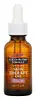
This hydrating oil is formulated around Prunus Amygdalus Dulcis Oil and Vitis Vinifera Seed Oil to hydrate skin and soften the look of wrinkles.
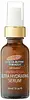
This anti-aging serum is formulated around Retinol to soften the look of wrinkles and fade the look of dark spots.

What's inside
What's inside
 Key Ingredients
Benefits
Concerns
Ingredients Side-by-side
Prunus Amygdalus Dulcis Oil
Skin Conditioning



Vitis Vinifera Seed Oil
Emollient
Isopropyl Myristate
Emollient



Cetearyl Ethylhexanoate
Emollient
Camelina Sativa Seed Oil
Skin Conditioning
Macadamia Ternifolia Seed Oil
Emollient
Sesamum Indicum Seed Oil
Emollient
PEG-40 Sorbitan Peroleate
Emulsifying
Cocos Nucifera Oil
Masking

Prunus Armeniaca Kernel Oil
Masking
Caprylyl Methicone
Skin Conditioning
Theobroma Cacao Seed Butter
Emollient
Tocopheryl Acetate
Antioxidant


Retinol
Skin Conditioning







Ascorbyl Palmitate
Antioxidant
Centella Asiatica Extract
Cleansing

Rosa Canina Seed Extract
EmollientArgania Spinosa Kernel Oil
Emollient
Helianthus Annuus Seed Oil
Emollient
Dimethicone
Emollient
Hydrogenated Methyl Abietate
Parfum
Masking
Caprylic/Capric Triglyceride
Masking
BHT
Antioxidant
Benzyl Benzoate
Antimicrobial
Citronellol
Perfuming
Alpha-Isomethyl Ionone
Perfuming
Geraniol
Perfuming
Hydroxyisohexyl 3-Cyclohexene Carboxaldehyde
Masking
Hexyl Cinnamal
Perfuming
Butylphenyl Methylpropional
Perfuming
Prunus Amygdalus Dulcis Oil, Vitis Vinifera Seed Oil, Isopropyl Myristate, Cetearyl Ethylhexanoate, Camelina Sativa Seed Oil, Macadamia Ternifolia Seed Oil, Sesamum Indicum Seed Oil, PEG-40 Sorbitan Peroleate, Cocos Nucifera Oil, Prunus Armeniaca Kernel Oil, Caprylyl Methicone, Theobroma Cacao Seed Butter, Tocopheryl Acetate, Retinol, Ascorbyl Palmitate, Centella Asiatica Extract, Rosa Canina Seed Extract, Argania Spinosa Kernel Oil, Helianthus Annuus Seed Oil, Dimethicone, Hydrogenated Methyl Abietate, Parfum, Caprylic/Capric Triglyceride, BHT, Benzyl Benzoate, Citronellol, Alpha-Isomethyl Ionone, Geraniol, Hydroxyisohexyl 3-Cyclohexene Carboxaldehyde, Hexyl Cinnamal, Butylphenyl Methylpropional

Reviews
Ingredients Explained
These ingredients are found in both products.
Ingredients higher up in an ingredient list are typically present in a larger amount.
Retinol is one of the most studied anti-aging ingredients in skincare (and for good reason!).
It's a form of vitamin A that your skin converts into Retinoic Acid, the active molecule that actually does the work in your cells.
That conversion happens in two steps: your skin first turns Retinol into Retinaldehyde (also called Retinal), then turns Retinaldehyde into Retinoic Acid.
Retinol is converted to biologically active retinoic acid via retinaldehyde by dehydrogenases in a two-step oxidation process.
Each step is a little "upgrade" toward the active form which is part of why Retinol is gentler than prescription Retinoic Acid; your skin does the work gradually. This also explains where Retinol sits in the retinoid family.
Here is the retinoid family ranked roughly by strength: Retinyl Esters (like Retinyl Palmitate) < Retinol < Retinaldehyde < Retinoic Acid.
Retinoid activity increases in that order, while tolerance runs in reverse; retinyl esters are the gentlest and retinoic acid the most irritating.
The more conversion steps an ingredient needs, the gentler (and slower) it tends to be, so Retinol lands in a nice middle spot. It's more effective than the esters, gentler than prescription options.
Once it becomes Retinoic Acid, it binds to receptors inside your cells' nuclei (called RARs and RXRs). These receptor pairs bind to specific DNA motifs called retinoic acid response elements and act like switches that turn certain genes on or off.
In practice, this means a few things happen in a formula. It:
That last two are worth a closer look.
A study that tested Retinol directly (not just prescription Retinoic Acid) found that four weeks of retinol thickened the epidermis and switched on the genes for Collagen I and Collagen III, with more procollagen I and III showing up in the skin. And after twelve weeks, facial wrinkles were visibly reduced.
Retinoids more broadly stimulate the skin's synthesis of hyaluronan and other glycosaminoglycans, part of what gives skin a plumper, more hydrated look over time.
So even the gentler OTC form is doing real structural work (not just sitting on the surface).
It's also worth knowing Retinol isn't only a wrinkle ingredient; it can help with uneven tone, dark spots, rough texture, and the look of pores as well because it speeds up turnover and influences pigment.
The research backs this up as well.
A pooled analysis of six clinical studies found that 0.1% stabilized retinol improved all signs of photoaging versus vehicle as early as week 4 and through 12 weeks, with only a few mild cases of irritation.
Another study comparing concentrations found that 0.3% and 1% Retinol were similarly effective at remodeling photodamaged skin, but 0.3% caused fewer adverse reactions when used daily (a useful reminder that more isn't always better).
Retinol is about tenfold less potent than Retinoic Acid. This is why it works as a gentler, non-prescription option that builds results over time.
Typical concentrations range from 0.1-1%, with 0.1% to 0.3% being a well-supported sweet spot for visible benefits with good tolerability.
One quirk worth mentioning: Retinol is famously unstable.
It's highly sensitive to light and oxygen, and UV exposure breaks it down into a range of degradation products.
Real-world testing bears this out, with retinoid content in some products dropping anywhere from 0% to 80% after six months at room temperature, and even more at higher temperatures.
This is why good formulations lean on opaque, air-tight packaging (think tubes and pumps, not clear jars) and often "encapsulate" the Retinol to shield it.
Signs of oxidation include your product turning yellow or smelling "off". Keeping it somewhere cool and dark, and using it up within a few months of opening helps it stay effective.
The most common side effects are mild and temporary: usually some dryness, redness, or light peeling as your skin adjusts. These tend to settle with consistent and lower-frequency use.
Like all retinoids, Retinol works best with nightly use, a good moisturizer, and daytime sunscreen.
The "ramp up" method works well: start with Retinol once a week to give your skin time to adjust, which keeps irritation low. Slowly add more nights until you reach your goal frequency once your skin feels comfortable.
Retinoids also make your skin more sensitive to the sun in the first few weeks, so wear sunscreen every morning and protect your skin from direct sun while you build up tolerance.
One safety note: topical Retinoids aren't recommended during pregnancy or breastfeeding. Systemic absorption from creams is low but because high oral vitamin A is a known teratogen and topical safety data are limited, most clinicians recommend stopping retinoids when pregnant or trying to conceive.
Learn more about RetinolTheobroma Cacao Seed Butter comes from the Theobroma cacoa, or Cacao tree. Cacao trees are native to tropical landscapes.
Like other plant butters, Cacao seed butter is an emollient. Emollients help soothe and soften your skin. By creating a barrier to trap moisture in, emollients help keep your skin hydrated.
Cacao seed butter contains antioxidants known as polyphenols. Antioxidants help fight free-radical molecules by stabilizing them. Unstable free-radicals may cause damage to your skin cells. Antioxidants may help with anti-aging.
Theobroma Cacao Seed Butter can be bad for acne prone skin.
Learn more about Theobroma Cacao Seed Butter

