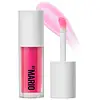
This lip moisturizer is formulated around Ricinus Communis Seed Oil and Butyrospermum Parkii Butter to hydrate lips.


What's inside
What's inside
 Key Ingredients
Benefits
Concerns
Ingredients Side-by-side

Polybutene
Octyldodecanol
Emollient
Pentaerythrityl Tetraisostearate
Emollient

Silica Silylate
Emollient
Ethylhexyl Palmitate
Emollient


Ricinus Communis Seed Oil
Masking


Simmondsia Chinensis Seed Oil
Emollient

Punica Granatum Flower Extract
Skin Conditioning
Polyglyceryl-3 Diisostearate
Emulsifying
Tribehenin
Emollient
Tocopheryl Acetate
Antioxidant


Sorbitan Isostearate
Emulsifying
Trihydroxystearin
Skin Conditioning
Lactic Acid
Buffering





Sodium Hyaluronate
Humectant

Palmitoyl Tripeptide-1
Skin Conditioning
Parfum
Masking
CI 77891
Cosmetic ColorantIron Oxides
CI 15850
Cosmetic ColorantCI 42090
Cosmetic ColorantCI 19140
Cosmetic ColorantPolybutene, Octyldodecanol, Pentaerythrityl Tetraisostearate, Silica Silylate, Ethylhexyl Palmitate, Ricinus Communis Seed Oil, Simmondsia Chinensis Seed Oil, Punica Granatum Flower Extract, Polyglyceryl-3 Diisostearate, Tribehenin, Tocopheryl Acetate, Sorbitan Isostearate, Trihydroxystearin, Lactic Acid, Sodium Hyaluronate, Palmitoyl Tripeptide-1, Parfum, CI 77891, Iron Oxides, CI 15850, CI 42090, CI 19140
Reviews
Ingredients Explained
These ingredients are found in both products.
Ingredients higher up in an ingredient list are typically present in a larger amount.
Ci 15850 is the pigment color red. It is an azo dye and created synthetically.
Azo dyes need to be thoroughly purified before use. This allows them to be more stable and longer-lasting.
This ingredient is common in foundations, lipsticks, and blushes. This color is described as brown/orangey red.
It has many secondary names such as Red 6 and Red 7. According to a manufacturer, Red 6 usually contains aluminum.
Learn more about CI 15850This ingredient is also known as castor oil. It is a skin conditioning ingredient.
The star component of castor oil is ricinoleic acid, an unusual fatty acid that makes up ~80-92% of its composition.
In skincare, it is an emollient that dries down to a solid film with water-binding properties. This helps keep skin hydrated and helps reduce transepidermal water loss (TEWL).
A 2026 dermatology review pulls together its broader uses:
Human clinical testing found this ingredient to be non-irritating and non-sensitizing.
Because castor oil contains fatty acids in the C11-24 range, this ingredient may not be fungal acne safe.
At this time, the literature does not support castor oil in regrowing hair. A 2022 systematic review found no strong evidence that it supports hair growth and only weak evidence that it improves hair shine.
Castor oil itself carries "perfuming" and "masking" function tags according to the official CosIng database. This is because of its mild odor and odor-dampening properties.
Learn more about Ricinus Communis Seed Oil

