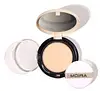
Moira Beauty Complete Wear Powder Foundation Versus Aromaleigh Dewdrop Medium Coverage Mineral Foundation

What's inside
What's inside
 Key Ingredients
Benefits
Concerns
No concerns
Ingredients Side-by-side
Mica
Cosmetic ColorantTalc
Abrasive
Silica
Abrasive

Dimethicone
Emollient

Nylon-12

Microcrystalline Cellulose
AbsorbentLauroyl Lysine
Skin Conditioning
Allantoin
Skin Conditioning



Aloe Barbadensis Leaf Extract
Emollient
Squalane
Emollient
Sodium Hyaluronate
Humectant
Camellia Japonica Flower Extract
EmollientChamomilla Recutita Flower Extract
Masking
Hydroxyapatite
Abrasive
Caprylic/Capric Triglyceride
Masking
Caprylyl Glycol
Emollient
Aluminum Hydroxide
Emollient1,2-Hexanediol
Skin Conditioning
Phenyl Trimethicone
Skin Conditioning
Dimethicone/Vinyl Dimethicone Crosspolymer
Skin Conditioning
Ethylhexylglycerin
Skin ConditioningMethicone
Emollient
Alumina
Abrasive
Water
Skin ConditioningCI 77891
Cosmetic ColorantCI 77492
Cosmetic ColorantCI 77491
Cosmetic ColorantCI 77499
Cosmetic ColorantMica, Talc, Silica, Dimethicone, Nylon-12, Microcrystalline Cellulose, Lauroyl Lysine, Allantoin, Aloe Barbadensis Leaf Extract, Squalane, Sodium Hyaluronate, Camellia Japonica Flower Extract, Chamomilla Recutita Flower Extract, Hydroxyapatite, Caprylic/Capric Triglyceride, Caprylyl Glycol, Aluminum Hydroxide, 1,2-Hexanediol, Phenyl Trimethicone, Dimethicone/Vinyl Dimethicone Crosspolymer, Ethylhexylglycerin, Methicone, Alumina, Water, CI 77891, CI 77492, CI 77491, CI 77499



Ingredients Explained
These ingredients are found in both products.
Ingredients higher up in an ingredient list are typically present in a larger amount.
Allantoin is a soothing ingredient known for its protective and moisturizing properties; it's basically a quiet workhorse ingredient you can find in a huge range of cosmetics.
Though it can be derived from the comfrey plant, allantoin is produced synthetically for cosmetic products to ensure purity.
Research shows it can encourage your skin cells to turn over and renew by stimulating keratinocyte and fibroblast proliferation.
It also has mild keratolytic properties to help loosen and shed dead skin cells without being harsh.
Studies also suggest allantoin can help calm inflammation by dialing down some of the chemical signals your skin sends out when it is irritated.
This ingredient is typically used in the 0.1-0.5% range, and the FDA recognizes it as a skin protectant in OTC products up to 2%.
Overall, allantoin is a wonderful addition to most routines; it is stable across a wide pH range (~4-8), works well with other ingredients, and is considered non-sensitizing/non-irritating.
Fun fact: Allantoin is naturally occurring in comfrey root, beets, chamomile, and wheat sprouts. Our bodies even produce it as a byproduct of uric acid metabolism.
Learn more about AllantoinCi 77891 is a white pigment from Titanium dioxide. It is naturally found in minerals such as rutile and ilmenite.
It's main function is to add a white color to cosmetics. It can also be mixed with other colors to create different shades.
Ci 77891 is commonly found in sunscreens due to its ability to block UV rays.
Learn more about CI 77891Dimethicone is a type of synthetic silicone created from natural materials such as quartz. It is also known as polydimethylsiloxane.
What it does:
Dimethicone comes in different viscosities:
Depending on the viscosity, dimethicone has different properties.
Ingredients lists don't always show which type is used, so we recommend reaching out to the brand if you have questions about the viscosity.
This ingredient is unlikely to cause irritation because it does not get absorbed into skin. However, people with silicone allergies should be careful about using this ingredient.
Note: Dimethicone may contribute to pilling. This is because it is not oil or water soluble, so pilling may occur when layered with products. When mixed with heavy oils in a formula, the outcome is also quite greasy.
Learn more about DimethiconeMica is a naturally occurring mineral used to add shimmer and color in cosmetics. It can also help improve the texture of a product or give it an opaque, white/silver color.
Serecite is the name for very fine but ragged grains of mica.
This ingredient is often coated with metal oxides like titanium dioxide. Trace amounts of heavy metals may be found in mica, but these metals are not harmful in our personal products.
Mica has been used since prehistoric times throughout the world. Ancient Egyptian, Indian, Greek, Roman, Aztec, and Chinese civilizations have used mica.
Learn more about MicaSilica, also known as silicon dioxide, is a naturally occurring mineral. It is used as a fine, spherical, and porous powder in cosmetics.
Though it has exfoliant properties, the function of silica varies depending on the product.
The unique structure of silica enhances the spreadability and adds smoothness, making it a great texture enhancer.
It is also used as an active carrier, emulsifier, and mattifier due to its ability to absorb excess oil.
In some products, tiny microneedles called spicules are made from silica or hydrolyzed sponge. When you rub them in, they lightly polish away dead skin layers and enhance the penetration of active ingredients.
Learn more about Silica

