
What's inside
What's inside
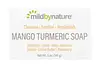 Key Ingredients
No key ingredients
Benefits
Concerns
Ingredients Side-by-side
Sodium Palmate
CleansingSodium Cocoate
Cleansing


Sodium Palm Kernelate
CleansingWater
Skin ConditioningGlycerin
Humectant


Parfum
Masking



Sodium Chloride
MaskingSodium Gluconate
ChelatingButyrospermum Parkii Butter
Skin Conditioning


Curcuma Longa Root Powder
Skin ConditioningAloe Barbadensis Leaf Juice
Skin Conditioning

Mangifera Indica Seed Butter
Skin Conditioning
Tocopheryl Acetate
Antioxidant


Persea Gratissima Oil
Skin Conditioning
Simmondsia Chinensis Seed Oil
Emollient
Theobroma Cacao Seed Butter
Emollient
Tetrasodium Glutamate Diacetate
ChelatingRosmarinus Officinalis Leaf Extract
AntimicrobialSodium Palmate, Sodium Cocoate, Sodium Palm Kernelate, Water, Glycerin, Parfum, Sodium Chloride, Sodium Gluconate, Butyrospermum Parkii Butter, Curcuma Longa Root Powder, Aloe Barbadensis Leaf Juice, Mangifera Indica Seed Butter, Tocopheryl Acetate, Persea Gratissima Oil, Simmondsia Chinensis Seed Oil, Theobroma Cacao Seed Butter, Tetrasodium Glutamate Diacetate, Rosmarinus Officinalis Leaf Extract
Ingredients Explained
These ingredients are found in both products.
Ingredients higher up in an ingredient list are typically present in a larger amount.
This ingredient is also known as shea butter. It is a plant-derived extract from the nuts of the Africa shea tree and one of the most well-studied emollients.
Because it has a high concentration of fatty acids (primarily oleic, stearic, and linoleic) it is able to form a protective barrier on the skin's surface. This helps seal in moisture and prevents transepidermal water loss (TEWL).
In vitro research found an increase in skin hydration by 58% and a decrease in TEWL by 37.8% after 24 hours of applying this ingredient (pretty impressive for a single ingredient!).
Besides hydration, shea butter also contains triterpenes that have anti-inflammatory potential. In particule, lupeol cinnamate has shown the highest anti-inflammatory activity in vivo.
Shea butter also contains vitamins A and E which may contribute to antioxidant activity.
While Shea Butter has an SPF rating of about 3-4, it is not a sunscreen replacement.
This ingredient may not be fungal acne safe because its fatty acids fall within the C11-C24 range that the Malassezia yeast can metabolize.
This ingredient shows up on a lot of "pore-clogging" lists but there's no real evidence behind that. It doesn't even have a comedogenic rating from an actual study; the numbers you'll find online come from blogs citing other blogs.
Ratings for other ingredients mostly come from a 1980s rabbit ear test. This test doesn't translate well to human skin or to real products because the ingredient sits at a much lower percentage.
Some people still find it breaks them out. So if that's you, definitely trust your skin. Just know this one's based on experience and not evidence.
Learn more about Butyrospermum Parkii ButterGlycerin (or glycerol) is a compound naturally found in your skin. It's a powerhouse humectant that pulls water into the stratum corneum.
Topically, glycerin does several things at once:
Your skin makes glycerin on its own (mostly from sebaceous oil breakdown) and shuttles it to your outermost layer of skin, or your epidermis, via aquaporin-3.
Aquaporin-3 is a transporter that is essential for normal skin hydration, elasticity, and repair. Interestingly, mice lacking in AQP3 have dry and less elastic skin that can be fully corrected with glycerin.
This ingredient is non-irritating, plays well with almost every ingredient, and works across all skin types. Typical use is anywhere between 3-10% but can go up to 79% in some leave-on products.
Just know very high concentrations (>40%) can feel tacky in low humidity.
Glycerin is the name for this ingredient in American English. British English uses Glycerol/Glycerine.
Learn more about GlycerinChances are, you eat sodium chloride every day. Sodium Chloride is also known as table salt. This ingredient has many purposes in skincare: thickener, emulsifier, and exfoliator.
You'll most likely find this ingredient in cleansers where it is used to create a gel-like texture. As an emulsifier, it also prevents ingredients from separating.
You might see people debate whether Sodium Chloride is comedogenic, but there actually haven't been any comedogenic tests done on it. Either way, the overall formulation of a product matters a lot more than any single ingredient.
You might see this ingredient used in scrubs as a primary exfoliating ingredient.
Learn more about Sodium ChlorideSodium cocoate is a salt created by saponifying coconut oil. It has cleansing and emulsifying properties.
As a cleansing agent, this ingredient helps reduce the surface tension of dirt, sebum, and other residue in skin and hair. This makes them easier to be rinsed away with water.
Sodium Gluconate is the sodium salt of gluconic acid. In skincare, its main job is as a chelator.
Chelators grab onto stray metal ions like iron and copper that sneak in through water, raw materials, or manufacturing equipment. This stops them from triggering reactions that cause oils to go rancid, formulas to change color, and actives like vitamin C to fall apart.
This ingredient is often chosen as a biodegradable, gentler-sounding alternative to EDTA. It also pulls double duty as a mild humectant and pH buffer.
Typical use levels sit around 0.1-1% and supplier documents list up to 10% as an acceptable ceiling. Industry data found this ingredient family is mostly used well below 1% in leave on products.
Allergy risk is very low; animal testing has found it to be non-irritating to skin and eyes, mutagenicity assays came back negative, and there are no published reports of allergic contact dermatitis to it.
Learn more about Sodium GluconateThis ingredient is derived from the fatty acids of palm kernel oil and is considered a traditional soap.
It acts as a surfactant by making it easier for water to wash away dirt, oil, and other impurities.
Sodium Palmate is a surfactant and used to saponify fatty acids. It can be derived from palm oil or synthetically created.
As a surfactant, it helps lift dirt and oil off the skin to be cleansed.
Sodium Palmate is also used during the soap-making process to saponify fatty acids. This helps soap creates bubbles without leaving residue on the skin.
This ingredient is sometimes called saponified palm oil.
Learn more about Sodium PalmateWater. It's the most common cosmetic ingredient of all. You'll usually see it at the top of ingredient lists, meaning that it makes up the largest part of the product.
So why is it so popular? Water most often acts as a solvent - this means that it helps dissolve other ingredients into the formulation.
You'll also recognize water as that liquid we all need to stay alive. If you see this, drink a glass of water. Remember to stay hydrated!
Learn more about Water

