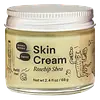
This barrier-repair moisturizer is formulated around Rosa Canina Fruit Oil and Calophyllum Inophyllum Seed Oil to strengthen the skin barrier and hydrate skin.
This barrier-repair moisturizer is formulated around Sclerocarya Birrea Seed Oil and Butyrospermum Parkii Butter to strengthen the skin barrier and hydrate skin.

What's inside
What's inside
 Key Ingredients
No key ingredients
Benefits
Concerns
Ingredients Side-by-side





Sclerocarya Birrea Seed Oil
Humectant





Cocos Nucifera Oil
Masking


Hydrogenated Vegetable Oil
Emollient
Cucurbita Pepo Seed Oil
Emollient
Butyrospermum Parkii Butter
Skin Conditioning
Sclerocarya Birrea Seed Butter
Emollient
Mangifera Indica Seed Butter
Skin Conditioning
Theobroma Grandiflorum Seed Butter
Skin Conditioning
Camellia Sinensis Seed Oil
Humectant
Rosa Canina Fruit Oil
Emollient
Aleurites Moluccanus Seed Oil
Skin Conditioning
Simmondsia Chinensis Seed Oil
Emollient
Limnanthes Alba Seed Oil
Skin Conditioning
Oryza Sativa Bran Oil
Emollient
Persea Gratissima Oil
Skin Conditioning
Helianthus Annuus Seed Wax
Skin Conditioning
Vitis Vinifera Seed Oil
Emollient
Sclerocarya Birrea Seed Oil, Cocos Nucifera Oil, Hydrogenated Vegetable Oil, Cucurbita Pepo Seed Oil, Butyrospermum Parkii Butter, Sclerocarya Birrea Seed Butter, Mangifera Indica Seed Butter, Theobroma Grandiflorum Seed Butter, Camellia Sinensis Seed Oil, Rosa Canina Fruit Oil, Aleurites Moluccanus Seed Oil, Simmondsia Chinensis Seed Oil, Limnanthes Alba Seed Oil, Oryza Sativa Bran Oil, Persea Gratissima Oil, Helianthus Annuus Seed Wax, Vitis Vinifera Seed Oil
Reviews
Ingredients Explained
These ingredients are found in both products.
Ingredients higher up in an ingredient list are typically present in a larger amount.
Cucurbita Pepo Seed oil comes from the field pumpkin, including winter squash and the traditional orange pumpkin we see in Autumn.
Pumpkin seed oil is rich in vitamin E and plenty of fatty acids such as linoleic acids. Pumpkin seeds also have zinc and cartenoids.
Linoleic acid helps moisturize your skin as an emollient. Emollients act as a thin film to prevent moisture from escaping.
Cartenoids are an antioxidant. Antioxidants protect your skin against external damage. They also give pumpkins their classic orange color.
Fun fact: Pumpkins were first domesticated in Southern Mexico about 10,000 years ago.
Learn more about Cucurbita Pepo Seed OilThough this ingredient might sound like a juicy fruit extract, it's actually the fat pressed from the mango seed kernel (or the pit).
In skincare, it behaves more like shea butter and cocoa butter than like a plant active.
The fatty acid makeup of mango seed butter makes it special; it's typically rich in stearic acid and oleic acid, with small amounts of palmitic and linoleic acid.
This combo helps it melt on skin, feel creamy, and leave behind a protective "seal" that slows down water loss.
It also contains a small amount of "extras" like tocopherols (vitamin E) and phytosterols, which are often used to support skin soothing.
Due to its fatty acid content (like oleic acid), this ingredient may not be fungal acne safe. In vitro studies have shown that Oleic Acid is one of the fatty acids that induce rapid Malassezia growth in lab settings.
Learn more about Mangifera Indica Seed ButterRosa Canina Fruit Oil is a non-fragrant plant oil that has earned its skincare reputation through chemistry.
It's dominated by fatty acids like linoleic acid (~35-55%), alpha-linolenic acid (~17-27%), and oleic acid (~14-22%). This is the exact profile that supports skin barrier, locks in hydration, and calms inflammation.
A 2024 review found evidence for the Rosa canina species supports its use for scarring, hyperpigmentation, wrinkles, and atopic dermatitis; this was mostly credited to its vitamin C content and fatty acid composition as the primary active mechanisms.
You might see this ingredient marketed as a "natural retinol". Some rosehip seed oils contains traces of all-trans-retinoic acid but these trace amounts are far below biologically active levels.
The Cosmetic Ingredient Review Panel has deemed this ingredient safe and it's well-tolerated.
Fungal acne: The fatty acids of this oil fall into the C11-24 range that Malassezia yeast can metabolize, so this ingredient may not be fungal acne safe.
Learn more about Rosa Canina Fruit Oil

