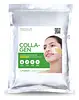
This wash off mask is made with Diatomaceous Earth and Allantoin for a rinse-off oil-control boost.
This wash off mask is made with Diatomaceous Earth and Kaolin for a rinse-off oil-control boost.

What's inside
What's inside
 Key Ingredients
Benefits
Concerns
No concerns
Ingredients Side-by-side
Diatomaceous Earth
Abrasive

CI 77231
Cosmetic ColorantGlucose
Humectant

Algin
MaskingTetrapotassium Pyrophosphate
BufferingPotassium Alginate
Emulsion StabilisingAllantoin
Skin Conditioning


Adenosine
Skin Conditioning
Hydrolyzed Collagen 0.02%
Emollient
Citrus Junos Fruit Extract
Skin ConditioningCellulose Gum
Emulsion StabilisingMaltodextrin
Absorbent
Sorbitan Fatty Acid Ester
EmulsifyingLactococcus Ferment
Skin ConditioningPortulaca Oleracea Extract
Skin Conditioning
Parfum
Masking




Diatomaceous Earth
Abrasive
Glucose
Humectant
Algin
MaskingCI 77231
Cosmetic ColorantKaolin
Abrasive

Trehalose
Humectant
Betaine
Humectant
Xylitol
Humectant
Water
Skin ConditioningPanthenol
Skin Conditioning
Sodium Benzoate
Masking
Hydrolyzed Collagen
Emollient
Sodium Dehydroacetate
Preservative
Allantoin
Skin Conditioning
Sodium Hyaluronate
Humectant
Rosa Damascena Flower Water
Masking
Rosa Centifolia Flower Water
Skin ConditioningMonascus Extract
Skin ConditioningTetrasodium Pyrophosphate
Buffering1,2-Hexanediol
Skin Conditioning
Glycerin
Humectant
Dextrin
AbsorbentButylene Glycol
Humectant
Calendula Officinalis Extract
Skin Conditioning
Rosmarinus Officinalis Leaf Extract
AntimicrobialRose Extract
Skin ConditioningPropolis Extract
Skin Conditioning
Pearl Extract
Antioxidant
Acetyl Hexapeptide-8
Humectant
Copper Tripeptide-1
Skin Conditioning
Hibiscus Sabdariffa Flower Extract
Skin ConditioningHoney Extract
Humectant
Diatomaceous Earth, Glucose, Algin, CI 77231, Kaolin, Trehalose, Betaine, Xylitol, Water, Panthenol, Sodium Benzoate, Hydrolyzed Collagen, Sodium Dehydroacetate, Allantoin, Sodium Hyaluronate, Rosa Damascena Flower Water, Rosa Centifolia Flower Water, Monascus Extract, Tetrasodium Pyrophosphate, 1,2-Hexanediol, Glycerin, Dextrin, Butylene Glycol, Calendula Officinalis Extract, Rosmarinus Officinalis Leaf Extract, Rose Extract, Propolis Extract, Pearl Extract, Acetyl Hexapeptide-8, Copper Tripeptide-1, Hibiscus Sabdariffa Flower Extract, Honey Extract
Reviews
Ingredients Explained
These ingredients are found in both products.
Ingredients higher up in an ingredient list are typically present in a larger amount.
Algin is the sodium salt of alginic acid, a sugar-based polymer pulled out of brown seaweed.
In cosmetics, it's a workhorse thickener, binder, and film former rather than an active; it's mostly there for texture and slip.
Industry survey data collected by the Cosmetic Ingredient Review put its maximum reported use at 50% in paste masks and mud packs with reported use going all the way down to 0.001% in aerosol products. Most formulas sit at the low end since a little goes a long way as a thickener.
Allergy-wise, this ingredient is about as low-risk as it gets topically:
The "algae causes acne" idea comes from three places that got tangled together:
None of that transfers to a purified polysaccharide like algin. Clogged pores are a lipid problem where an ingredient has to get into the follicle and mix with sebum to form a comedone. Algin is a big, water-loving sugar chain that does neither; it gels and then sits on the surface as a film until it's rinsed off.
Learn more about AlginAllantoin is a soothing ingredient known for its protective and moisturizing properties; it's basically a quiet workhorse ingredient you can find in a huge range of cosmetics.
Though it can be derived from the comfrey plant, allantoin is produced synthetically for cosmetic products to ensure purity.
Research shows it can encourage your skin cells to turn over and renew by stimulating keratinocyte and fibroblast proliferation.
It also has mild keratolytic properties to help loosen and shed dead skin cells without being harsh.
Studies also suggest allantoin can help calm inflammation by dialing down some of the chemical signals your skin sends out when it is irritated.
This ingredient is typically used in the 0.1-0.5% range, and the FDA recognizes it as a skin protectant in OTC products up to 2%.
Overall, allantoin is a wonderful addition to most routines; it is stable across a wide pH range (~4-8), works well with other ingredients, and is considered non-sensitizing/non-irritating.
Fun fact: Allantoin is naturally occurring in comfrey root, beets, chamomile, and wheat sprouts. Our bodies even produce it as a byproduct of uric acid metabolism.
Learn more about AllantoinWe don't have a description for CI 77231 yet.
Diatomaceous Earth is an exfoliant. It can be good for oily skin.
Glucose is a simple sugar (a monosaccharide). In skincare, it is mostly a humectant and skin conditioning agent.
Mechanistically, it has multiple hydroxyl groups that hydrogen-bond to water. This pulls moisture into the upper layers of skin to keep the surface soft and hydrated.
It's worth knowing sugars are already a natural component of the skin's NMF (natural moisturizing factor) so it's a molecule that your stratum corneum is well-acquainted with.
Just so you know, glucose is hydrophilic (water-loving) and the stratum corneum is a strong barrier to hydrophilic compounds. This just means penetration is slow and most of the action is happening on the surface.
Gram-to-gram, glucose is not as efficient as a humectant as glycerin. This is why you'll likely see glycose paired with stronger humectants for a bigger hydration payoff.
In skincare, glucose is typically derived from corn or other starch sources.
Learn more about GlucoseHydrolyzed Collagen is Collagen (usually sourced from fish, bovine, or porcine byproducts) that's been broken down into smaller peptides. This makes it water-soluble and easy to blend into formulations.
In a formula, it works mainly as a skin-conditioning and moisturizing agent.
The small peptides and amino acids (including Natural Moisturizing Factor components like Hydroxyproline, Serine, and Aspartic Acid) help the surface of the skin hold onto water, feel softer, and look temporarily plumper.
This ingredient also has mild film-forming and antioxidant properties with research showing the antioxidant effect is stronger the lower the molecular weight of the peptides.
It's worth being realistic here:
Topically applied Hydrolyzed Collagen conditions the upper layers of skin rather than rebuilding the structural collagen deep in your dermis (the wrinkle-and-firmness benefits people associate with Collagen mostly come from oral supplements in studies, not topicals).
However, recent lab and skin-model work on Hydrolyzed Fish Collagen has shown promising effects on cell viability and wound healing when used as an active.
Typical concentrations range from 0.2-2%, but the percentage can go much higher in rinse-off or hair products (sometimes even above 50%).
Clinical studies on this ingredient showed no irritation, sensitization, or phototoxicity.
If you are looking for vegan collagen, it usually goes by a different INCI name like hydrolyzed soy protein. Vegan collagen is derived from yeast, bacteria, or plant sources.
The results are varied.
A study from 2021 found hydrolyzed collagen increased elasticity and improved wrinkles in 1,125 participants between age 20 and 70. Another study found increased skin thickness in participants between the ages of 45 to 59.
However, It is difficult to prove that oral collagen will end up working on your skin. Many of the studies using hydrolyzed collagen also add several vitamins and nutrients into the test mixture as well.
Further studies are needed at this time.
Learn more about Hydrolyzed Collagen

