Lacura Luminosity Purifying Cleansing Balm Versus Glow Recipe Papaya Sorbet Smoothing Enzyme Cleansing Balm
This oil-based makeup remover is made to dissolve makeup, sunscreen, and daily buildup.
This oil-based makeup remover is made to dissolve makeup, sunscreen, and daily buildup.


What's inside
What's inside
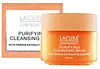 Key Ingredients
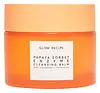
Benefits
Concerns
Ingredients Side-by-side
Caprylic/Capric Triglyceride
Masking


Sorbitan Oleate
Emulsifying



Prunus Armeniaca Kernel Oil
Masking
Cetyl Ethylhexanoate
EmollientPolyethylene
Abrasive
Water
Skin ConditioningCamellia Japonica Seed Oil
Emollient
Pentylene Glycol
Skin Conditioning
Carica Papaya Seed Oil
Humectant
Carica Papaya Fruit Extract
Skin ConditioningVaccinium Angustifolium Fruit Extract
Skin Protecting
Fragaria Ananassa Fruit Extract
Skin Conditioning
Alkanna Tinctoria Root Extract
Skin ConditioningCapsicum Annuum Fruit Extract
Antimicrobial
Maltodextrin
Absorbent
Sodium Metabisulfite
Antioxidant
Caprylic/Capric Triglyceride, Sorbitan Oleate, Prunus Armeniaca Kernel Oil, Cetyl Ethylhexanoate, Polyethylene, Water, Camellia Japonica Seed Oil, Pentylene Glycol, Carica Papaya Seed Oil, Carica Papaya Fruit Extract, Vaccinium Angustifolium Fruit Extract, Fragaria Ananassa Fruit Extract, Alkanna Tinctoria Root Extract, Capsicum Annuum Fruit Extract, Maltodextrin, Sodium Metabisulfite
Cetyl Ethylhexanoate
EmollientSorbitan Oleate
Emulsifying
Prunus Armeniaca Kernel Oil
Masking
Polyethylene
Abrasive
Water
Skin ConditioningCamellia Japonica Seed Oil
Emollient
Carica Papaya Seed Oil
Humectant
Carica Papaya Fruit Extract
Skin ConditioningPapain
Skin Conditioning
Vaccinium Angustifolium Fruit Extract
Skin Protecting
Fragaria Ananassa Fruit Extract
Skin Conditioning
Alkanna Tinctoria Root Extract
Skin ConditioningCapsicum Annuum Fruit Extract
Antimicrobial
Maltodextrin
Absorbent
Caprylic/Capric Triglyceride
Masking
Levulinic Acid
Perfuming

Pentylene Glycol
Skin Conditioning
Sodium Metabisulfite
Antioxidant
Cetyl Ethylhexanoate, Sorbitan Oleate, Prunus Armeniaca Kernel Oil, Polyethylene, Water, Camellia Japonica Seed Oil, Carica Papaya Seed Oil, Carica Papaya Fruit Extract, Papain, Vaccinium Angustifolium Fruit Extract, Fragaria Ananassa Fruit Extract, Alkanna Tinctoria Root Extract, Capsicum Annuum Fruit Extract, Maltodextrin, Caprylic/Capric Triglyceride, Levulinic Acid, Pentylene Glycol, Sodium Metabisulfite
Reviews
Ingredients Explained
These ingredients are found in both products.
Ingredients higher up in an ingredient list are typically present in a larger amount.
We don't have a description for Alkanna Tinctoria Root Extract yet.
This ingredient is also known as Tsubaki oil, or the fixed oil from the seeds of the Japanese camellia.
It's basically a fatty acid delivery system (~75-85% oleic acid) plus some minor extras like squalene, tocopherols, and phytosterols.
That profile makes it a classic emollient; it works by hanging out with the skin's surface lipids, softens, and slows down water loss.
The most cited study on it was done on skin cells in a dish where this oil got them to make more of the building blocks for collagen while also slowing down the enzyme that breaks collagen down. Researchers tested this on human skin too; it didn't cause irritation and helped skin hold onto moisture better.
Another study done on cells and mice found this oil quieted down some of the body's inflammation signals.
These studies are still small, early, and not done on humans, so it's best to think of this ingredient as a great supporting ingredient for the rest of your routine and not the main active.
Concentrations can range from 1-5% in serums to 100% as a single face oil (how it's most traditionally used).
Because this ingredient is a triglyceride of long-chain fatty acids, this ingredient may not be Malassezia safe.
Allergies to this protein are quite rare as the refined seed oil contains very little residual protein. Human irritation testing also came back clean. But it is a plant and as with any botanical ingredient, contact allergy is possible.
Learn more about Camellia Japonica Seed OilCaprylic/Capric Triglyceride (aka MCT Oil) is a lightweight emollient, solvent, and texture enhancer. It is considered a skin-softener by helping to prevent moisture loss.
Though it behaves like an oil, it is not technically one due to its chemical composition. One perk of this ingredient is that it is very stable, resistant to oxidation, and unlikely to go rancid.
In practice, that translates to a long shelf life and a consistently elegant skin feel.
While there is an assumption Caprylic Triglyceride can clog pores due to it being derived from coconut oil, there is no research supporting this. Just patch test if you have concerns.
Fractionated coconut oil and MCT Oil are both listed as Caprylic/Capric Triglyceride according to INCI. This is because INCI names are based on the ingredient’s final chemical composition and not its marketing name or source.
This ingredient is treated as the gold standard fungal acne safe oil. Even though it is coconut derived, the problematic lauric acid is stripped out.
This leaves just caprylic (C8) and capric (C10) acid. These chain lengths actually trend antifungal; a 2020 study found caprylic acid was enough to disrupt Malassezia furfur cell membrane, with a caprylic acid derivative damaging membrane structures at concentrations as low as 0.2%.
Learn more about Caprylic/Capric TriglycerideYou probably know some famous peppers from Capsicum Annuum: paprika, chili pepper, jalapeño, cayenne, and bell pepper.
Though these peppers are often associate with food - they have plenty of skin benefits too. Capsicum Annuum has antidandruff, antifungal, antimicrobial, and antioxidant properties.
The antioxidant activity comes from its flavonoid, polyphenol, and sterol content.
Studies show low concentrations of this ingredient did not cause skin irritation:
Capsicum Frutescens Fruit Extract is often used in the same studies due to their similarities. However, a study found Capsicum Annuum to have higher antibacterial activity.
Another study found Capsicum Annuum to absorb a tiny bit of UV, but this should not replace your sunscreen.
Learn more about Capsicum Annuum Fruit ExtractCarica Papaya Fruit Extract comes from the flesh of the papaya. It's a skin conditioning agent that carries a mix of bioactives like papain, beta-carotene, and vitamin C.
These bioactive compounds give it two main talking points:
1. Papain is a proteolytic enzyme that provides mild exfoliation, helping skin look smoother and more even.
2. The carotenoids and vitamin C provide some antioxidant activity.
It's pretty compatible with most ingredients, but just sure to space out enzyme products with strong acids/retinoids to avoid over-doing it.
Maximum reported concentration is around 0.1% and most leave-on products use just 0.05%. If you see higher figures like 5-10%, this is usually the pre-diluted material from raw extract suppliers.
This ingredient has an assuring safety record and there's a lack of clinical case reports of dermatitis from using it.
The only caveat is allergy: patch test if you have a papaya or latex-fruit allergy.
Learn more about Carica Papaya Fruit ExtractCarica Papaya Seed Oil comes from the papaya fruit. This fruit comes from Central America.
As a humectant, papaya seed oil helps hydrate your skin. It does this by drawing water from the air towards your skin.
Cetyl Ethylhexanoate is an emollient ester. It comes from cetearyl alcohol and 2-ethylhexanoic acid.
Cetyl Ethylhexanoate is an emollient that adds a velvety feel to skin without being greasy or oily. Emollients help trap moisture into your skin, keeping your skin soft and hydrated.
Fragaria Ananassa Fruit extract comes from garden strawberry. It is a hybrid strawberry created from wild strawberries.
Strawberries have antioxidant and hydrating properties. They contain many compounds that are potent antioxidants, such as anthocyanins and Vitamin C.
The polysaccharides in strawberry help moisturize our skin.
Strawberries also contain acids such as ellagic acid, a compound that may protect our skin against UVB damage. Another acid present is citric acid.
This strawberry is the kind most commonly eaten and found at grocery stores.
Learn more about Fragaria Ananassa Fruit ExtractMaltodextrin is a plant-derived carbohydrate made by breaking down starch (usually from corn, potato, or rice). In cosmetic formulas, it's a multitasking absorbent, emulsion stabilizer, and skin conditioner.
This ingredient is mostly used to stabilize emulsions and improve the powdery, non-greasy feel of products (like dry shampoos).
Safety-wise, this ingredient is pretty solid; it's even recognized as a food additive. Both animal and clinical studies found no adverse effects at the levels used in cosmetics.
Industry data shows this ingredient is used up to 45.7% in spray products and up to 33% in powder products.
Learn more about MaltodextrinPentylene Glycol (1,2-pentanediol) is a multitasking little diol with three main roles in a formula:
Research on alkanediols (the family pentylene glycol belongs to) show they work by disrupting microbial cell membranes. This disruption helps the primary preservative system in a product work more effectively at lower doses.
On the safety side, the Cosmetic Ingredient Review Expert Panel has concluded this ingredient to be safe as used in current cosmetic practices + concentrations.
Typical use levels in a formula run about 1-5%.
Learn more about Pentylene GlycolPolyethylene is a synthetic ingredient that helps the skin retain moisture. It is a polymer.
It is also typically used within product formulations to help bind solid ingredients together and thicken oil-based ingredients. When added to balms and emulsions, it helps increase the melting point temperature.
This ingredient is also known as Apricot kernel oil, and it comes form the seed kernels of apricot (a member of the Rosaceae family like almond, peach, cherry, and plum).
It's mostly made up of triglycerides: oleic acid (43.9-78.5%), linoleic acid (9.7-37%), and palmitic acid (4.9-7.3%). These numbers vary depending on the variety of Prunus and the ripeness of the fruit; oleic tends to go up at late harvest while linoleic goes down.
Vitamin E is also prevalent in this ingredient and the most dominant form is gamma-tocopherol.
These compounds give the ingredient emollient and skin conditioning properties that keep the skin soft and hydrated.
There's no regulatory maximum cap for this ingredient so you'll see it across a huge concentration range (100% as a single ingredient facial oil).
On allergies: refined cosmetic-grade oils carry almost no protein. The CIR notes that people allergic to a food generally do not react to the refined oil because the allergenic protein does not partition into it (though cold-pressed grades retain more).
However, it's worth patch testing if you have a stone fruit or tree nut allergy because manufacturer processes for removing the protein can vary.
Malassezia lacks the cytosolic fatty acid synthase gene so the yeast cannot make palmitate on its own and instead uses lipases and phospholipases to release fatty acids from host lipids. Since apricot kernel oil is entirely C16-18 (right in the usable range of C11-24), this ingredient may not be fungal acne safe.
Old rabbit-ear testing did assign this ingredient a comedogenic rating of 1-2. The original author has stated that testing on rabbit ears is not an ideal model for human comedogenicity.
Human testing has proved that any finished product with a comedogenic ingredient won't automatically make you break out; it really comes down to concentration, formula, and your skin.
Just know high-oleic oils tend to feel heavier on oily skin so it's worth patch testing.
Learn more about Prunus Armeniaca Kernel OilSodium metabisulfite is also known as Sodium Pyrosulfite. It is a preservative, antioxidant, and disinfectant.
As a preservative, it helps stabilize cosmetic formulas without affecting their color or scent.
Sorbitan Oleate is a PEG-free emulsifier made by esterifying sorbitol with oleic acid.
You'll likely see it paired with Polysorbate 80 to create the right emulsification balance.
Typical use levels in formulas range from 2-10%.
The CIR Expert Panel has concluded this ingredient to be safe as a cosmetic ingredient.
Since this ingredient is an ester of oleic acid, it may not be fungal acne safe. Oleic acid is a fatty acid that falls into the C11-24 range that Malassezia can metabolize.
This ingredient does have a comedogenic rating of 3, but this doesn't mean a formula with this ingredient will clog pores. Human testing has proved that any finished product with a comedogenic ingredient won't automatically make you break out; it really comes down to concentration, formula, and your skin.
Learn more about Sorbitan OleateThis extract comes from the blueberry native to North America. It has great antioxidant and skin soothing properties.
The antioxidant properties from blueberries come from its polyphenolic and vitamin C content. Polyphenols are a compound famous for their antioxidant properties and are commonly found in fruits.
A 2023 study found blueberries to protect skin from UV-B related inflammation. However, this ingredient should not replace your sunscreen.
Learn more about Vaccinium Angustifolium Fruit ExtractWater. It's the most common cosmetic ingredient of all. You'll usually see it at the top of ingredient lists, meaning that it makes up the largest part of the product.
So why is it so popular? Water most often acts as a solvent - this means that it helps dissolve other ingredients into the formulation.
You'll also recognize water as that liquid we all need to stay alive. If you see this, drink a glass of water. Remember to stay hydrated!
Learn more about Water

