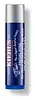
This barrier-repair lip moisturizer is formulated around Squalane and Butyrospermum Parkii Butter to strengthen the lip barrier and hydrate lips.
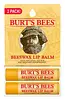
This lip moisturizer is formulated around Cera Alba and Cocos Nucifera Oil to hydrate lips.

What's inside
What's inside
 Key Ingredients
Benefits
Concerns
Ingredients Side-by-side
Squalane
Emollient


Ethylhexyl Palmitate
Emollient




Microcrystalline Wax
Emulsion StabilisingPolyethylene
Abrasive
Isopropyl Palmitate
Emollient
Prunus Armeniaca Kernel Oil
Masking
Butyrospermum Parkii Butter
Skin Conditioning
Paraffin
Skin Conditioning
Synthetic Wax
Abrasive
Mentha Piperita Oil
Masking



Simmondsia Chinensis Butter
Skin Conditioning
Prunus Amygdalus Dulcis Oil
Skin Conditioning
Sodium Saccharin
MaskingLimonene
Perfuming
Linalool
Perfuming
Citric Acid
Buffering

Squalane, Ethylhexyl Palmitate, Microcrystalline Wax, Polyethylene, Isopropyl Palmitate, Prunus Armeniaca Kernel Oil, Butyrospermum Parkii Butter, Paraffin, Synthetic Wax, Mentha Piperita Oil, Simmondsia Chinensis Butter, Prunus Amygdalus Dulcis Oil, Sodium Saccharin, Limonene, Linalool, Citric Acid






Reviews
Ingredients Explained
These ingredients are found in both products.
Ingredients higher up in an ingredient list are typically present in a larger amount.
Limonene is the compound that gives citrus peel its smell.
In skincare, it shows up as a standalone fragrance ingredient or as a natural compound of citrus and other essential oils.
You'll typically see this ingredient used in very small amounts; anything above 0.001% in a leave-on product or 0.01% in a rinse-off has to be named on the label in the EU. The citrus oils that carry it sit around 0.5-1% in a finished formula.
Fresh limonene is a weak allergen; the real issue is that it slowly reacts with air and then breaks down from oxidation to create hydroperoxides (which are strong sensitizers). This is why suppliers are required to keep the peroxide value below 20 mmol.
Positive reactions in people being investigated for eczema vary:
It's worth skipping if you have a known fragrance allergy or a compromised barrier, but the risk is low for most people.
Older or long-opened products are also more likely to bother you than fresh ones due to oxidation.
Learn more about LimoneneThis essential oil is steam-distilled from peppermint leaves, also known as peppermint oil. It's mainly used for scent in skincare but also provides that signature "cooling" sensation.
Peppermint oil is a "feels amazing" ingredient until it doesn't.
At higher doses or for those with sensitive skin, methol-type cooling can quickly turn into burning/irritation. It can also trigger irritant dermatitis or even allergic contact dermatitis. In a large patch-test dataset, peppermint oil had a low but positive rate for this.
In cosmetics, Cosmetic Safety Reviews (CIR) concludes that peppermint oil is safe to use when formulated to be non-sensitizing with some restrictions; for instance, pulegone, a naturally occurring component of peppermint oil, should not exceed 1%.
Since peppermint oil contains fragrance allergens such as limonene, linalool, and menthol, it can be sensitizing for those with rosacea, eczema, a broken skin barrier, or just sensitive skin in general.
In Japan, this ingredient is known as Hakka Yu.
Learn more about Mentha Piperita Oil

