
What's inside
What's inside
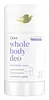 Key Ingredients
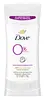
No key ingredients
Benefits
Concerns
Ingredients Side-by-side
Cocos Nucifera Oil
Masking








Caprylic/Capric Triglyceride
Masking
Maranta Arundinacea Root Powder
Skin ConditioningHelianthus Annuus Seed Wax
Skin Conditioning
Oryza Sativa Bran Wax
Skin Conditioning
Jojoba Esters
Emollient
Butyrospermum Parkii Butter
Skin Conditioning
Parfum
Masking

Silica
Abrasive


Zinc Neodecanoate
Isopropyl Myristate
Emollient
Niacinamide
Smoothing








Tocopheryl Acetate
Antioxidant

Allantoin
Skin Conditioning
Bisabolol
Antioxidant
Zingiber Officinale Root Extract
Masking
Benzyl Alcohol
Perfuming


Cocos Nucifera Oil, Caprylic/Capric Triglyceride, Maranta Arundinacea Root Powder, Helianthus Annuus Seed Wax, Oryza Sativa Bran Wax, Jojoba Esters, Butyrospermum Parkii Butter, Parfum, Silica, Zinc Neodecanoate, Isopropyl Myristate, Niacinamide, Tocopheryl Acetate, Allantoin, Bisabolol, Zingiber Officinale Root Extract, Benzyl Alcohol

Ingredients Explained
These ingredients are found in both products.
Ingredients higher up in an ingredient list are typically present in a larger amount.
Benzyl Alcohol is an aromatic alcohol with several roles: it's a preservative, solvent, and mild fragrance component with a floral scent.
This ingredient has been deemed safe for use in cosmetic formulations at concentrations up to 5%, and up to 10% in hair dyes. You'll typically see 0.5-2% in most rinse-off or leave-on products.
As a preservative, it works by disrupting the membrane of microbial proteins. This helps keep bacteria and fungi from growing in your products.
The sensitization picture is actually quite assuring as well:of nearly 71,000 patients patch tested with benzyl alcohol, only 0.21% showed a positive reaction with most of them being weakly positive.
This led researchers to conclude that benzyl alcohol cannot be regarded as a significant contact allergen.
It is worth noting this ingredient is classified as one of the EU's regulated fragrance allergens and restricted to 1% in finished products.
Labels must also declare it in concentrations above 0.001% in leave-on products and 0.01% in rinse-off products.
At concentrations around 5%, localized redness and itching can appear as a direct irritant response and not as a true allergic reaction.
Learn more about Benzyl AlcoholParfum is a catch-all term for an ingredient or more that is used to give a scent to products.
Also called "fragrance", this ingredient can be a blend of hundreds of chemicals or plant oils. This means every product with "fragrance" or "parfum" in the ingredients list is a different mixture.
For instance, Habanolide is a proprietary trade name for a specific aroma chemical. When used as a fragrance ingredient in cosmetics, most aroma chemicals fall under the broad labeling category of “FRAGRANCE” or “PARFUM” according to EU and US regulations.
The term 'parfum' or 'fragrance' is not regulated in many countries. In many cases, it is up to the brand to define this term.
For instance, many brands choose to label themselves as "fragrance-free" because they are not using synthetic fragrances. However, their products may still contain ingredients such as essential oils that are considered a fragrance by INCI standards.
One example is Calendula flower extract. Calendula is an essential oil that still imparts a scent or 'fragrance'.
Depending on the blend, the ingredients in the mixture can cause allergies and sensitivities on the skin. Some ingredients that are known EU allergens include linalool and citronellol.
Parfum can also be used to mask or cover an unpleasant scent.
The bottom line is: not all fragrances/parfum/ingredients are created equally. If you are worried about fragrances, we recommend taking a closer look at an ingredient. And of course, we always recommend speaking with a professional.
Learn more about Parfum

