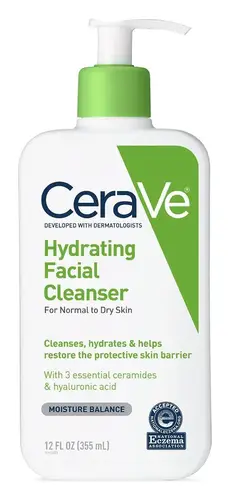
This oil-based makeup remover is made to dissolve makeup, sunscreen, and daily buildup.
This cream makeup remover is made to dissolve makeup, sunscreen, and daily buildup.

What's inside
What's inside
 Key Ingredients
Benefits
Concerns
Ingredients Side-by-side
Paraffinum Liquidum
Emollient


Isononyl Isononanoate
EmollientPEG-12 Laurate
Emulsifying

Octyldodecanol
Emollient
Polysorbate 80
Emulsifying
Sorbeth-230 Tetraoleate
Emulsifying
Dimethicone
Emollient

Isododecane
EmollientCetyl Dimethylbutyl Ether
Skin ConditioningPolyglyceryl-2 Isostearate
Emulsifying
Polysorbate 85
Emulsifying
Isostearyl Glyceryl Ether
Skin ConditioningWater
Skin ConditioningSorbeth-60 Tetraoleate
Emulsifying
Dipropylene Glycol
HumectantMyristyl Alcohol
Emollient

Butylene Glycol
Humectant

PEG-5 Hydrogenated Castor Oil
Emulsifying
Cholesteryl Isostearate
EmollientIsostearyl Glyceryl Pentaerythrityl Ether
EmollientPEG-6 Sorbitan Oleate
EmulsifyingSorbeth-40 Tetraoleate
Emulsifying
PEG-10 Hydrogenated Castor Oil
Emollient
Dipotassium Glycyrrhizate
Humectant

Succinic Acid
BufferingBHT
Antioxidant
Tocopherol
Antioxidant



Phenoxyethanol
Preservative
Paraffinum Liquidum, Isononyl Isononanoate, PEG-12 Laurate, Octyldodecanol, Polysorbate 80, Sorbeth-230 Tetraoleate, Dimethicone, Isododecane, Cetyl Dimethylbutyl Ether, Polyglyceryl-2 Isostearate, Polysorbate 85, Isostearyl Glyceryl Ether, Water, Sorbeth-60 Tetraoleate, Dipropylene Glycol, Myristyl Alcohol, Butylene Glycol, PEG-5 Hydrogenated Castor Oil, Cholesteryl Isostearate, Isostearyl Glyceryl Pentaerythrityl Ether, PEG-6 Sorbitan Oleate, Sorbeth-40 Tetraoleate, PEG-10 Hydrogenated Castor Oil, Dipotassium Glycyrrhizate, Succinic Acid, BHT, Tocopherol, Phenoxyethanol






Reviews
Ingredients Explained
These ingredients are found in both products.
Ingredients higher up in an ingredient list are typically present in a larger amount.
Butylene Glycol (or BG) is used within cosmetic products for a few different reasons:
Overall, Butylene Glycol is a safe and well-rounded ingredient that works well with other ingredients.
Though this ingredient works well with most skin types, some people with sensitive skin may experience a reaction such as allergic rashes, closed comedones, or itchiness.
Learn more about Butylene GlycolIsononyl Isononanoate is a synthetic skin-conditioner and texture enhancer. It is created from nonanoic acid, a fatty acid found in cocoa and lavender oil.
As an emollient, Isononyl Isononanoate helps keep your skin soft and smooth. This is because emollients create a barrier on the skin to trap moisture in.
Isononyl Isononanoate helps give products a velvet feel and improves spreadability.
Learn more about Isononyl IsononanoateParaffinum Liquidum is a highly-refined cosmetic-grade mineral oil. It is also known as liquid paraffin.
Despite its controversial reputation, the science is pretty clear: it's one of the most well-studied and effective moisturizing ingredients out there.
As an occlusive, it forms a protective layer on the skin that locks in moisture and prevents transepidermal water loss (TEWL). This makes it especially great for compromised skin barriers.
The "it clogs your pores" myth has been around for decades; a study found that industrial-grade mineral oil may be comedogenic but cosmetic-grade mineral oil is not (these two are very, very different).
A 2017 review concluded that cosmetic use of mineral oils and waxes does not present a risk to consumers due to absorption.
Mineral oil got a bad rap from the old rabbit ear studies. When tested on actual human skin, cosmetic-grade mineral oil showed no comedogenic activity. The rating of 0 is a correction of outdated science.
Mineral oil is an inert substance with no fatty acids so there's nothing to feed Malassezia. This ingredient is fungal acne safe.
Learn more about Paraffinum LiquidumPEG-12 Laurate isn't fungal acne safe.
Polyglyceryl-2 Isostearate isn't fungal acne safe.
Tocopherol is a fat-soluble antioxidant known as Vitamin E.
You'll find this ingredient in the vast majority of skincare (for good reason). It works to neutralize free radicals, or unstable molecules generated by UV exposure, pollution, and other environmental stressors, before they can cause oxidative damage to your skin cells.
Topically applied tocopherol has been shown to protect against UV damage by ramping up the skin's own natural defense enzymes.
It also acts as a skin conditioning agent; some studies show that regular topical use can improve the skin's water-binding capacity over 2-4 weeks.
This ingredient is especially loved for being a team player. When combined with Vitamin C, the photoprotective effect of both ingredients roughly doubles and the combo also helps reduce UV-induced DNA damage.
This ingredient has some brightening potential but it's more of a prevention ingredient than spot-fader. Cell studies show it can slow down melanin production but it's worth noting that it's not the most powerful brightener out there.
In formulations, it also serves as a stabilizer that helps protect other oxidation-prone ingredients from degrading.
Concentrations usually range from 0.1-1% in most leave-on products.
Learn more about TocopherolWater. It's the most common cosmetic ingredient of all. You'll usually see it at the top of ingredient lists, meaning that it makes up the largest part of the product.
So why is it so popular? Water most often acts as a solvent - this means that it helps dissolve other ingredients into the formulation.
You'll also recognize water as that liquid we all need to stay alive. If you see this, drink a glass of water. Remember to stay hydrated!
Learn more about Water