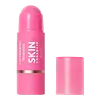
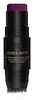
Covergirl Trublend Skin Enhancer Balm Blush Stick Versus Nudestix Nudies Matte All Over Face Blush Color


What's inside
What's inside
 Key Ingredients
Benefits
Concerns
Ingredients Side-by-side
Caprylic/Capric Triglyceride
Masking


Isostearyl Neopentanoate
Emollient

Mica
Cosmetic ColorantPolyethylene
Abrasive
Synthetic Fluorphlogopite
Simmondsia Chinensis Seed Oil
Emollient



Kaolin
Abrasive


Dicalcium Phosphate
Abrasive
Synthetic Beeswax
Emulsion Stabilising
Synthetic Wax
Abrasive
Aluminum Hydroxide
EmollientStearalkonium Bentonite
Gel FormingCalcium Sodium Borosilicate
Polyhydroxystearic Acid
Emulsifying
Silica
Abrasive
Propylene Carbonate
SolventPentaerythrityl Tetra-Di-T-Butyl Hydroxyhydrocinnamate
Antioxidant
Punica Granatum Pericarp Extract
Skin ConditioningTin Oxide
Abrasive
Rubus Idaeus Leaf Extract
Skin ConditioningVitis Vinifera Fruit Extract
Skin ConditioningCI 77491
Cosmetic ColorantCI 77492
Cosmetic ColorantCI 77499
Cosmetic ColorantCI 77891
Cosmetic ColorantCI 42090
Cosmetic ColorantCI 15985
Cosmetic ColorantCI 45410
Cosmetic ColorantCI 15850
Cosmetic ColorantCI 19140
Cosmetic ColorantCaprylic/Capric Triglyceride, Isostearyl Neopentanoate, Mica, Polyethylene, Synthetic Fluorphlogopite, Simmondsia Chinensis Seed Oil, Kaolin, Dicalcium Phosphate, Synthetic Beeswax, Synthetic Wax, Aluminum Hydroxide, Stearalkonium Bentonite, Calcium Sodium Borosilicate, Polyhydroxystearic Acid, Silica, Propylene Carbonate, Pentaerythrityl Tetra-Di-T-Butyl Hydroxyhydrocinnamate, Punica Granatum Pericarp Extract, Tin Oxide, Rubus Idaeus Leaf Extract, Vitis Vinifera Fruit Extract, CI 77491, CI 77492, CI 77499, CI 77891, CI 42090, CI 15985, CI 45410, CI 15850, CI 19140
Dimethicone
Emollient
Diisostearyl Malate
EmollientPolybutene
Caprylyl Methicone
Skin Conditioning
Synthetic Wax
Abrasive
Vinyl Dimethicone/Methicone Silsesquioxane Crosspolymer
Bis-Diglyceryl Polyacyladipate-2
Emollient
Polyethylene
Abrasive
Dimethicone/Vinyl Dimethicone Crosspolymer
Skin Conditioning
Kaolin
Abrasive
Aluminum Starch Octenylsuccinate
Absorbent
C12-15 Alkyl Benzoate
AntimicrobialTocopheryl Acetate
Antioxidant

Silica
Abrasive
Caprylyl Glycol
Emollient
Phenoxyethanol
Preservative
Pentaerythrityl Tetra-Di-T-Butyl Hydroxyhydrocinnamate
Antioxidant
Hexylene Glycol
EmulsifyingCI 77891
Cosmetic ColorantCI 45410
Cosmetic ColorantCI 42090
Cosmetic ColorantCI 77491
Cosmetic ColorantDimethicone, Diisostearyl Malate, Polybutene, Caprylyl Methicone, Synthetic Wax, Vinyl Dimethicone/Methicone Silsesquioxane Crosspolymer, Bis-Diglyceryl Polyacyladipate-2, Polyethylene, Dimethicone/Vinyl Dimethicone Crosspolymer, Kaolin, Aluminum Starch Octenylsuccinate, C12-15 Alkyl Benzoate, Tocopheryl Acetate, Silica, Caprylyl Glycol, Phenoxyethanol, Pentaerythrityl Tetra-Di-T-Butyl Hydroxyhydrocinnamate, Hexylene Glycol, CI 77891, CI 45410, CI 42090, CI 77491
Ingredients Explained
These ingredients are found in both products.
Ingredients higher up in an ingredient list are typically present in a larger amount.
Ci 42090 is a synthetic dye created from petroleum. It is used to give a bright blue color to cosmetics, medicine, and food.
CI 45410 is a synthetic red-pigment and dye.
It often goes by both Red 28 or Red 27; manufacturers label both ingredients as CI 45410.
This dye is commonly found in makeup because it imparts a vivid color. Some types of this dye change color based on pH level and interaction with moisture:
Your skin has a natural pH of around 4.5 - 5.5.
According to the FDA, CI 45410 is not permitted for use in eye products.
Red 27 is a flourescein dye and commonly used as a fluorescent tracer in medicine.
Learn more about CI 45410Ci 77491 is also hydrated iron III oxide. It's sole purpose is to give a red/pink hue to products.
Iron III oxides are classified as inorganic chemicals for coloring.
Synthetically created Ci 77491 is considered safer than those naturally found. This is because the synthetically created version may contain less impurities. Iron oxides are generally non-toxic and non-allergenic.
Learn more about CI 77491Ci 77891 is a white pigment from Titanium dioxide. It is naturally found in minerals such as rutile and ilmenite.
It's main function is to add a white color to cosmetics. It can also be mixed with other colors to create different shades.
Ci 77891 is commonly found in sunscreens due to its ability to block UV rays.
Learn more about CI 77891Kaolin is a clay. It is used for oil control and to help minimize pores. Like other clays, kaolin has the ability to absorb excess sebum or oil. This can help clean out pores and mattify the skin.
Some types of kaolin may have exfoliating properties. When water is added to kaolin, it becomes a paste with small abrasive particles.
Most kaolin is a white color, but may be pink/orange/red depending on where it comes from.
The name 'kaolin' comes from a Chinese village named 'Gaoling'. Kaolin clay comes from rocks rich in kaolinite. Kaolinite, the mineral, has a silicate layered structure. Kaolinite is formed from chemical weathering of aluminum siilicate minerals.
Besides skincare, kaolin is commonly used to make glossy paper, in ceramics, toothpaste, and as medicine to soothe stomach issues.
Learn more about KaolinPentaerythrityl Tetra-Di-T-Butyl Hydroxyhydrocinnamate (long name, huh?) is a synthetic antioxidant.
It is used to help stabilize other antioxidants or prevent the color from changing in a product.
As an antioxidant, it helps fight free-radical molecules. Free-radical molecules are capable of damaging our cells and other genetic material. Thus, antioxidants may reduce the signs of aging.
This ingredient is oil-soluble.
Learn more about Pentaerythrityl Tetra-Di-T-Butyl HydroxyhydrocinnamatePolyethylene is a synthetic ingredient that helps the skin retain moisture. It is a polymer.
It is also typically used within product formulations to help bind solid ingredients together and thicken oil-based ingredients. When added to balms and emulsions, it helps increase the melting point temperature.
Silica, also known as silicon dioxide, is a naturally occurring mineral. It is used as a fine, spherical, and porous powder in cosmetics.
Though it has exfoliant properties, the function of silica varies depending on the product.
The unique structure of silica enhances the spreadability and adds smoothness, making it a great texture enhancer.
It is also used as an active carrier, emulsifier, and mattifier due to its ability to absorb excess oil.
In some products, tiny microneedles called spicules are made from silica or hydrolyzed sponge. When you rub them in, they lightly polish away dead skin layers and enhance the penetration of active ingredients.
Learn more about SilicaSynthetic Wax is a manufactured hydrocarbon wax. In formulas, it works as an occlusive emollient that helps reduce water loss and improves the spreadability of products.
Research comparing synthetic wax to traditional mineral-derived products found that formulas containing it perform as well for skin hydration.
It is considered non-comedogenic and vegan-friendly.
This ingredient has a well-established safety record by the CIR Expert Panel for Cosmetic Ingredient Safety.
Synthetic Waxes are straight/branched-chain hydrocarbons with no ester bond or fatty acids. That means there is nothing for the Malassezia yeast to feed on.
Learn more about Synthetic Wax

