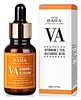
This brightening serum is formulated around Ascorbic Acid and Arbutin to brighten dull-looking skin and fade the look of dark spots.
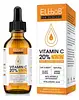
This brightening serum is formulated around Sodium Ascorbyl Phosphate and Tocopheryl Acetate to brighten dull-looking skin and fade the look of dark spots.


What's inside
What's inside
 Key Ingredients
Benefits
Concerns
No concerns
Ingredients Side-by-side
Propanediol
Solvent

Aloe Barbadensis Leaf Extract
Emollient

Ascorbic Acid
Antioxidant






Arbutin
Antioxidant
1,2-Hexanediol
Skin Conditioning
Arginine
Masking
Sodium Hyaluronate
Humectant
Panthenol
Skin Conditioning
Sodium Hydroxide
BufferingCamellia Sinensis Leaf Extract
Antimicrobial

Momordica Charantia Fruit Extract
Skin ConditioningSambucus Nigra Flower Extract
RefreshingLeontopodium Alpinum Extract
Skin ConditioningDisodium EDTA
ChelatingWater
Skin ConditioningTocopheryl Acetate
Antioxidant
Physostegia Virginiana Leaf/Stem Extract
AntiseborrhoeicAloe Barbadensis Extract
Skin Conditioning
Sodium Ascorbyl Phosphate
Antioxidant
Glycerin
Humectant
Betaine
Humectant
Proline
Skin Conditioning
Dimethyl Sulfone
SolventHamamelis Virginiana Water
Astringent



Simmondsia Chinensis Seed Oil
Emollient

Ethylhexylglycerin
Skin ConditioningSodium Hyaluronate
Humectant
Arginine
Masking
Retinol
Skin Conditioning

Carbomer
Emulsion StabilisingCamellia Sinensis Leaf Extract
Antimicrobial
Water, Tocopheryl Acetate, Physostegia Virginiana Leaf/Stem Extract, Aloe Barbadensis Extract, Sodium Ascorbyl Phosphate, Glycerin, Betaine, Proline, Dimethyl Sulfone, Hamamelis Virginiana Water, Simmondsia Chinensis Seed Oil, Ethylhexylglycerin, Sodium Hyaluronate, Arginine, Retinol, Carbomer, Camellia Sinensis Leaf Extract
Reviews
Ingredients Explained
These ingredients are found in both products.
Ingredients higher up in an ingredient list are typically present in a larger amount.
Arginine is a semi-essential amino acid. This just means our bodies can product a bit on its own, but sometimes needs a little boost from food sources.
It is a part of your skin's natural moisturizing factor (NMF), or the water-loving molecules in your outermost layer of skin (stratum corneum) that keeps everything hydrated and happy.
Here's an interesting thing about Arginine: your skin converts it into urea through the Krebs-Henseleit urea cycle. Urea is one of the most effective humectants your skin naturally produces.
A clinical study showed applying 2.5% arginine hydrochloride to atopic dermatitis skin showed significant urea levels in the stratum corneum and improved moisture in just four weeks.
Arginine is also a precursor to nitric oxide; nitric oxide improves microcirculation and supports wound healing and collagen synthesis.
One study found that an amino acid complex containing Arginine reduced skin irritation, improved hydration, and accelerated skin repair in clinical / in-vivo studies.
Arginine itself is an amino acid and not a fatty acid, oil, or ester. On its own, it's not a direct food source for Malassezia, or the yeast that causes fungal acne.
Learn more about ArginineCamellia Sinensis Leaf Extract (tea extract) is one of the most well-researched plant extracts in skincare with an impressive resume.
Black tea, green tea, and oolong tea are all harvested from the Camellia Sinensis plant.
Studies show green tea extract and its catechins (like epigallocatechin gallate (EGCG)) help your skin cells product energy more efficiently and reducing the number of free-radicals that can damage your skin from the inside.
In lab-grown skin models, this translated to younger, healthier, and stronger skin.
There's also good sun protection data; researchers saw less DNA damage and redness on human skin when green tea was applied before UVB exposure. And the more they applied, the better the protection.
Needless to say, this ingredient shouldn't replace your sunscreen. But it is a great supportive ingredient that you can already find in many sunscreens and antioxidant serums.
A 2009 study found a 2% green tea lotion was effective for mild-to-moderate acne thanks to its anti-inflammatory and mild antimicrobial activity.
The quality of the extract matters a lot here:
Good extracts contain 50-90% catechins while lower quality ones are mostly there for marketing. We recommend reaching out to the brand if you have questions about the quality or source of their ingredients.
Human Repeated Insult Patch Testing showed no irritation or sensitization at use concentrations (0.86% in leave-on products and up to 30% as leaf water).
Learn more about Camellia Sinensis Leaf ExtractSodium Hyaluronate is the salt form of hyaluronic acid. It is a long sugar chain that is naturally found in your skin, joints, and connective tissue that maintains hydration and elasticity.
In skincare, it works as a humectant. It pulls water from the environment and deeper layers of skin and binds it to the surface.
Interestingly, the size of the molecule affects its behavior:
Some clinical evidence links low molecular weight versions to improved wrinkle depth, elasticity, anti-inflammatory effects, and barrier repair.
Many serums use a blend of both weights so you can get surface hydration plus longer-lasting and deeper effects.
You'll typically see concentrations between 0.1-2% for this ingredient.
Learn more about Sodium Hyaluronate

