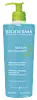
This mild gel cleanser is made to cleanse without leaving your skin tight or dry.

What's inside
What's inside
 Key Ingredients
No key ingredients
Benefits
Concerns
Ingredients Side-by-side
Water
Skin ConditioningSodium Cocoamphoacetate
CleansingSodium Laureth Sulfate
Cleansing



Methylpropanediol
SolventDisodium EDTA
ChelatingMannitol
Humectant
Xylitol
Humectant
Rhamnose
HumectantFructooligosaccharides
Humectant
Zinc Sulfate
Antimicrobial
Copper Sulfate
Skin ConditioningGinkgo Biloba Leaf Extract
Skin Conditioning

PEG-90 Glyceryl Isostearate
Cleansing

Lactic Acid
Buffering






Laureth-2
CleansingPotassium Sorbate
Preservative
Sodium Chloride
MaskingPropylene Glycol
Humectant
Sodium Hydroxide
BufferingParfum
Masking

Water, Sodium Cocoamphoacetate, Sodium Laureth Sulfate, Methylpropanediol, Disodium EDTA, Mannitol, Xylitol, Rhamnose, Fructooligosaccharides, Zinc Sulfate, Copper Sulfate, Ginkgo Biloba Leaf Extract, PEG-90 Glyceryl Isostearate, Lactic Acid, Laureth-2, Potassium Sorbate, Sodium Chloride, Propylene Glycol, Sodium Hydroxide, Parfum
Water
Skin ConditioningSodium Cocoamphoacetate
CleansingPropanediol
Solvent
Sodium Lauroyl Sarcosinate
CleansingCitric Acid
Buffering
Coco-Glucoside
Cleansing
Glyceryl Oleate
Emollient
Sodium Citrate
BufferingPEG-90 Glyceryl Isostearate
Cleansing
Mannitol
Humectant
Xylitol
Humectant
Laureth-2
CleansingRhamnose
HumectantFructooligosaccharides
Humectant
Tocopherol
Antioxidant

Hydrogenated Palm Glycerides Citrate
Emollient
Reviews
Ingredients Explained
These ingredients are found in both products.
Ingredients higher up in an ingredient list are typically present in a larger amount.
Fructooligosaccharides (FOS) are a type of prebiotic sugar with humectant and skin conditioning properties. As a humectant, they help attract and hold moisture in the skin.
FOS essentially acts as a food source for the "good" bacteria on your skin and make it harder for "bad" bacteria to thrive. A 2022 study using a reconstructured human skin model found that just 1% of FOS was enough to shift the bacteria balance in favor of beneficial species. This suggests it could help support a healthier skin microbiome over time.
This ingredient has a low sensitization risk and testing shows it does not classify as a skin irritant or sensitizer.
FOS are usually produced from sugar beets and can also be found in foods like bananas, garlic, and onions.
Learn more about FructooligosaccharidesLaureth-2 is a synthetic surfactant that has cleansing and emulsifying properties. It is commonly used to blend oil and water, help improve cleansing, and add foam.
Like other surfactants, laureth-2 works by reducing surface tension to help dirt, sebum, and other impurities be washed away easily.
This ingredient has low risk of irritation when properly formulated. However, some individuals with sensitive skin may still experience mild irritation.
Learn more about Laureth-2Mannitol is a sugar alcohol. It is a humectant and moisturizes the skin. In vitro (not tested on a living organism), mannitol displays antioxidant properties.
When found in aqueous solutions, mannitol tends to become acidic. This is because it loses a hydrogen ion. This is why mannitol can often be found with pH adjusting ingredients, such as sodium bicarbonate.
Fun fact: Mannitol can be found in foods as a sweetener. It can be naturally found in mushrooms, algae, fruits, and veggies.
Learn more about MannitolPeg-90 Glyceryl Isostearate is a surfactant made by reacting glycerin with isostearic acid and then attaching 90 ethylene oxide units. This gives the molecule a water-loving tail.
This dual water-oil loving structure gives this ingredient several properties; it is a:
Due to its large molecular size, it sits on the surface of skin rather than penetrating (also why it's pretty tolerable).
Leave-on product usage ranges between 1-5% while shaving gels can go up to 10%.
This ingredient may not be fungal acne safe due to the isostearic acid base.
Learn more about PEG-90 Glyceryl IsostearateWe don't have a description for Rhamnose yet.
We don't have a description for Sodium Cocoamphoacetate yet.
Water. It's the most common cosmetic ingredient of all. You'll usually see it at the top of ingredient lists, meaning that it makes up the largest part of the product.
So why is it so popular? Water most often acts as a solvent - this means that it helps dissolve other ingredients into the formulation.
You'll also recognize water as that liquid we all need to stay alive. If you see this, drink a glass of water. Remember to stay hydrated!
Learn more about WaterXylitol is a humectant and prebiotic. It can help with dry skin.
In studies, xylitol has been shown to improve dry skin. It decreased transepidermal water loss, or when water passes through the skin and evaporates. Xylitol also showed to help improve the biomechanical properties of the skin barrier.
The prebiotic property of xylitol may also help reinforce our skin's natural microbiome. Having a healthy microbiome prevents infection by bad bacteria and helps with hydration.
As a humectant, Xylitol helps draw moisture from both the air and from deeper skin layers. This helps keep skin hydrated.
Xylitol is a sugar alcohol and commonly used as a sugar substitute. It is naturally occurring in plants such as strawberries and pumpkin.
Learn more about Xylitol

