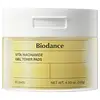
This brightening toner pad uses a pre-saturated pad with Niacinamide and Glutathione to brighten dull-looking skin and fade the look of dark spots.
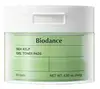
This hydrating toner pad uses a pre-saturated pad with Macrocystis Pyrifera Extract and Houttuynia Cordata Extract to hydrate skin and calm redness.

What's inside
What's inside
 Key Ingredients
No key ingredients
Benefits
Concerns
No concerns
Ingredients Side-by-side
Water
Skin ConditioningSr-Pineapple Stem Bromelain
Skin ConditioningGlycerin
Humectant


Butylene Glycol
Humectant
Niacinamide
Smoothing









1,2-Hexanediol
Skin Conditioning
Glyceryl Glucoside
Humectant
Allantoin
Skin Conditioning
Carbomer
Emulsion StabilisingEthylhexylglycerin
Skin ConditioningRose Extract
Skin ConditioningXanthan Gum
EmulsifyingSodium Edtmp
ChelatingSodium Polyacrylate
Absorbent
Morinda Citrifolia Flower Extract
Ocimum Sanctum Leaf Extract
Skin ConditioningMorinda Citrifolia Leaf Extract
Skin ConditioningUlmus Davidiana Root Extract
Skin Conditioning
Sodium Hyaluronate
Humectant
Hydroxypropyltrimonium Hyaluronate
Sodium Acetylated Hyaluronate
Humectant
Zinc Hydrolyzed Hyaluronate
HumectantHydrolyzed Sodium Hyaluronate
Skin Conditioning
Sodium Hyaluronate Crosspolymer
Humectant
Glutathione
Potassium Hyaluronate
Skin ConditioningTyramine Hyaluronamide
HumectantCeramides

Water, Sr-Pineapple Stem Bromelain, Glycerin, Butylene Glycol, Niacinamide, 1,2-Hexanediol, Glyceryl Glucoside, Allantoin, Carbomer, Ethylhexylglycerin, Rose Extract, Xanthan Gum, Sodium Edtmp, Sodium Polyacrylate, Morinda Citrifolia Flower Extract, Ocimum Sanctum Leaf Extract, Morinda Citrifolia Leaf Extract, Ulmus Davidiana Root Extract, Sodium Hyaluronate, Hydroxypropyltrimonium Hyaluronate, Sodium Acetylated Hyaluronate, Zinc Hydrolyzed Hyaluronate, Hydrolyzed Sodium Hyaluronate, Sodium Hyaluronate Crosspolymer, Glutathione, Potassium Hyaluronate, Tyramine Hyaluronamide, Ceramides
Water
Skin ConditioningButylene Glycol
Humectant
1,2-Hexanediol
Skin Conditioning
Lactobacillus
Skin ConditioningSea Water
HumectantPolyglyceryl-10 Laurate
Skin Conditioning

Arginine
Masking
Allantoin
Skin Conditioning
Carbomer
Emulsion StabilisingEthylhexylglycerin
Skin ConditioningXanthan Gum
EmulsifyingSodium Polyacrylate
Absorbent
Ficus Indica Leaf Extract
Skin ConditioningMethyl Diisopropyl Propionamide
MaskingHouttuynia Cordata Extract
Skin Conditioning
Spirulina Maxima Extract
SmoothingUlmus Davidiana Root Extract
Skin Conditioning
Maltodextrin
Absorbent
Hydrolyzed Roe Extract
HumectantJania Rubens Extract
Skin Conditioning

Sea Silt Extract
Skin ConditioningMacrocystis Pyrifera Extract
Skin Conditioning
Water, Butylene Glycol, 1,2-Hexanediol, Lactobacillus, Sea Water, Polyglyceryl-10 Laurate, Arginine, Allantoin, Carbomer, Ethylhexylglycerin, Xanthan Gum, Sodium Polyacrylate, Ficus Indica Leaf Extract, Methyl Diisopropyl Propionamide, Houttuynia Cordata Extract, Spirulina Maxima Extract, Ulmus Davidiana Root Extract, Maltodextrin, Hydrolyzed Roe Extract, Jania Rubens Extract, Sea Silt Extract, Macrocystis Pyrifera Extract
Reviews
Ingredients Explained
These ingredients are found in both products.
Ingredients higher up in an ingredient list are typically present in a larger amount.
1,2-Hexanediol is a synthetic liquid and another multi-functional powerhouse.
It is a:
- Humectant, drawing moisture into the skin
- Emollient, helping to soften skin
- Solvent, dispersing and stabilizing formulas
- Preservative booster, enhancing the antimicrobial activity of other preservatives
Allantoin is a soothing ingredient known for its protective and moisturizing properties; it's basically a quiet workhorse ingredient you can find in a huge range of cosmetics.
Though it can be derived from the comfrey plant, allantoin is produced synthetically for cosmetic products to ensure purity.
Research shows it can encourage your skin cells to turn over and renew by stimulating keratinocyte and fibroblast proliferation.
It also has mild keratolytic properties to help loosen and shed dead skin cells without being harsh.
Studies also suggest allantoin can help calm inflammation by dialing down some of the chemical signals your skin sends out when it is irritated.
This ingredient is typically used in the 0.1-0.5% range, and the FDA recognizes it as a skin protectant in OTC products up to 2%.
Overall, allantoin is a wonderful addition to most routines; it is stable across a wide pH range (~4-8), works well with other ingredients, and is considered non-sensitizing/non-irritating.
Fun fact: Allantoin is naturally occurring in comfrey root, beets, chamomile, and wheat sprouts. Our bodies even produce it as a byproduct of uric acid metabolism.
Learn more about AllantoinButylene Glycol (or BG) is used within cosmetic products for a few different reasons:
Overall, Butylene Glycol is a safe and well-rounded ingredient that works well with other ingredients.
Though this ingredient works well with most skin types, some people with sensitive skin may experience a reaction such as allergic rashes, closed comedones, or itchiness.
Learn more about Butylene GlycolCarbomer is a synthetic thickening and gelling agent. It's basically the ingredient that gives a lot of serums, gels, creams, and sunscreens their smooth, non-sticky texture.
Although legally permitted at very high levels, carbomers are normally used at concentrations below 1%.
It also needs to be neutralized to actually thicken, and because it is a large molecule, it doesn't really penetrate the skin barrier.
Allergy-wise, the risk is very low. Clinical studies show carbomers have low potential for skin irritation/sensitization even at concentrations up to 100%.
A 2024 UK study patch-tested 1,302 patients and found true allergy to the parent group of carbomer to be rare with no confirmed relevant reactions.
Learn more about CarbomerEthylhexylglycerin is created from glycerin. It is a multitasker ingredient that:
The CIR Expert Panel found minimal skin absorption or sensitization of any kind in a safety assessment. Though this ingredient is considered well-tolerated, a small number of cases of allergic dermatitis have been published since 2002. Just be sure to patch test if you are unsure.
Industry-reported use ranges from 8% in rinse-off products and 2% in leave-on formulations.
Learn more about EthylhexylglycerinSodium Polyacrylate is the sodium salt of polyacrylic acid. It is used as an absorber, emollient, and stabilizer.
This ingredient is a super-absorbent polymer - meaning it can absorb 100 to 1000 times its mass in water. As an emollient, Sodium Polyacrylate helps soften and soothe skin. Emollients work by creating a barrier to trap moisture in. This helps keep your skin hydrated.
This tree is also known as the David Elm. It contains the ingredient bakuchiol.
Other great compounds found in this ingredient include galactose, glucose, and phenolics. The sugar content gives it great skin hydrating properties. Phenolics are potent antioxidants commonly found in fruits and veggies.
A 2020 study found the phenolics of this root to have an anti-inflammatory effect.
Fun fact: This ingredient is used in traditional Asian medicine.
Learn more about Ulmus Davidiana Root ExtractWater. It's the most common cosmetic ingredient of all. You'll usually see it at the top of ingredient lists, meaning that it makes up the largest part of the product.
So why is it so popular? Water most often acts as a solvent - this means that it helps dissolve other ingredients into the formulation.
You'll also recognize water as that liquid we all need to stay alive. If you see this, drink a glass of water. Remember to stay hydrated!
Learn more about WaterXanthan gum is used as a stabilizer and thickener within cosmetic products. It helps give products a sticky, thick feeling - preventing them from being too runny.
On the technical side of things, xanthan gum is a polysaccharide - a combination consisting of multiple sugar molecules bonded together.
Xanthan gum is a pretty common and great ingredient. It is a natural, non-toxic, non-irritating ingredient that is also commonly used in food products.
Learn more about Xanthan Gum

