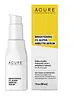
This brightening serum is formulated around Alpha-Arbutin and Aloe Barbadensis Leaf Juice to fade the look of dark spots and brighten dull-looking skin.
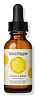
This brightening serum is formulated around Sodium Ascorbyl Phosphate and Ferulic Acid to fade the look of dark spots and brighten dull-looking skin.

What's inside
What's inside
 Key Ingredients
Benefits
Ingredients Side-by-side
Water
Skin ConditioningAlpha-Arbutin
Antioxidant




Aloe Barbadensis Leaf Juice
Skin Conditioning


Sodium Hyaluronate
Humectant


Sambucus Nigra Fruit Juice
AstringentGlycerin
Humectant
Sclerotium Gum
Emulsion StabilisingXanthan Gum
EmulsifyingSodium Levulinate
Skin ConditioningPolyglutamic Acid
Skin Conditioning
Hydroxyethylcellulose
Emulsion StabilisingPropanediol
Solvent
Sodium Phytate
Ethylhexylglycerin
Skin ConditioningSodium Anisate
AntimicrobialCitric Acid
Buffering

Water
Skin ConditioningSodium Ascorbyl Phosphate
Antioxidant


C12-15 Alkyl Benzoate
AntimicrobialGlycerin
Humectant
Sodium Levulinate
Skin ConditioningSodium Anisate
AntimicrobialSalvia Sclarea Oil
Masking
Citrus Grandis Seed Extract
Astringent
Hyaluronic Acid
Humectant
Amorphophallus Konjac Root Powder
Abrasive
Aloe Barbadensis Leaf
Masking
Tocotrienols
Skin Conditioning
Ferulic Acid
Antimicrobial
Matricaria Maritima Powder
Abrasive
Sodium Phytate
Xanthan Gum
EmulsifyingHydroxyethylcellulose
Emulsion StabilisingWater, Sodium Ascorbyl Phosphate, C12-15 Alkyl Benzoate, Glycerin, Sodium Levulinate, Sodium Anisate, Salvia Sclarea Oil, Citrus Grandis Seed Extract, Hyaluronic Acid, Amorphophallus Konjac Root Powder, Aloe Barbadensis Leaf, Tocotrienols, Ferulic Acid, Matricaria Maritima Powder, Sodium Phytate, Xanthan Gum, Hydroxyethylcellulose
Reviews
Ingredients Explained
These ingredients are found in both products.
Ingredients higher up in an ingredient list are typically present in a larger amount.
Glycerin (or glycerol) is a compound naturally found in your skin. It's a powerhouse humectant that pulls water into the stratum corneum.
Topically, glycerin does several things at once:
Your skin makes glycerin on its own (mostly from sebaceous oil breakdown) and shuttles it to your outermost layer of skin, or your epidermis, via aquaporin-3.
Aquaporin-3 is a transporter that is essential for normal skin hydration, elasticity, and repair. Interestingly, mice lacking in AQP3 have dry and less elastic skin that can be fully corrected with glycerin.
This ingredient is non-irritating, plays well with almost every ingredient, and works across all skin types. Typical use is anywhere between 3-10% but can go up to 79% in some leave-on products.
Just know very high concentrations (>40%) can feel tacky in low humidity.
Glycerin is the name for this ingredient in American English. British English uses Glycerol/Glycerine.
Learn more about GlycerinHydroxyethylcellulose is used to improve the texture of products. It is created from a chemical reaction involving ethylene oxide and alkali-cellulose. Cellulose is a sugar found in plant cell walls and help give plants structure.
This ingredient helps stabilize products by preventing ingredients from separating. It can also help thicken the texture of a product.
This ingredient can also be found in pill medicines to help our bodies digest other ingredients.
Learn more about HydroxyethylcelluloseSodium Anisate comes from fennel. It is used as a preservative and to add flavoring.
Sodium Anisate has antimicrobial properties.
Sodium levulinate is the a sodium salt of Levulinic Acid. Oncedissolved in an aqueous solution, the two ingredients become identical. It is usually derived from renewable plant sources like corn starch or sugarcane.
In skincare, it mostly acts as a skin conditioning agent that keeps skin soft and hydrated. It also acts as a preservative booster by inhibiting the growth of mold, yeast, and bacteria.
It's often paired with Sodium Anisate as the two create a broad-spectrum preservative system that is popular in "natural" formulations.
This ingredient is water-soluble.
The CIR Expert Panel for Cosmetic Ingredient Safety has concluded this ingredient to be non-irritated and there are no restrictions for use in EU cosmetics. The FDA also allows this ingredient to be used as a food-grade flavoring agent.
Learn more about Sodium LevulinateSodium Phytate is the synthetic salt form of phytic acid. Phytic acid is an antioxidant and can be found in plant seeds.
Sodium Phytate is a chelating agent. Chelating agents help prevent metals from binding to water. This helps stabilize the ingredients and the product.
Water. It's the most common cosmetic ingredient of all. You'll usually see it at the top of ingredient lists, meaning that it makes up the largest part of the product.
So why is it so popular? Water most often acts as a solvent - this means that it helps dissolve other ingredients into the formulation.
You'll also recognize water as that liquid we all need to stay alive. If you see this, drink a glass of water. Remember to stay hydrated!
Learn more about WaterXanthan gum is used as a stabilizer and thickener within cosmetic products. It helps give products a sticky, thick feeling - preventing them from being too runny.
On the technical side of things, xanthan gum is a polysaccharide - a combination consisting of multiple sugar molecules bonded together.
Xanthan gum is a pretty common and great ingredient. It is a natural, non-toxic, non-irritating ingredient that is also commonly used in food products.
Learn more about Xanthan Gum

