Province Apothecary Invigorating + Balancing Toner
A toner with 14 ingredients, including PHA.
This smoothing toner is formulated around Rosa Damascena Flower Water and Gluconolactone to refine skin texture and calm redness.
Worth noting
Contains EU-listed fragrance allergens, including Pelargonium Graveolens Oil and Pogostemon Cablin Leaf Oil.
We independently verify ingredients, backed by peer-reviewed research. Suggest an update.
What's inside
Ingredients List
Water
Skin ConditioningRosa Damascena Flower Water
Masking

Lavandula Angustifolia Flower Water
Skin Conditioning
Gluconolactone
Chelating







Sodium Benzoate
Masking
Calcium Gluconate
HumectantDisodium Cupric Citrate
StabilisingSorbitan Oleate Decylglucoside Crosspolymer
CleansingHelianthus Annuus Seed Oil
Emollient



Rosmarinus Officinalis Extract
AntimicrobialPelargonium Graveolens Oil
Masking


Salvia Sclarea Oil
Masking
Pogostemon Cablin Leaf Oil
Masking
Boswellia Serrata Oil
Masking
Water, Rosa Damascena Flower Water, Lavandula Angustifolia Flower Water, Gluconolactone, Sodium Benzoate, Calcium Gluconate, Disodium Cupric Citrate, Sorbitan Oleate Decylglucoside Crosspolymer, Helianthus Annuus Seed Oil, Rosmarinus Officinalis Extract, Pelargonium Graveolens Oil, Salvia Sclarea Oil, Pogostemon Cablin Leaf Oil, Boswellia Serrata Oil
Key Ingredients
Benefits
Concerns
Ingredients Explained
Water. It's the most common cosmetic ingredient of all. You'll usually see it at the top of ingredient lists, meaning that it makes up the largest part of the product.
So why is it so popular? Water most often acts as a solvent - this means that it helps dissolve other ingredients into the formulation.
You'll also recognize water as that liquid we all need to stay alive. If you see this, drink a glass of water. Remember to stay hydrated!
Learn more about WaterRosa Damascena Flower Water is the water-based byproduct of steam-distilling damask rose petals. It has skin conditioning, masking, and skin protecting properties.
Research shows that Rosa damascena is rich in flavonoids and phenolic compounds like gallic acid that contribute to its antioxidant activity.
In vitro studies have shown that Rosa damascena can scavenge free radicals and reduce melanin overproduction. Research has also found this extract offers some degree of UV absorption but this should not replace your sunscreen.
Learn more about Rosa Damascena Flower WaterLavandula Angustifolia Flower Water is created by distilling parts of the lavender plant. Lavender flower water is a diluted version of lavender essential oil. It contains linalool and linalyl acetate.
When exposed to air, these two compounds become strong allergens. This ingredient exhibits cytotoxicity at low concentrations; amounts of 0.25% have been shown to damage skin cells.
Gluconolactone is a PHA. PHAs are a great gentle alternative to traditional AHAs.
When applied, Gluconolactone has the same affect on skin as AHAs such as lactic acid. It helps dissolve the dead skin cells in the top layer of your skin. This improves texture and brightens the skin.
PHAs are more gentle than AHAs due to their larger structure. They do not penetrate as deeply as AHAs and take a longer time to dissolve dead cells. Studies show PHAs do not cause as much irritation.
Gluconolactone has some interesting properties:
In a 2004 study, Gluconolactone was found to prevent UV damage in mouse skin cells and has not been found to increase sun sensitivity. However, we still recommend wearing SPF daily.
This ingredient is is an created by reacting gluconic acid with an alcohol.
Learn more about GluconolactoneSodium Benzoate is a preservative. It's used in both cosmetic and food products to inhibit the growth of mold and bacteria. It is typically produced synthetically.
Both the US FDA and EU Health Committee have approved the use of sodium benzoate. In the US, levels of 0.1% (of the total product) are allowed.
Sodium benzoate works as a preservative by inhibiting the growth of bacteria inside of cells. It prevents the cell from fermenting a type of sugar using an enzyme called phosphofructokinase.
It is the salt of benzoic acid. Foods containing sodium benzoate include soda, salad dressings, condiments, fruit juices, wines, and snack foods.
Studies for using ascorbic acid and sodium benzoate in cosmetics are lacking, especially in skincare routines with multiple steps.
We always recommend speaking with a professional, such as a dermatologist, if you have any concerns.
Learn more about Sodium BenzoateThis ingredient is calcium salt of gluconic acid. It is a humectant, meaning it attracts water to your skin.
We don't have a description for Disodium Cupric Citrate yet.
Sorbitan Oleate Decylglucoside Crosspolymer is also known as Poly Suga®Mulse D9 (We'll call is SODC for short).
SODC is a nonionic fragrance solubilizer. A solubilizer blends small amounts of oils into water-based formulas. It is especially good at solubilizing fragrances in water-only systems.
SODC does not contain PEGs. It is hydrophilic, meaning it has the tendency to mix with water.
In products, SODC acts as an emulsifer by blending waters and oils.
Learn more about Sorbitan Oleate Decylglucoside CrosspolymerHelianthus Annuus Seed Oil is a plant oil derived from the seeds of a sunflower.
It is rich in fatty acids, primarily linoleic acid and oleic acid. This gives it emollient and skin conditioning properties.
The reason this ingredient is so effective is because it forms a thin film on the skin that reduces transepidermal water loss (TEWL) while supplying linoleic acid to the stratum corneum to improve barrier strength.
The high linoleic acid content is particularly noteworthy for acne-prone skin.
Research suggests that acne-prone skin tends to be deficient in linoleic acid in sebum. Topical application may help replenish this to support a healthier follicular environment and less comedone-promoting sebum.
One randomized study found sunflower seed oil preserved skin barrier integrity in adult volunteers with and without atopic dermatitis (outperforming olive oil).
This ingredient is well-studied, gentle, and an effective emollient suitable for most skin types.
On fungal acne: This ingredient may not be Fungal acne (Malassezia folliculitis) safe. This is because it contains fatty acids with carbon chain lengths in the C11-C24 range.
Learn more about Helianthus Annuus Seed OilRosemary extract has antioxidant, anti-inflammatory, anti-bacterial, and astringent properties.
This ingredient has a natural fragrance due its small component of rosemary oil. The antioxidant properties from its rosmarinic acid, flavone, and phenolic acids.
Pelargonium Graveolens Oil is the pressed oil of the Rose Geranium plant. It has perfuming and masking properties.
This ingredient contains citronellol and geraniol. These compounds may cause allergies and skin-sensitivity.
The scent of Rose Geranium closely resembles. you guessed it: roses.
Learn more about Pelargonium Graveolens OilThis ingredient is more commonly known as clary sage essential oil.
The two main active components in clary sage essential oil are linalool and linalyl acetate.
A patch test is recommended before use, especially for sensitive skin. This ingredient should be diluted as part of a formulation and not applied directly.
Learn more about Salvia Sclarea OilThis ingredient is also known as Patchouli oil. Its main role is to add a warm, earthy, and musky scent to products.
Patchouli exhibits slight antioxidant, antibacterial and antifungal activity from its patchoulol, beta-caryophyllene, pogostone content.
Like all essential oils, this ingredient is a known sensitizer at higher concentrations. This is because this oil also contains known skin-irritating fragrances, limonene and camphor. Limonene and camphor are both known EU allergens.
While patchouli oil holds FDA GRAS ("generally recognized as safe") status, it is typically used at low levels and subject to usage guidelines.
Those with sensitive skin should patch test before using.
Learn more about Pogostemon Cablin Leaf OilThis ingredient comes from the Indian frankincense tree.
Reviews
No written reviews yet. Be the first to review this product.
Recent searches
Search reviews by skin type, ingredient, or keyword.
Where it's from
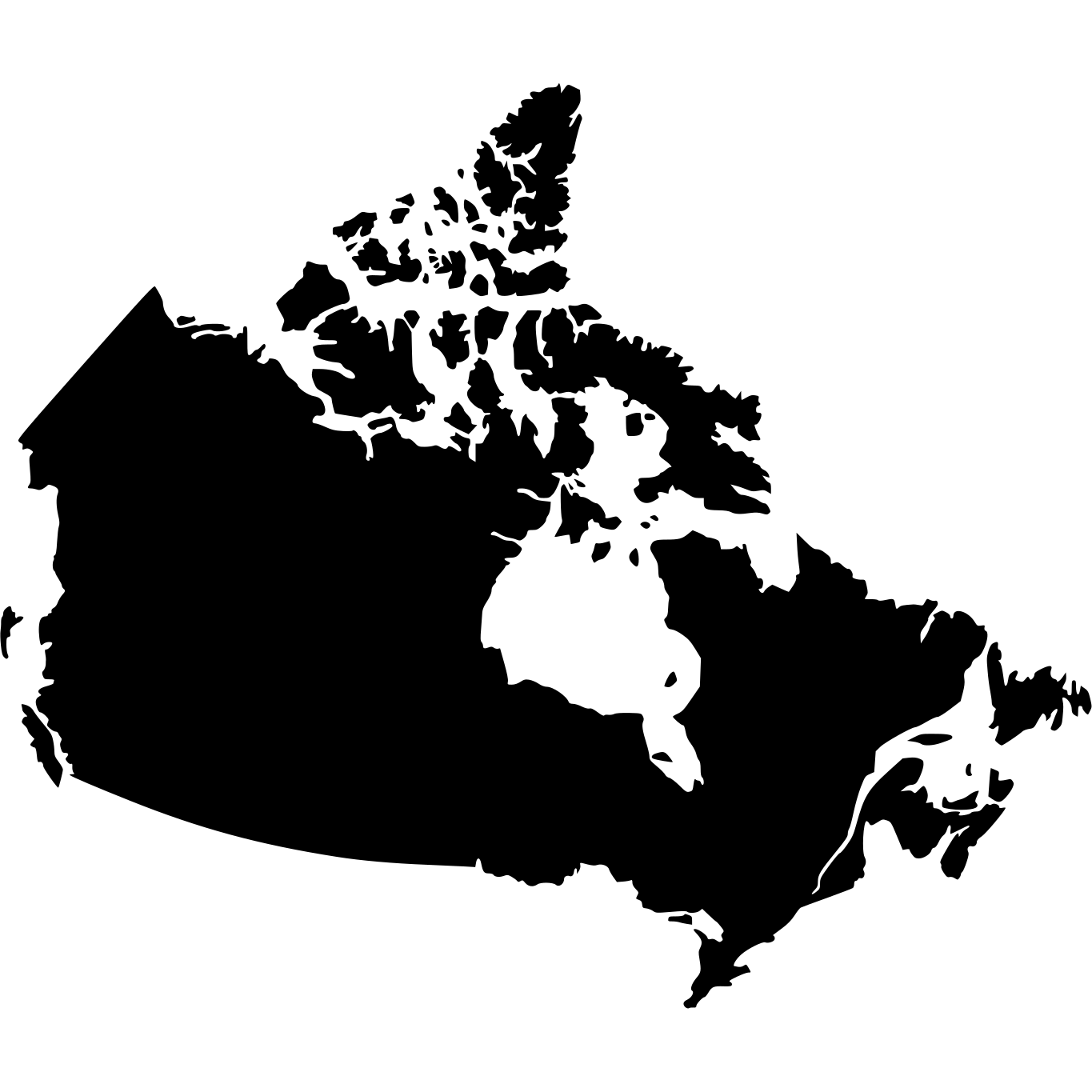
Province Apothecary is a Canadian brand
Often compared with

We're dedicated to providing you with the most up-to-date and science-backed ingredient info out there.
The data we've presented on this page has been verified by a member of the SkinSort Team.
Read more about us· Published May 25, 2023


